

(Kitco News) – Gold and silver have given back their earlier gains from the outbreak of the Iran conflict, but the war is impacting the global precious metals market in other, more concrete ways, while Treasury yields indicate investors are banking on the war being short-lived, according to precious metals analysts at Heraeus.
In the latest update, the analysts wrote that gold’s initial safe-haven boost has now evaporated.
“The gold price is still suffering from the fallout from the rapid rally to its record high, with safe-haven purchases amid geopolitical concerns being offset by profit-taking as investors reassess the outlook for further gains,” they noted.
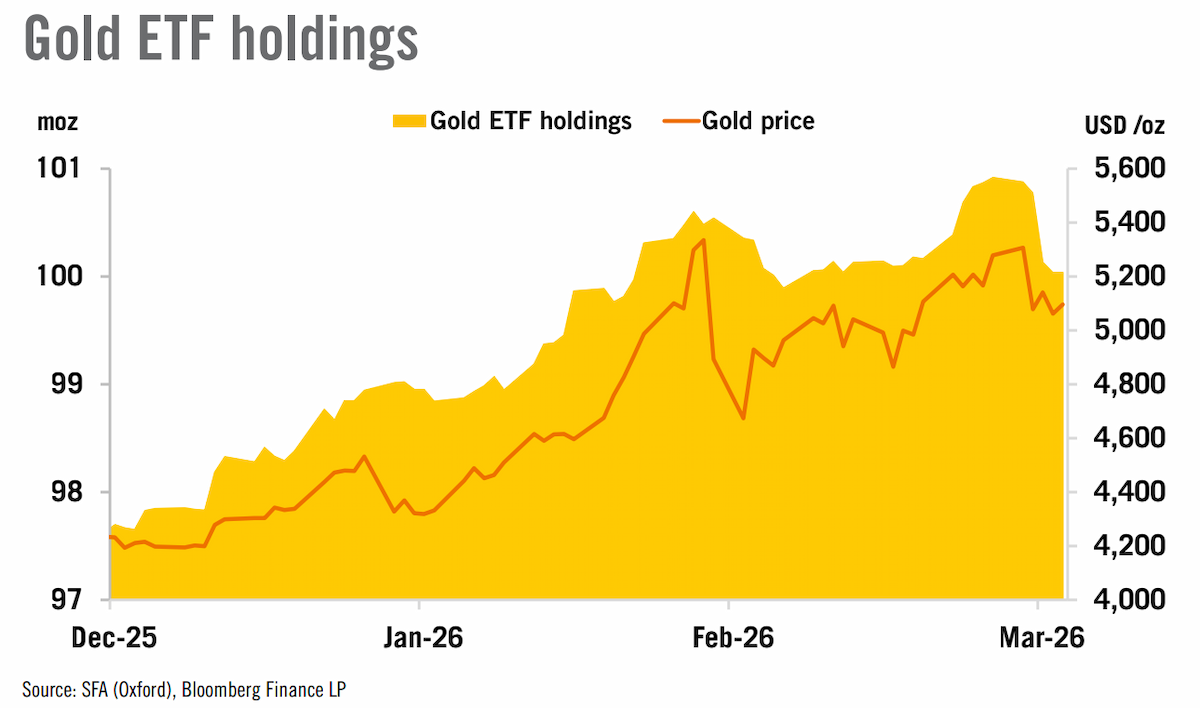
“The markets’ response to the conflict in the Middle East has been less extreme than might have been thought, possibly implying that the consensus judgement is that the conflict will be short-lived,” the analysts said. “In 2022, the gold price rallied for two weeks following the start of [the Russia-Ukraine] conflict but then gave up those gains, ultimately ending the year with little change as the overall sideways trend reasserted itself.”
Heraeus wrote that they expect a rise in inflation driven by higher energy costs, but noted that Treasury yields have only risen by around 20 basis points.
“The US dollar has strengthened, but the dollar index has moved from 97.6 on the Friday, before the attack began, to 99,” they said. “That is still below where it was in January and it was as high as 110 in January 2025. There are several possible headwinds for gold, including the stronger dollar and the chance of higher inflation leading to fewer rate cuts or even rate rises, which are now being priced in, but the impact may be temporary if the conflict ends quickly.”
The conflict is also impacting the global gold market in other ways, with the analysts pointing out that the Middle East’s precious metals trade has been grounded by the conflict.
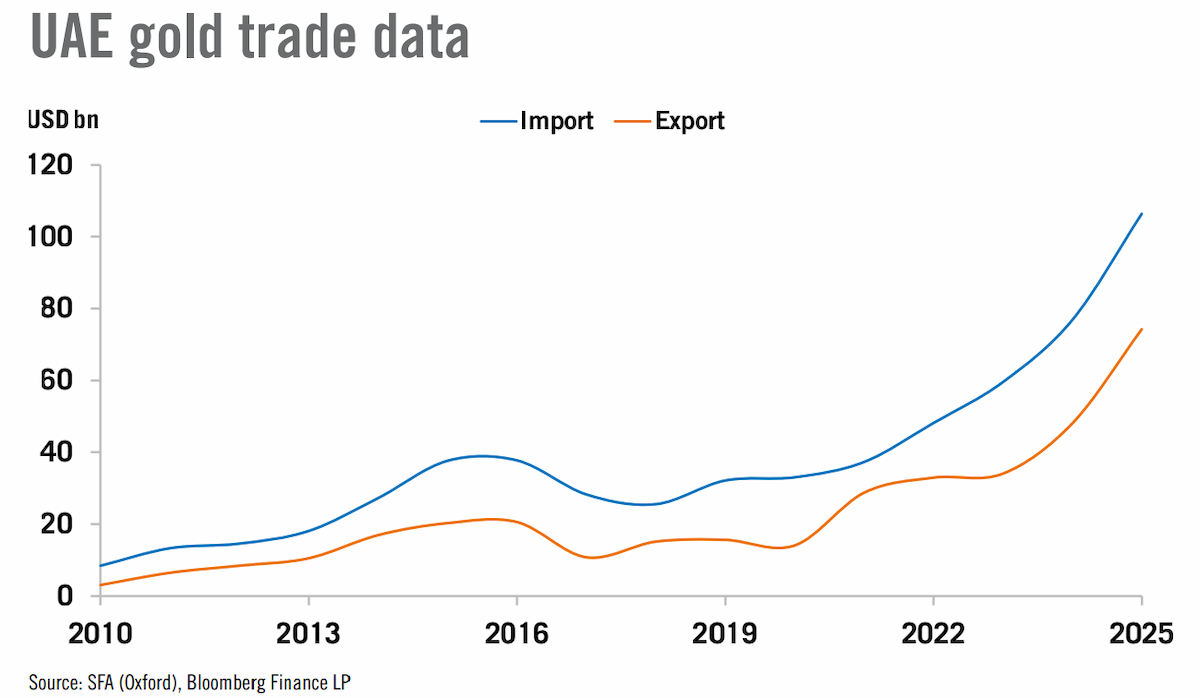
“Dubai is a trading hub for gold that imports material for refining and has significant gold exports, particularly to India,” they wrote. “Gold is often transported on commercial passenger flights but these have been effectively stopped by the conflict, with thousands being cancelled.”
Gold prices are trading near the middle of their daily range on Monday morning after declining sharply overnight.
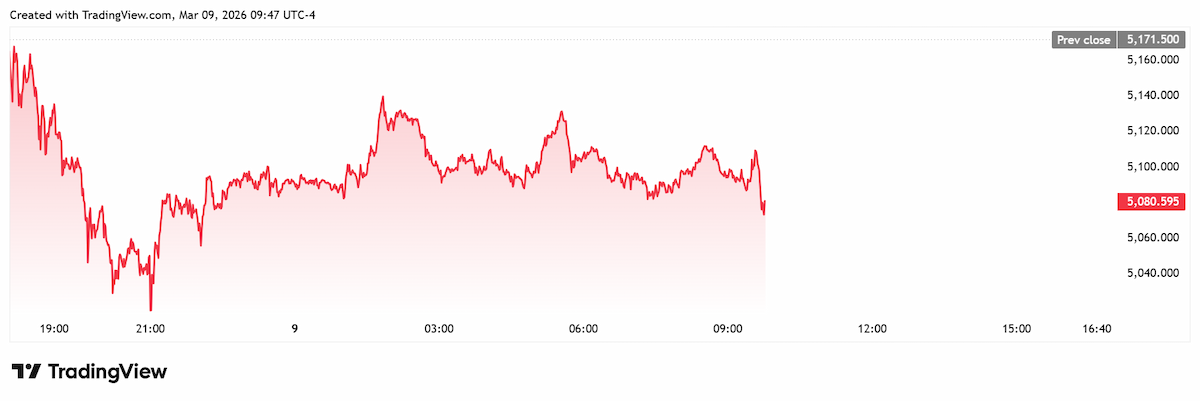
Spot gold last traded at $5,079.63 per ounce for a loss of 1.78% on the session.
Turning to silver, Heraeus analysts noted that the world’s largest primary silver producer, Fresnillo projects lower silver production going forward.
“Silver output was 48.7 moz in 2025, in line with guidance but down 13.5% from 56.3 moz in 2024,” they said. “The company has seen an improvement at the Saucito mine and higher production at Juanicipio and San Julián Veins. However, Fresnillo’s mine output was down owing to lower volumes and ore grade. The company expects to produce between 42.0 moz and 46.5 moz this year owing to changes to the Fresnillo mine plan, which are expected to reduce ore throughput and overall ore grade, and a decrease in ore throughput at Ciénega as the operation moves to high-grade gold areas that have lower silver grades.”
“Fresnillo’s mines are all in Mexico, which is the largest producer of silver,” they noted. “Initial government statistics show that silver production was up by about 3% last year despite Fresnillo’s decline in output.”
“The silver price initially rose in response to the start of hostilities in the Middle East but, like gold, it is also dealing with the after-effects of its rally to record prices, and the rally was used as an opportunity to reduce exposure and take profits as ETF holdings dropped,” they said. “The price has fallen below its corrective price channel which would suggest that the price is going to decline further in the near term. Initial support is at $78/oz, with another level at the $64/oz low from early February.”
Silver prices have recovered most of their overnight losses and are trading not far from session highs on Monday morning, albeit still in negative territory.
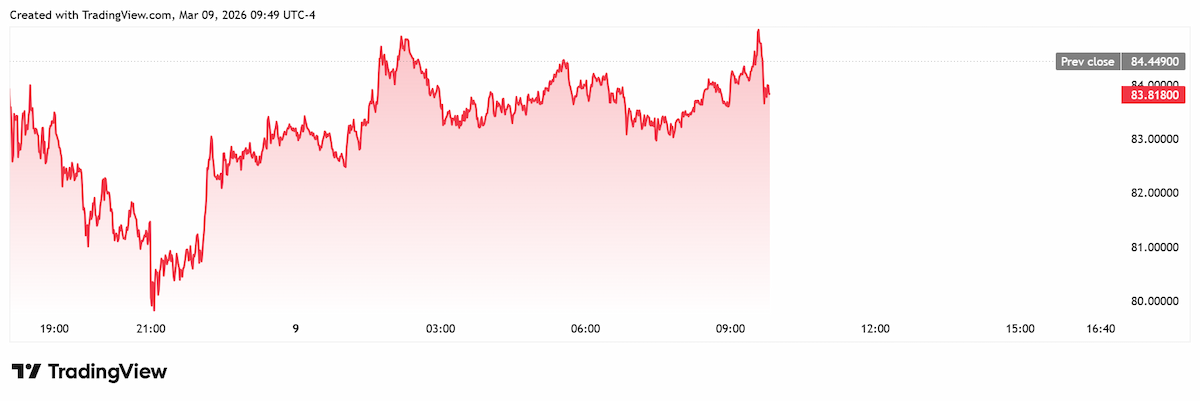
Spot silver last traded at $83.750 per ounce for a loss of 0.83% on the daily chart.
