(Kitco News) - The gold market is continuing to trade in positive territory ahead of the weekend after the latest data showed consumer sentiment in the U.S. declining, while one-year inflation expectations ticked higher once again.
The University of Michigan announced on Friday that the preliminary reading of its Consumer Sentiment survey for March was 55.5. The data was better than expectations, as the consensus forecast of economists called for a reading of 55, but it was below February’s final reading of 56.6.
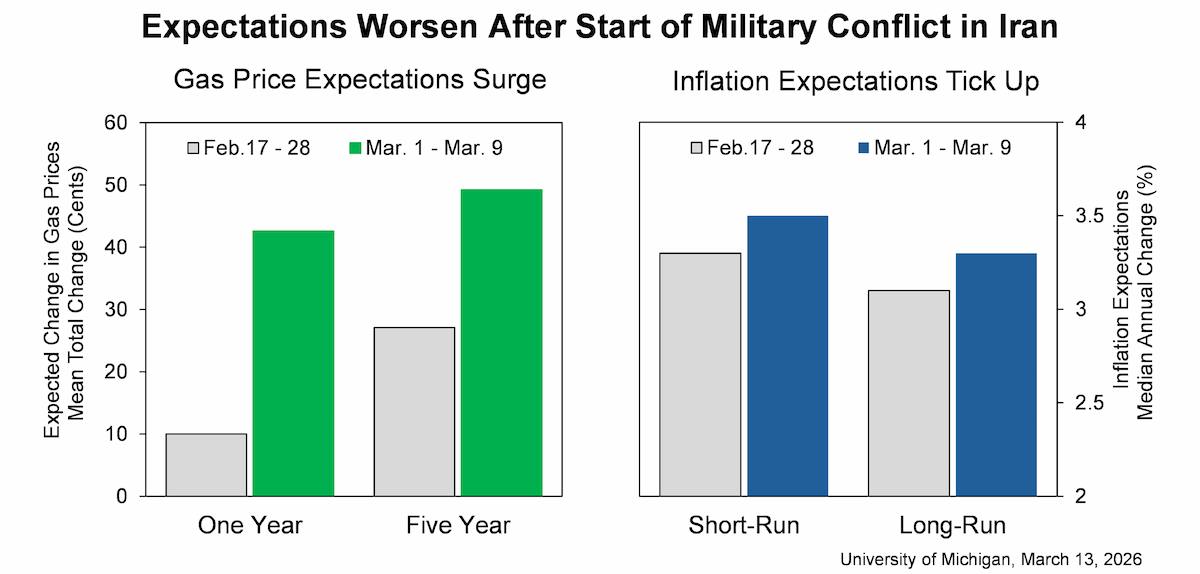
“Consumer sentiment dipped about 2%, reaching its lowest reading of the year,” said Surveys of Consumers Director Joanne Hsu. “Interviews completed prior to the military action in Iran showed an improvement in sentiment from last month, but lower readings seen during the nine days thereafter completely erased those initial gains.”
“Gasoline prices have exerted the most immediate impact felt by consumers, though the magnitude of passthrough to other prices remains highly uncertain.”
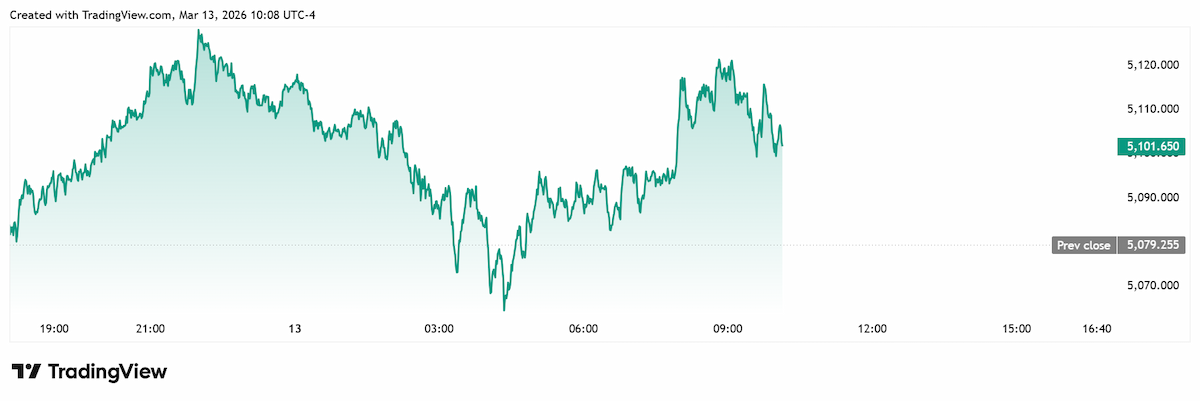
Gold prices are continuing to trade in positive territory following the 10 am EST data release, with spot gold last trading at $5,101.66 per ounce for a gain of 0.43% on the day.
The February index reflected significant declines in future personal finances, while year-ahead inflation expectations rose higher.
“A broad swath of consumers across incomes, age, and political affiliation all reported declines in expectations for their personal finances, down 7.5% nationally,” Hsu said. “Interviews for this release were collected between February 17 and March 9, with about half completed after the start of the US military conflict in Iran.”
“This month, year-ahead inflation expectations ended six months of consecutive declines, stalling at 3.4%,” she noted. “The current reading exceeds those seen in 2024 and remains well above the 2.3-3.0% range seen in the two years pre-pandemic. Long-run inflation expectations inched down to 3.2%. In 2024, readings ranged between 2.8% and 3.2%, while in 2019 and 2020, they were consistently below 2.8%.”
“Note that for both time horizons, interviews completed after February 28th exhibited higher inflation expectations than those completed before that date.”