
(Kitco News) – Gold prices ended Q1 with a weak March, but investor and wholesale demand surged in China, with record ETF inflows, while the PBoC also took the opportunity to make above-average addition to its reserves, according to Ray Jia, research head for China at the World Gold Council (WGC).
In the WGC’s latest China gold market update, Jia wrote that gold prices plunged last month in China and around the world.
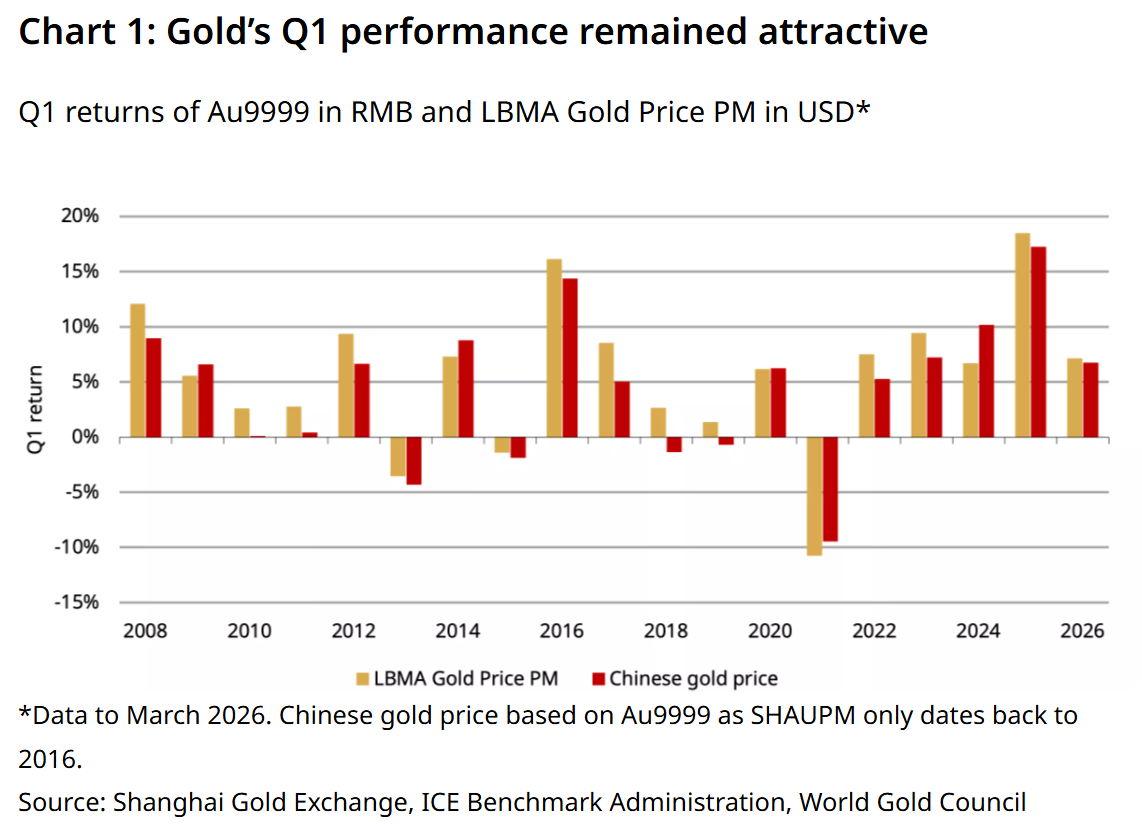
The LBMA Gold Price PM in USD fell 12% in the month, weighed by rapidly cooling expectations of future Fed cuts – due to inflationary fears stemming from the Middle East war – and momentum factors as investors unwind their positions in futures, ETFs and options. The SHAUPM saw a similar pullback of 11% although a depreciating local currency limited the extent of the decline.
Jia noted that March’s weakness trimmed gold’s Q1 gains. “The international gold price in dollars and the Chinese benchmark in RMB both registered a 7% rise in the first quarter,” he said. “Despite a turbulent quarter for gold, signs of recovery were evident towards the end of March and in early April.”
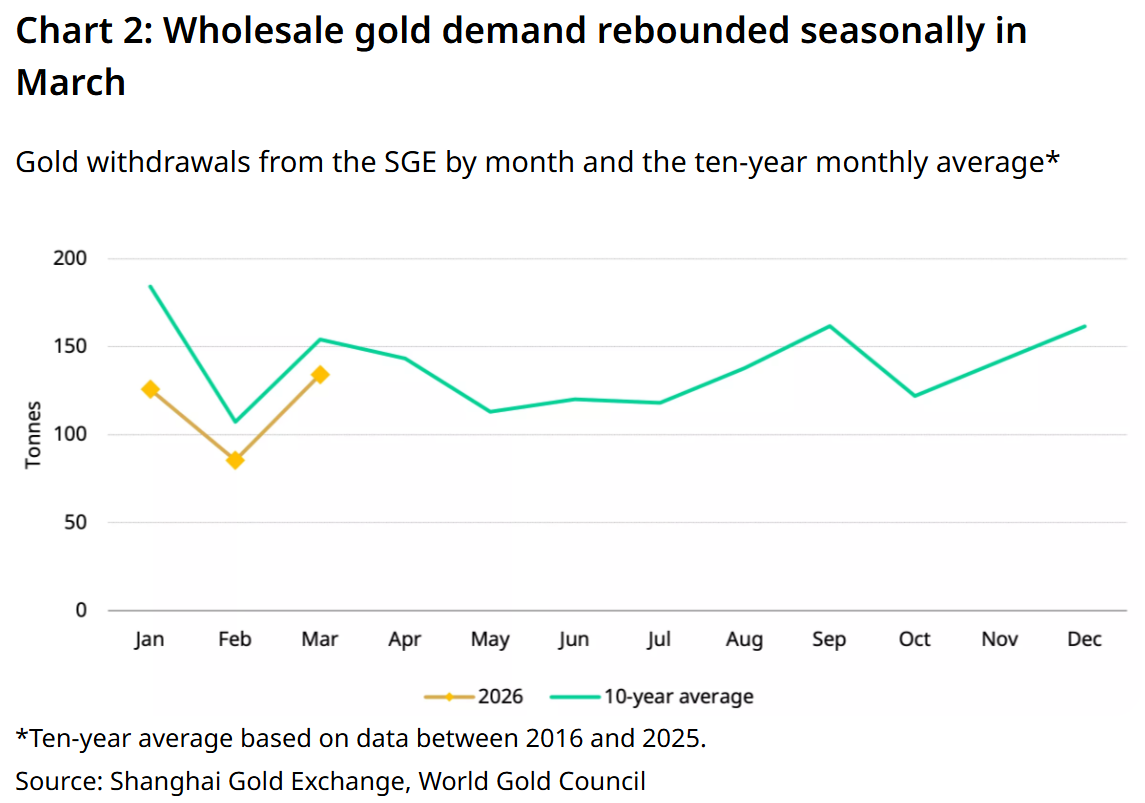
And while prices dipped lower in March, wholesale gold demand ended Q1 with a seasonal rebound.
“Banks, jewellers and refiners withdrew 134t of gold from the SGE in March, marking a 57% m/m rebound and a 12% increase y/y,” Jia noted. “The m/m recovery was largely seasonal, reflecting more working days in March (22 vs 14 in February) and post–Chinese New Year restocking by industry participants. We believe the gold price pullback also encouraged opportunistic replenishment.”
This price dynamic likely contributed to the y/y increase as well, as the sharp gold price rally in March last year had dampened jewellers’ restocking appetite,” he said. “Nevertheless, the month’s wholesale demand remained below its ten‑year average, underscoring continued weakness in the jewellery sector. A firmer March lifted Q1 wholesale gold demand to 345t – 3% higher y/y but still 23% below the ten‑year average. Overall, Chinese gold demand continued to diverge in line with trends observed in 2025: as gold prices surged through most of Q1, strong investment demand offset persistent weakness in gold jewellery consumption.”
The country’s gold ETFs also saw non-stop inflows throughout Q1, including March.
“Chinese gold ETFs have now seen inflows for seven months in a row, attracting RMB12bn (US$1.7bn) in March, equivalent to a 8.4t rise in holdings,” Jia wrote. “The plummeting local gold price did not interrupt Chinese investor appetite for gold ETFs. In March, the CSI300 stock index fell 6% and the local currency depreciated by 0.8% against the dollar; these factors, combined with safe-haven demand prompted by the US-Israel-Iran war, and continued regional geopolitical tensions supported local gold ETF buying. We also witnessed some dip buying during the first half of the month.”
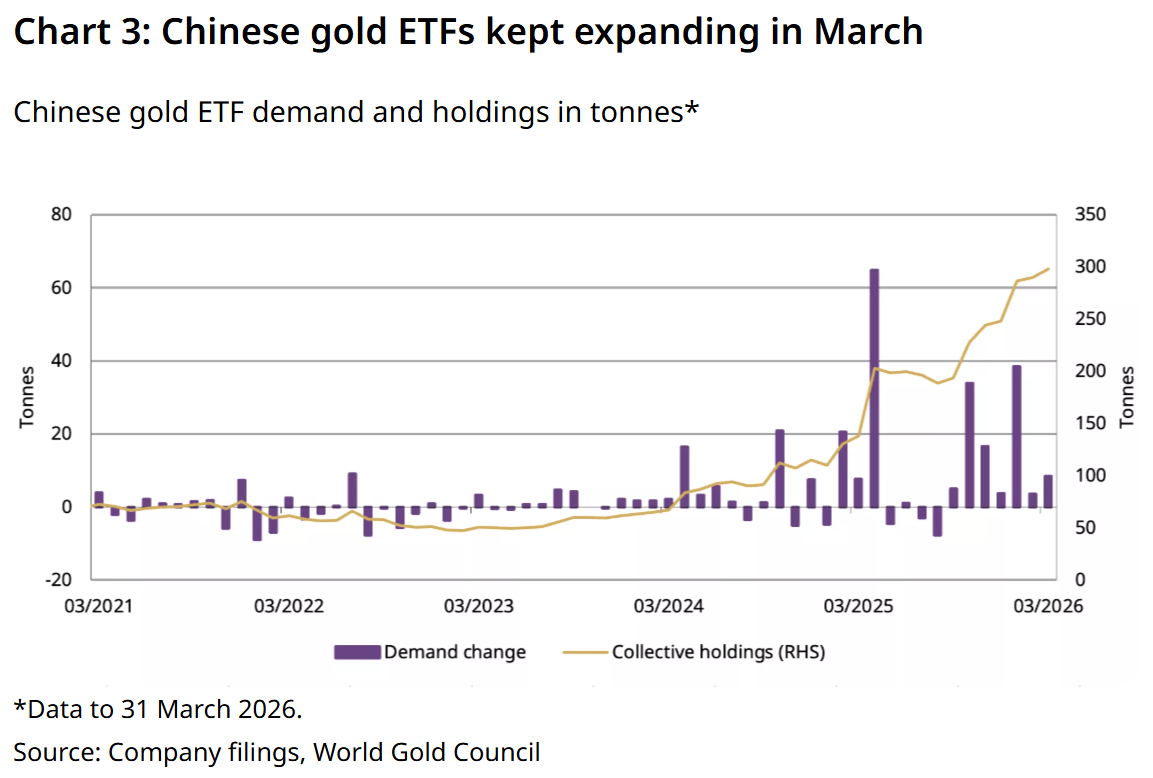
For Q1 as a whole, Chinese investors bought a total of RMB59bn (US$8.5bn, 50t) of gold ETFs, breaking the previous quarter’s all-time record. “This is the strongest quarter ever: Chinese gold ETFs’ total AUM – supported by the price increase and inflows – rose 26% to RMB304bn (US$44bn) and holdings climbed to 298t, both reaching quarter-end peaks,” he said.
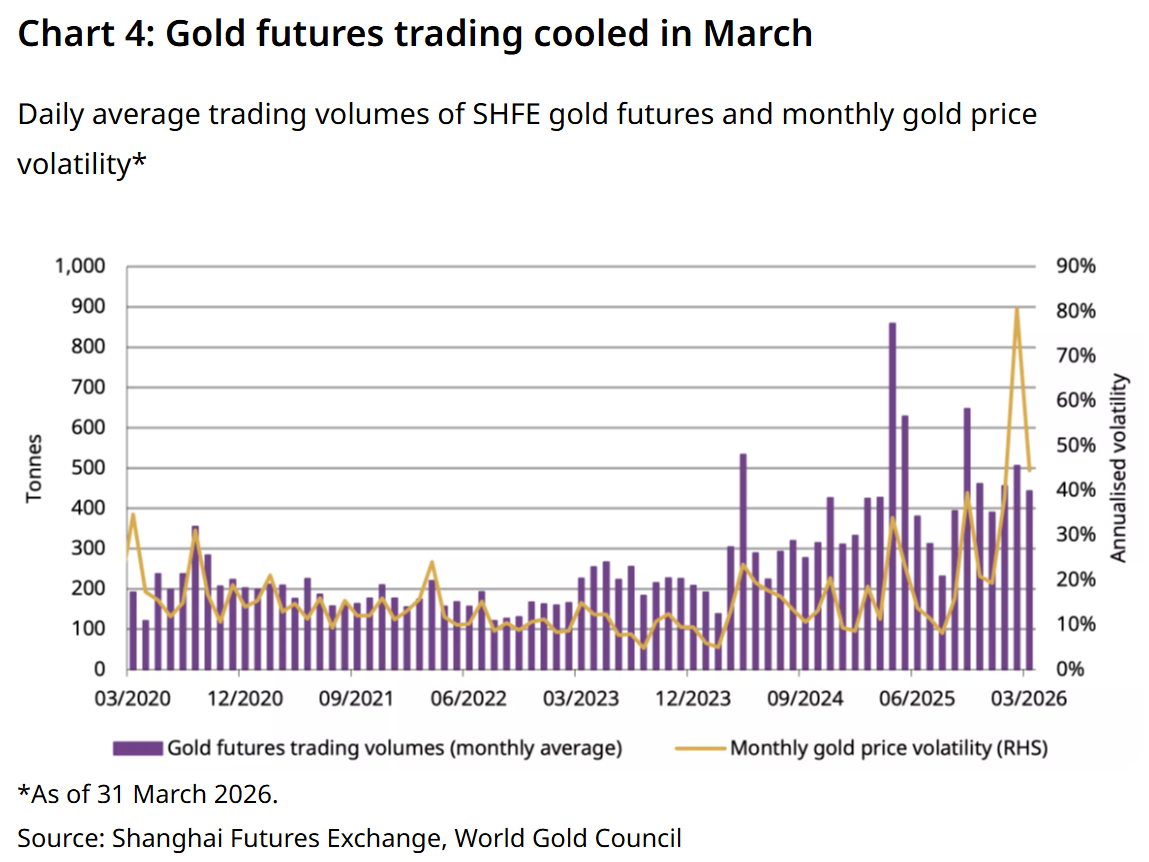
Turning to the futures market, Jia noted that Chinese gold futures trading volumes fell by 12% month over month to an average of 443 tonnes per day in March. “We believe the decline can be largely attributed to lower gold price volatility and a weakening gold price performance, factors that dimmed trader interest,” he said. “Over the course of Q1 gold futures trading at the Shanghai Futures Exchange (SHFE) averaged 468t per day in volumes, well above the five-year average of 265t/day.
Gold’s price decline was also a boon to the People’s Bank of China, with the central bank taking advantage of the discount to stock up.
“The PBoC announced its 17th consecutive monthly gold purchase in March,” Jia wrote. “This 5t addition, the largest since February 2025, pushed China’s official gold holdings to 2,313t.
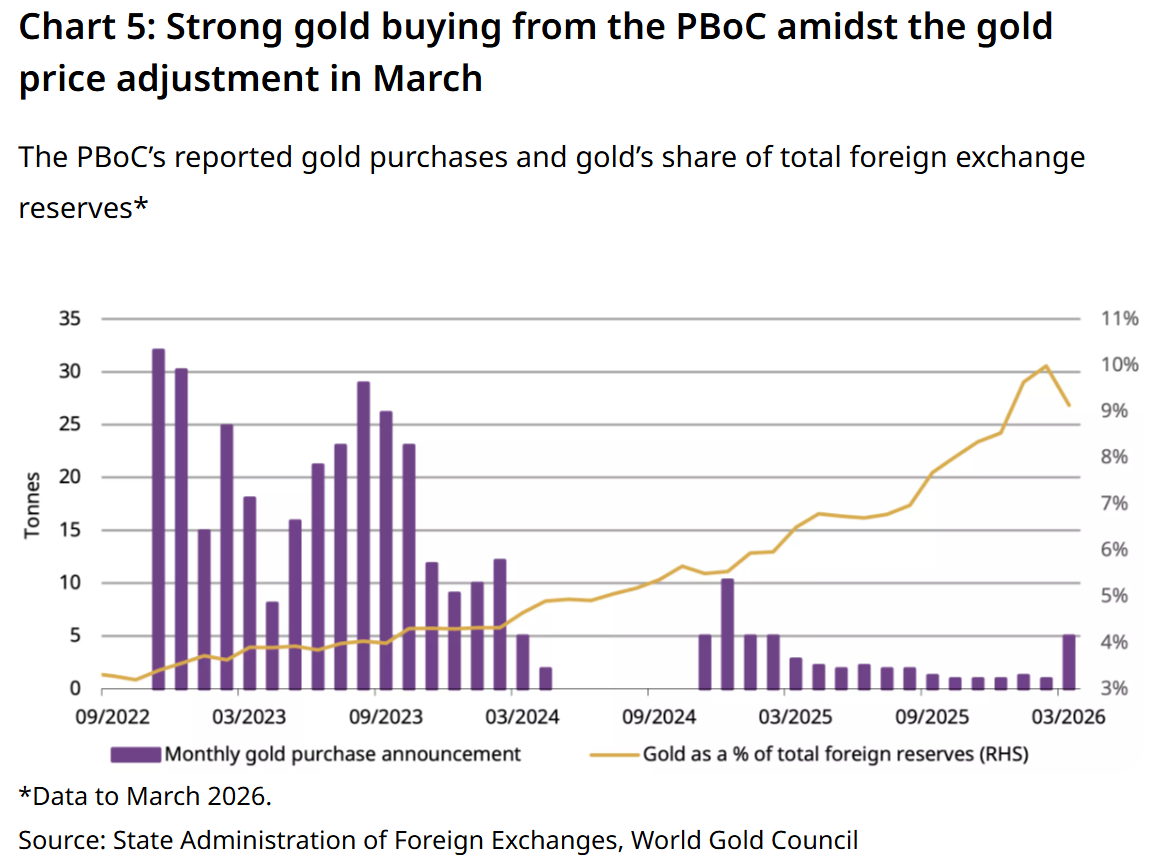
“Gold now accounts for 9% of China’s foreign exchange reserves, down from February’s 10% due mainly to the gold price pullback in March,” he said. “Non-stop buying throughout the quarter has accumulated an additional 7t of gold for the Chinese central bank, the highest since Q1 2025.”
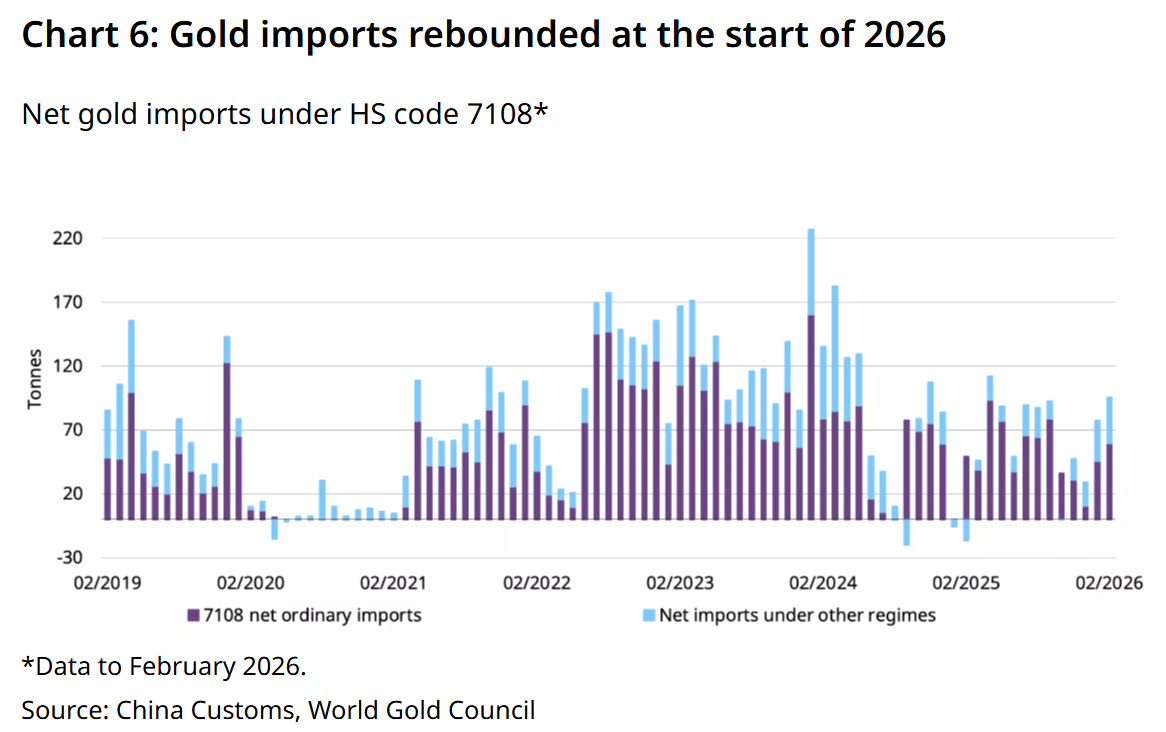
Imports also rose during the early part of the year according to the latest China Customs data.
“January net imports reached 77t, a significant increase compared to the net exports of 6t last year,” Jia noted. “Net imports in February totalled 96t, 63t higher y/y. This robustness was underpinned by resilient demand during the month, and the rebounding local gold price premium also boosted importer interest.
Looking ahead, Jia pointed out that while Q2 is the traditional off season for Chinese jewelry consumption, a boost may come if the gold price stabilizes.
“Investment demand strength may gain support from declining bond yields and the lack of other local investment opportunities – but the gold price trajectory will remain key to investor decisions,” he added. “More detailed Q2 outlook and Q1 review will be included in our Gold Demand Trends report coming up on 29 April.”
