
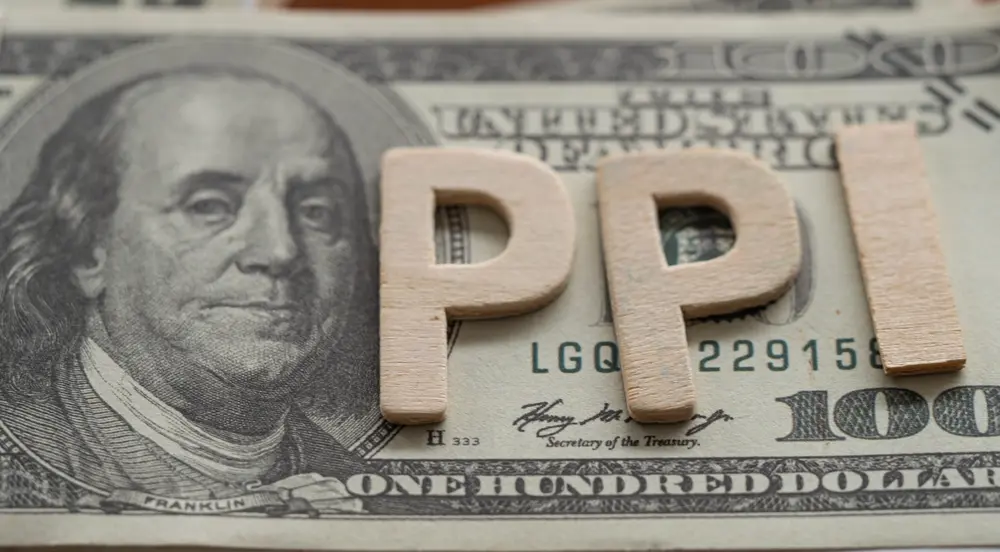
(Kitco News) - The gold market remains stuck and faces further downside pressure because of rising inflation fears after producer prices rose substantially more than expected in April.
The U.S. Labor Department said Wednesday that the headline Producer Price Index jumped 1.4% in April, following March’s increase of 0.7%. The latest inflation data came in significantly hotter than expected, as economists forecasted a 0.5% rise.
On an annual basis, headline wholesale inflation increased 6.0% over the last 12 months, the report said. That marks the largest 12-month advance since December 2022, when prices rose 6.4%.
In a similar trend to consumer prices, higher producer costs are becoming embedded in the broader economy. Core PPI, which excludes volatile food and energy prices, rose 1.0% last month. Core producer inflation also came in well above expectations, as consensus forecasts had called for a 0.3% rise.
For the year, core inflation rose 4.4%, its largest 12-month increase since it jumped 4.5% in February 2023.
PPI is considered a leading inflation indicator because producers often pass higher input costs on to consumers.
Although the gold market is not seeing any significant movement in its initial reaction to the rising inflation numbers, prices have fallen to session lows. Spot gold last traded at $4,679.50, down 0.75% on the day.
Analysts have said that the gold market faces growing near-term headwinds as inflation fears continue to push markets into pricing in more monetary policy tightening. Markets are now pricing in a nearly 40% chance that the Federal Reserve will hike rates by the end of the year.
Higher short-term interest rates will continue to weigh on gold, as its opportunity cost as a non-yielding asset rises.
Naeem Aslam, CIO Zaye Capital Markets, said that the latest PPI numbers will be a hawkish wake-up call for markets.
He added that the data is: “Igniting a powerful USD rally across the board, lifting real yields, and slamming gold with fresh selling pressure, while oil stays pinned lower under the weight of the stronger dollar. Markets are aggressively repricing a ‘higher for longer’ dollar regime right now.”
Although the U.S. economy faces growing inflation pressures, Fawad Razaqzada, Market Analyst at FOREX.com, said that there is an even bigger threat brewing in the marketplace: stagflation.
He explained that higher prices could start weighing on economic activity. He added that inflation is not just exploding higher, but becoming embedded in the broader economy.
“What makes the report even more concerning is the breadth of the inflation pressure. Yes, energy remains the dominant catalyst, driven largely by the earlier oil spike, but this is no longer just an oil story. Services inflation is now accelerating as higher input costs gradually seep into broader areas of the economy. That “pipeline effect” is exactly what investors feared would happen if elevated energy prices persisted long enough,” he said.
