
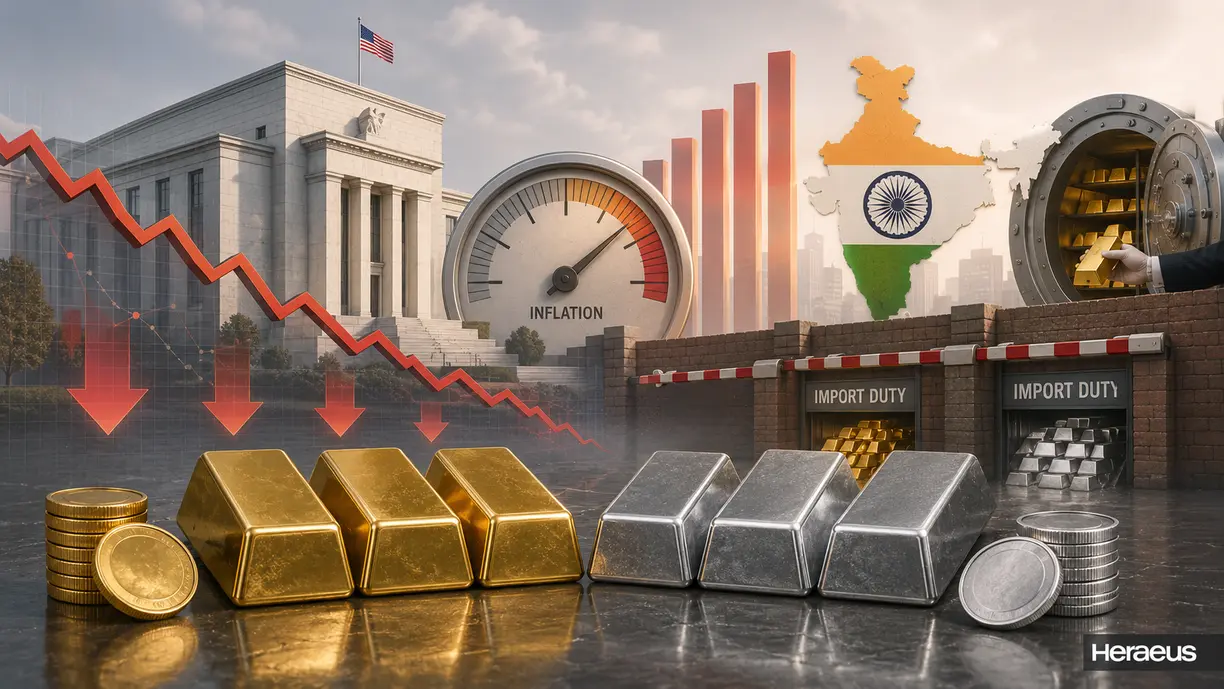
(Kitco News) – Precious metals are continuing to be impacted by rising inflation and shifting rate expectations, while both gold and silver demand are being reshaped by India’s new import tariff regime, according to precious metals analysts at Heraeus.
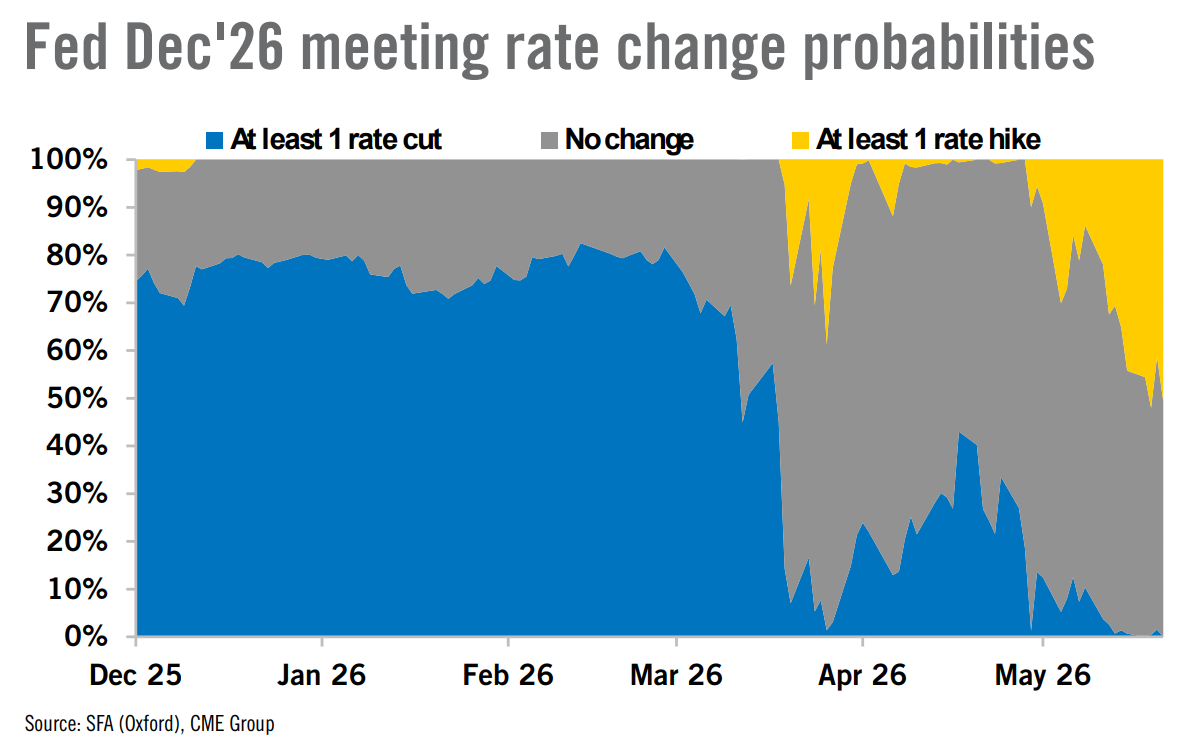
In their latest update, the analysts noted that both U.S. consumer and producer prices continued to rise last month, while the Personal Consumption Expenditures (PCE) index is also expected to climb further above the Fed’s 2% target.
“In response to the conflict in the Middle East and the subsequent price rises, the market has flipped from expecting 1-2 rate cuts in 2026 to now expecting 1 rate hike,” they wrote. “Meanwhile, the language and positioning of the Fed remain unchanged. With Kevin Warsh confirmed to take up the chairmanship by the meeting on 17 June, his options remain narrow.”
The analysts also looked at the impacts of the Indian government’s recent decision to raise import duties on gold and silver to 15% from 6% as of May 13.
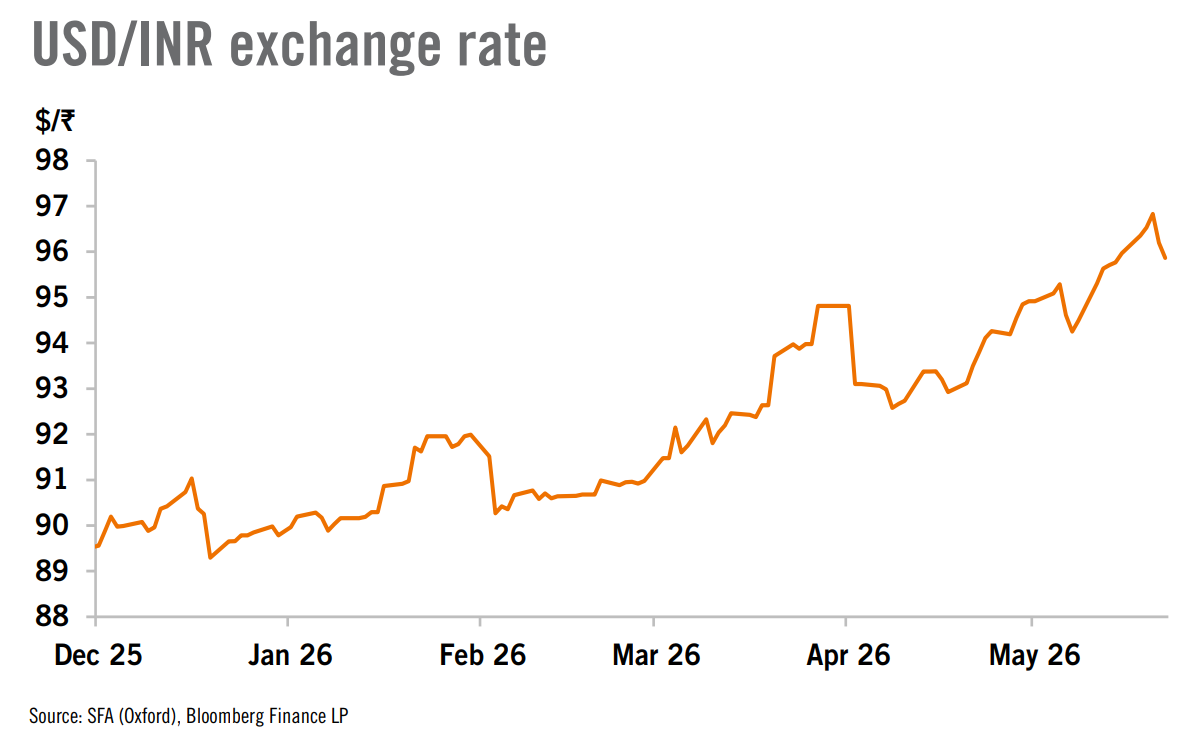
“India imports large amounts of oil, gold and silver. When commodity prices rise, the rupee can come under pressure,” they said. “Historically, India has moved to shore up its currency by increasing taxes on imports to disincentivise them and improve its balance of payments.”
“Following this announcement, many Indian bullion investors have sold into the market,” they noted. “This profit-taking led to discounts of approximately $200/oz over official domestic prices on 14 May. Indian banks had only just restarted importing gold and silver after agreeing to pay the 3% Integrated Goods and Services Tax. This follows a month-long pause on shipments which, combined with the increased duties on 13 May, could reduce India’s gold and silver imports for Q2’26 significantly.”
“India imported 0.66 moz of gold in April, down 47% from the 5-year monthly average of 1.25 moz,” they added.
Conversely, the analysts wrote that central bank gold buying is now expected to accelerate, with Goldman Sachs revising its nowcast of central bank purchases up to 60 tonnes per month for 2026.
“The revision comes as the bank updated its methodology to take account of gaps in official trade data,” they wrote. “This comes after a previous revision from 29 tonnes per month to 50 tonnes per month in March and is supported by continued diversification demand amid geopolitical uncertainty.”
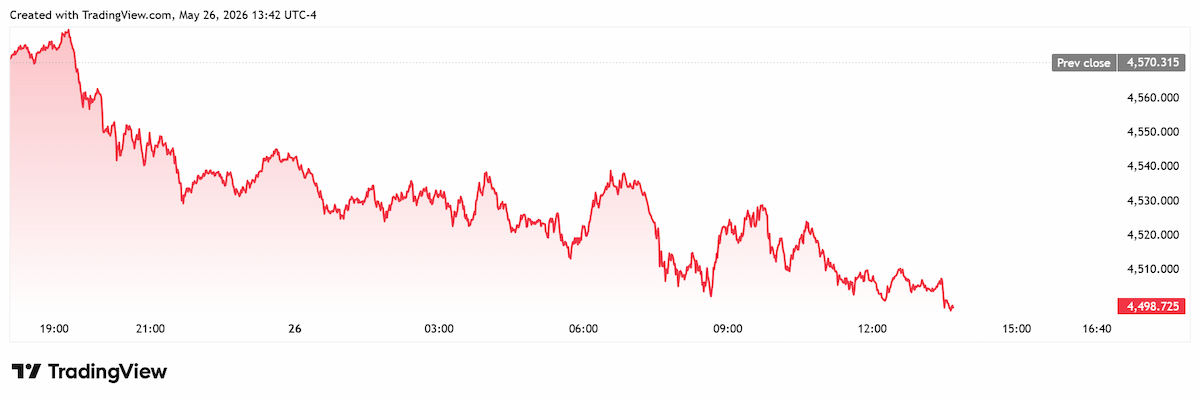
Spot gold has continued its decline on Monday as it tests near-term support at $4,500, last trading at $4,498.72 for a loss of 1.57% on the session.
Turning to silver, Heraeus analysts noted that the gray metal is also caught up in India’s tariff tumult, with import duties increased dramatically to help shore up the country’s currency.
“The Indian government has placed imports of silver bars of 999 fineness and other semi-manufactured forms under the restricted category,” they said. “These two categories account for around 90% of India’s silver imports. The Directorate General of Foreign Trade shifted imports of silver from ‘free’ to ‘restricted’. This is intended to close a loophole in which traders were declaring precious metals as jewellery to avoid the higher import duties on raw gold and silver.”
“Lower Indian demand for silver could put downward pressure on global prices,” they warned. “Indian imports totalled 210 moz in 2025, accounting for roughly 18% of global silver demand.”
Silver prices have slid alongside gold on Monday, hitting a low of $75.493 shortly before 9 a.m. ET.
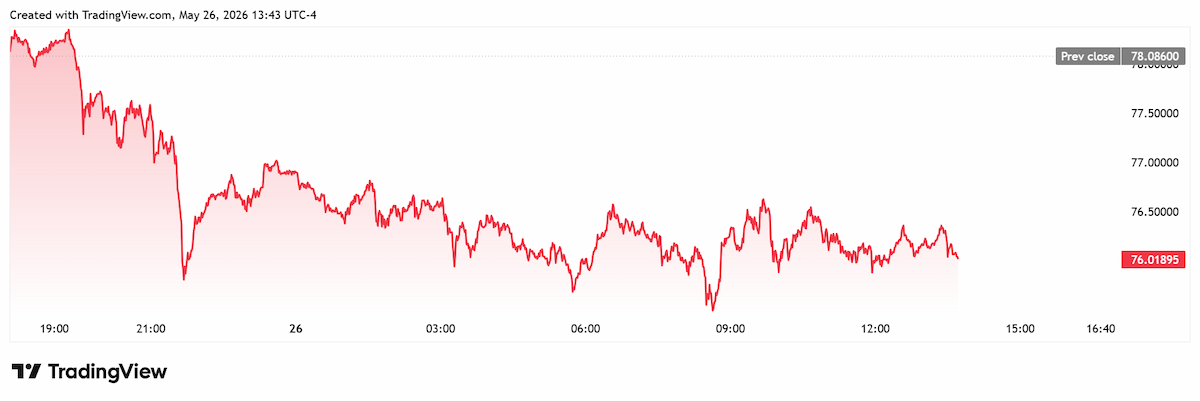
Spot silver last traded at $76.010 per ounce for a loss of 2.66% on the daily chart.
