
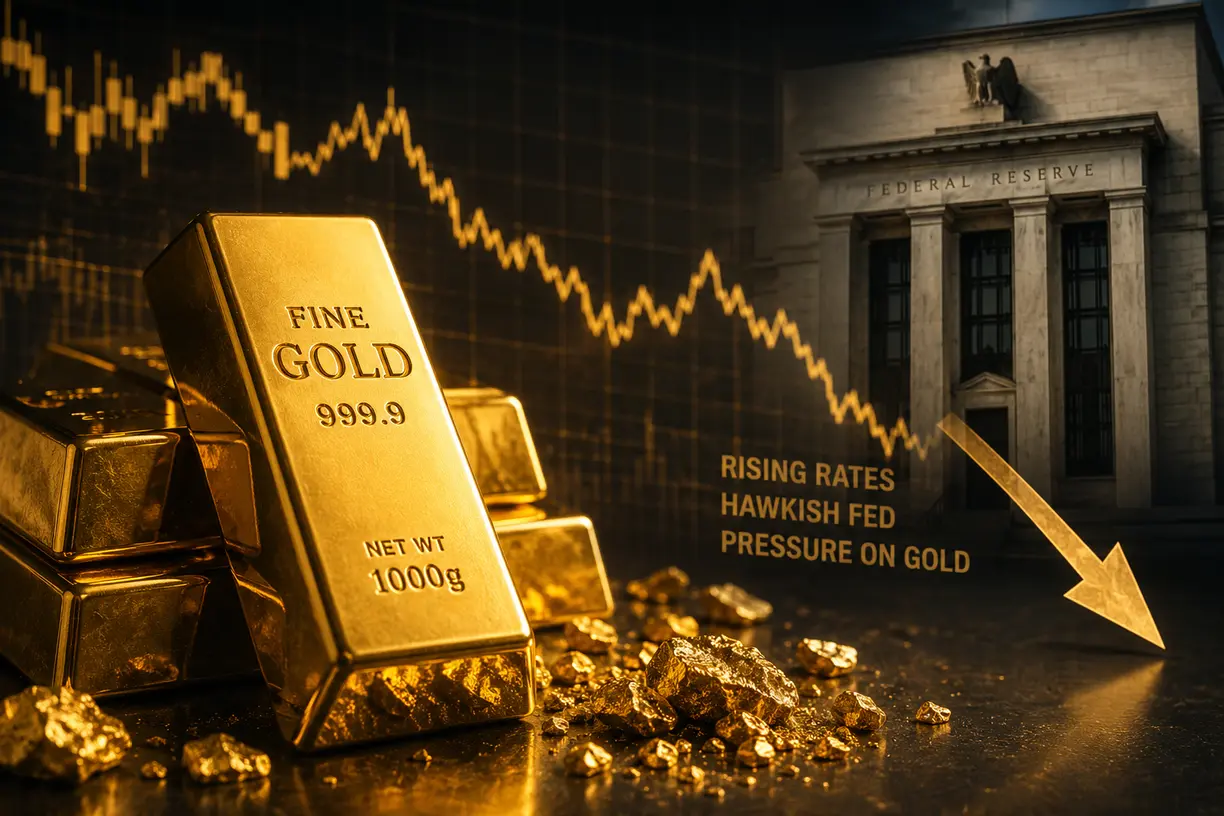
(Kitco News) - Gold prices continue to trade near their lows for the year as the Federal Reserve’s new hawkish bias takes its toll on the market, with another bank lowering its year-end price forecast.
In its third-quarter commodity outlook report, BMO Capital Markets said it sees gold prices averaging around $4,625 an ounce in the second half of the year, down 5% from its previous forecast. “Although we still see scope for spot prices to recover should lower oil prices be sustained, supporting a rebound in emerging market demand,” the analysts added.
While gold could continue to struggle through the rest of the year, BMO is not giving up on the precious metal. The analysts are maintaining their outlook for prices to push back above $5,000 in the first quarter of 2027, with prices projected to average around $4,200 through the second and third quarters of next year.
“While near-term sentiment may remain tied to macro volatility and geopolitical developments, we believe the sector is positioned to regain momentum as conditions stabilize,” the analysts said. “Risks remain around a prolonged escalation in the Middle East, particularly any disruption to energy supply and read-throughs to inflation and interest rates.”
The Canadian bank has also downgraded its short-term outlook for silver, now expecting prices to average around $69 an ounce during the third quarter. Meanwhile, the bank sees a modest recovery in the final quarter of the year, with prices averaging around $71 an ounce.
BMO sees silver continuing to recover through early 2027, with prices peaking in the second quarter and averaging around $74.80 an ounce.
“Silver continues to benefit from its industrial exposure, with underlying demand supported by ongoing investment in power infrastructure and electrification,” the analysts said. “The market will likely continue to focus on macro drivers, including rates and geopolitical risk, along with the durability of industrial demand.”
BMO noted that the biggest immediate threat to gold and silver prices remains U.S. monetary policy as markets start to aggressively price in rate hikes before the end of the year.
Although the Federal Reserve left interest rates unchanged during its latest monetary policy meeting, the central bank signaled support for at least one rate hike this year as the war in Iran has driven energy prices higher, stoking inflation fears. Federal Reserve Chair Kevin Warsh also emphasized his focus on price stability.
“The Fed’s message triggered waves of repositioning in markets, with two-year Treasury yields shooting up 13 basis points, the biggest jump since April 2025, and the market solidifying expectations for a quarter-point rate hike by October. Our economics team now pencils in quarter-point rate cuts for September and December 2027, nine months later than in our previous scenario,” the analysts said. “For now, rate cuts are a distant prospect, with many economies indeed hiking, all else being equal, acting as a dampening macro factor for metals.”
Despite short-term risks, BMO said that gold continues to benefit from a new era of demand drivers linked to the overarching de-dollarization theme.
“‘Geopolitical de-dollarisation’ is driven by entities being incentivised to cut U.S. dollar exposure due to threats of sanctions or to reduce dependence on the U.S. dollar trading system, with gold purchases frequently being an important step,” the analysts said. “Conversely, ‘hedging de-dollarisation’ is driven by the growing threat of monetary debasement, which comes from growing sovereign debt.”
