
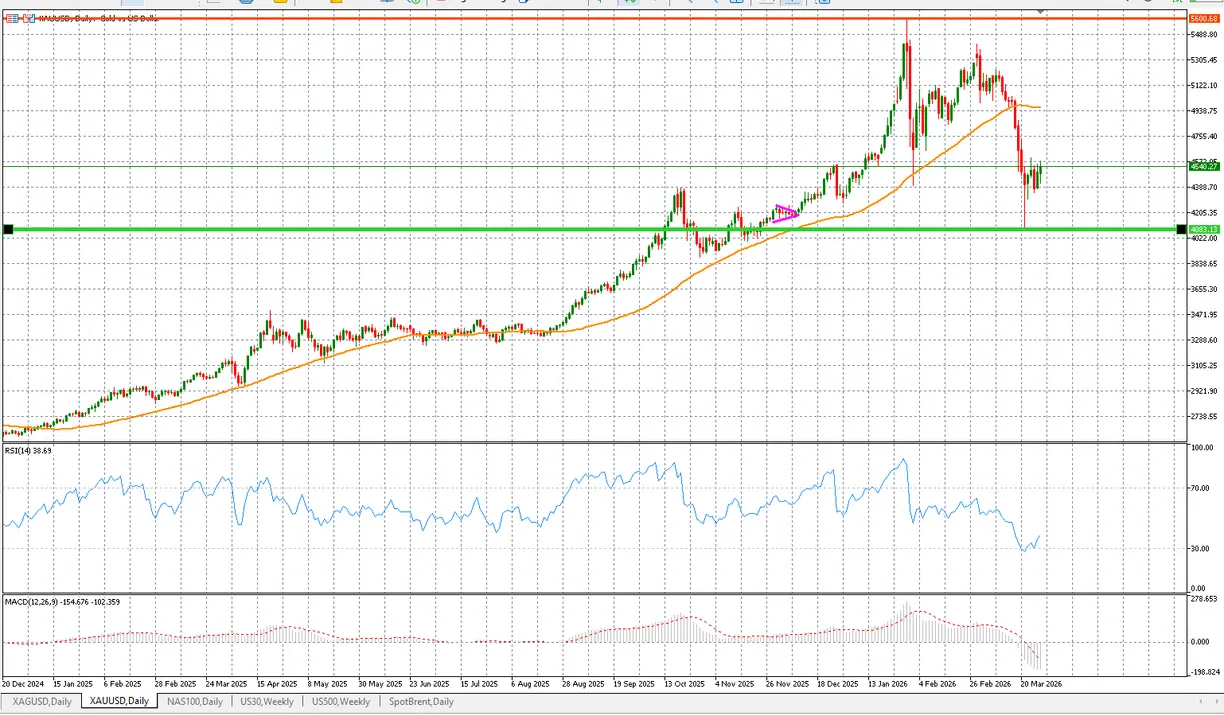
Gold prices are attempting to stabilise after a volatile period, with spot prices holding in the mid-$4,500 to $4,600 range following a sharp correction from January’s record highs near $5,600. Rather than signalling a breakdown in the broader trend, the recent price action reflects a market recalibrating as inflation risks, interest-rate expectations, and geopolitical tensions collide in increasingly complex ways.
The metal is no longer reacting in a linear fashion to traditional safe-haven triggers. Instead, gold is navigating a more nuanced environment where inflation shocks and policy uncertainty are competing for dominance.
From safe-haven surge to inflation shock
The escalation of tensions involving Iran initially triggered a classic safe-haven response, pushing gold sharply higher earlier in the year. However, as the conflict intensified and energy markets tightened, the narrative shifted.
Oil prices surged amid supply concerns linked to critical shipping routes, raising fears of sustained inflation pressures across the global economy. This shift has altered gold’s trajectory. Rather than benefiting unambiguously from geopolitical stress, the metal has faced intermittent headwinds as rising inflation expectations pushed bond yields higher and strengthened the U.S. dollar.
In effect, the market transitioned from a “flight to safety” toward a “flight to inflation pricing,” where energy and yield-sensitive assets temporarily gained relative strength.
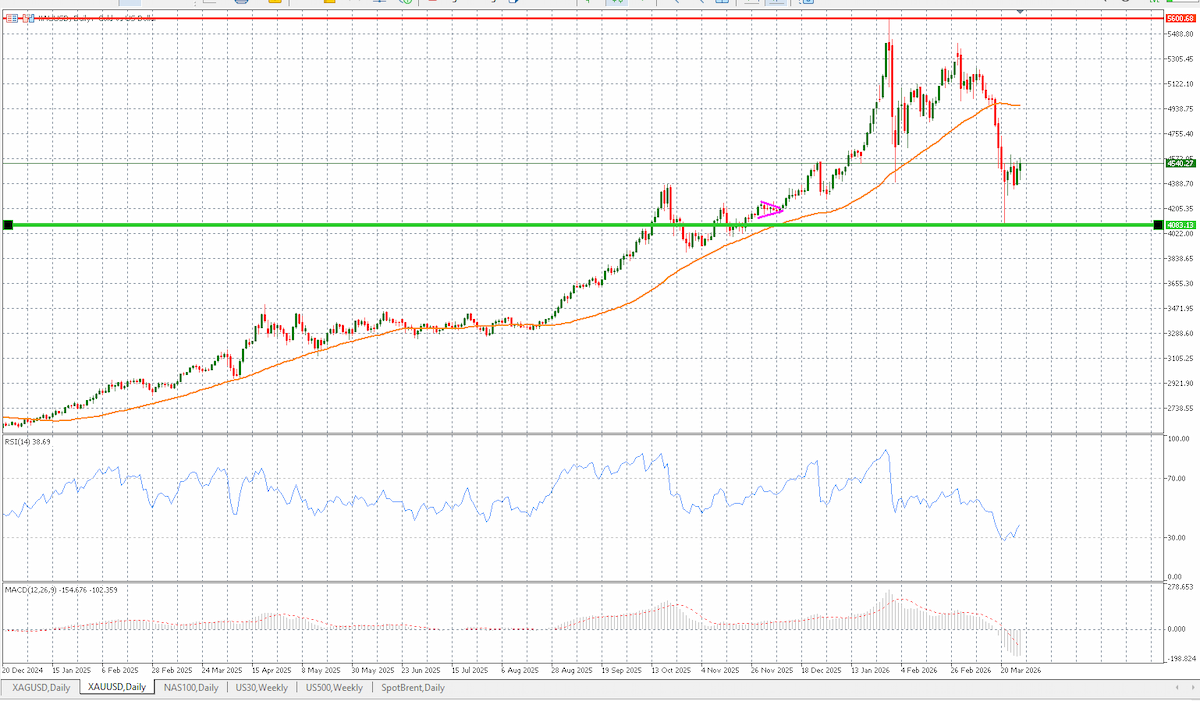 Gold price chart by Exness
Stabilisation reflects shifting expectations
The recent stabilisation in gold suggests that markets are reassessing the balance between inflation and growth risks. While elevated energy prices continue to signal inflationary pressure, there are growing concerns that such conditions could eventually weigh on economic activity.
This introduces a more complex macro backdrop—one where inflation remains elevated while growth begins to soften. Historically, such an environment has been supportive for gold, particularly if central banks are forced to navigate between containing inflation and supporting economic stability.
Price action indicates that aggressive liquidation has subsided, with gold finding a footing as markets transition from reactive positioning toward more strategic allocation.
Policy uncertainty returns to the forefront
Interest-rate expectations remain central to gold’s trajectory. The recent surge in inflation concerns had prompted markets to question the pace and scale of future rate cuts, creating a temporary headwind for bullion.
However, as volatility persists and growth risks re-emerge, the policy outlook is becoming increasingly uncertain. This ambiguity is a key support factor for gold. The metal tends to perform best in environments where policy direction is unclear and confidence in forward guidance weakens.
At the same time, geopolitical developments continue to inject uncertainty into the system. Ongoing tensions, shifting alliances, and concerns around trade and supply chains ensure that risk premiums remain embedded across markets.
Cross-market signals point to recalibration
Broader market movements reinforce the idea that gold is undergoing a recalibration rather than a reversal. The earlier decline in gold coincided with rising yields and stronger energy markets, while recent stability suggests those pressures are beginning to moderate.
Importantly, gold is no longer trading purely as a defensive asset. It is increasingly behaving as a broader macro instrument—sensitive to liquidity conditions, real yields, and systemic risks simultaneously.
Final word
Gold’s current stabilisation marks a transition phase rather than an endpoint. The metal is adjusting to an environment where geopolitical shocks, inflation dynamics, and monetary policy no longer produce straightforward market reactions.
As long as energy-driven inflation remains elevated and policy clarity remains limited, gold is likely to stay supported despite ongoing volatility. The recent correction appears less like a structural breakdown and more like a reset—one that reinforces gold’s role as a long-term anchor in an increasingly complex and inflation-sensitive global landscape.