
(Kitco Commentary) - Strengths
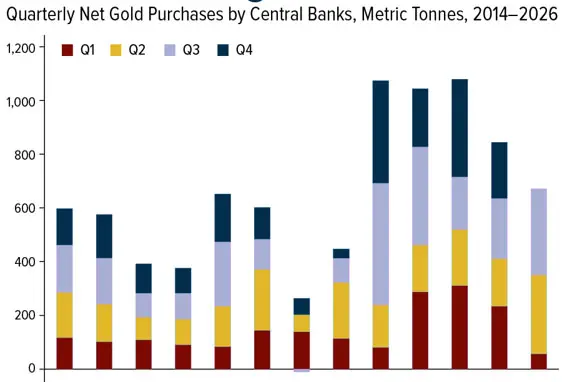
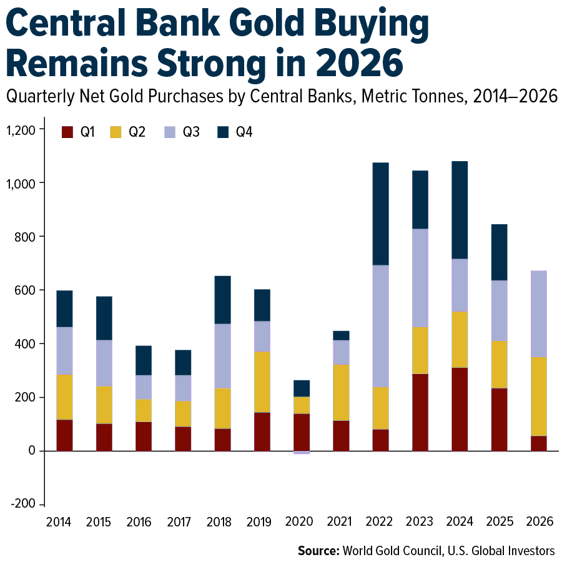
- The best-performing precious metal for the week was platinum, up 6.66%, outpacing palladium as global platinum inventories remain tight. According to the World Gold Council, central banks purchased a net 321 metric tons of gold in the third quarter of 2026, a 42% increase year-over-year and the highest quarterly total since late 2024. Year-to-date purchases reached 675 tons, up 6% from the same period last year. China and Poland led reported purchases, adding 63 and 40 tons, respectively, during the quarter. The sustained accumulation highlights gold's strategic importance for reserve diversification and risk management, providing underlying support for demand despite elevated prices and recent market volatility.
- Gold surged 3.4% following the Democratic Party's sweep of both chambers of Congress in the U.S. midterm elections, marking its largest single-day gain since August, according to Bloomberg. Investors anticipated greater political gridlock, pushing Treasury yields lower and weakening the U.S. dollar by as much as 0.6%. Bullion subsequently climbed toward $4,140 an ounce and was on track for a weekly gain of more than 5%, its strongest since August. However, gold later pared its gains on Friday, falling toward $4,078 as some investors sold bullion to cover equity losses, highlighting the fragility of the post-election rally.
- Wheaton Precious Metals reported strong third-quarter revenue growth, with revenue reaching $771.7 million, up 62% from $476.3 million a year earlier, as higher gold prices helped offset lower gold production. According to Bloomberg Intelligence, fourth-quarter EBITDA could increase 25% to approximately $795 million as previously produced metal is delivered and sold. Full-year production is projected at approximately 257,000 gold-equivalent ounces, slightly above the midpoint of guidance, highlighting the company's ability to generate strong financial results despite fluctuations in precious metals production.
Weaknesses
- The worst-performing precious metal for the week was palladium, although it was still up 3.47%. Hedge funds reduced their net bullish gold positions by 1,281 contracts to 107,404 in the week ended October 27, the lowest level in 20 weeks, according to Commodity Futures Trading Commission data. Long-only positions declined to 124,352, their lowest level in more than five months, while short positions increased by 1,157 contracts to 16,948. The shift in speculative positioning reflects weakening investor confidence and growing caution about the near-term outlook for gold prices.
- Gold-backed exchange-traded funds recorded a fourth consecutive session of outflows, shedding another 34,200 troy ounces, equivalent to approximately $138.9 million, according to Bloomberg. Total holdings declined to 100.8 million ounces, their lowest level since September 25. Despite the recent withdrawals, ETF gold holdings remained 1.9% higher year-to-date, reflecting net purchases of approximately 1.87 million ounces. The persistent short-term outflows suggest cautious investor positioning, even as bullion recovered following the U.S. midterm elections.
- AngloGold Ashanti reported third-quarter gold production of 696,000 ounces, down approximately 9.4% from 768,000 ounces a year earlier, as lower ore grades weighed on output at its Sukari mine. Despite the production decline, adjusted EBITDA increased 12% year-over-year to $1.57 billion, supported by a higher average realized gold price of $4,239 an ounce. The company reaffirmed its full-year 2026 production guidance of 2.8 million to 3.17 million ounces, highlighting the operational challenges facing miners even as elevated gold prices support profitability.
Opportunities
- Gold Fields and Windfall Mining Group received Quebec's environmental Certificate of Authorization on October 30 for the high-grade Windfall underground gold project. The mine is expected to produce approximately 300,000 ounces of gold annually once it reaches full production, while underground development activities, suspended since late August, are expected to resume shortly. Gold Fields is targeting a final investment decision by February 2027, subject to board approval, marking an important step toward expanding its future gold production capacity.
- Northern Star Resources received environmental approval for its Hemi gold project in Western Australia's Pilbara region, clearing a major regulatory milestone for the proposed development. The open-pit operation could include up to six mining pits and a large processing facility, supporting the company's longer-term production growth ambitions. Northern Star expects to make a final investment decision by July 2027, positioning Hemi as a potential contributor to future gold supply.
- Mayfair Gold's Fenn-Gibb gold project in northern Ontario has been selected to participate in the province's "One Project, One Process" initiative, which aims to reduce mining permit timelines by 50%. The accelerated approval framework could help shorten development schedules, reduce regulatory uncertainty and improve the economics of future mining investments. The initiative represents a potential catalyst for advancing new Canadian gold projects and expanding domestic production capacity.
Threats
- Gold's outlook remains vulnerable to shifts in U.S. monetary policy expectations and Treasury yields, even after its recent post-election recovery. According to Bloomberg, the metal's relationship with 10-year U.S. real yields has weakened considerably since 2022, with the R-squared declining from approximately 86% during 1998–2021 to 23% in the more recent period. Although lower yields and a weaker dollar have supported bullion's latest rally, renewed upward pressure on interest rates could increase the opportunity cost of holding non-yielding gold and potentially weigh on investor demand.
- Global silver demand is expected to remain subdued through 2030 as elevated prices accelerate efforts to reduce silver consumption in solar technologies and discourage jewelry purchases, according to Bloomberg Intelligence. Industrial demand is projected to decline in 2026 before stabilizing in 2027, while weaker jewelry consumption, particularly in India, remains a significant headwind. Although data centers, automotive electrification and electricity grid investment provide some support, these sources of demand may be insufficient to offset broader structural weakness.
- Goldman Sachs lowered its year-end 2026 gold price forecast to $4,150 an ounce from $4,650, a reduction of approximately 11%, citing the Federal Reserve's increasingly hawkish stance and its impact on investor positioning. The bank also reduced its year-end 2027 target to $4,800 from $5,400, reflecting concerns that tighter monetary conditions could weigh on bullion demand. Despite maintaining a constructive longer-term outlook supported by central bank purchases, the downward revisions highlight the risk that higher interest rates and shifting investor expectations could limit gold's near-term upside.
