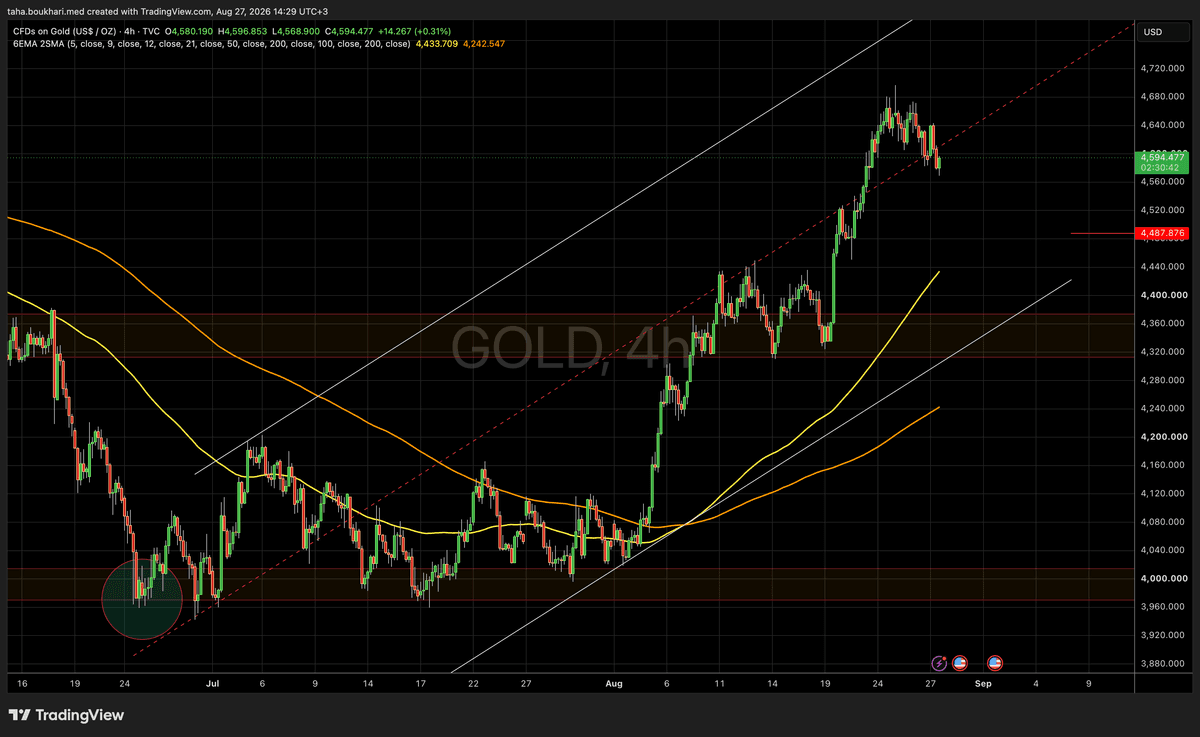
Gold experienced a strong reversal in August, taking prices higher and back toward levels last seen in May. The reversal had been building through almost two months of price accumulation around the $4,000 support area. Its strength was also supported by important fundamental shifts that encouraged market participants to return to gold following the sharp selloff that started earlier this year.
A rebound in inflation expectations and realised inflation, led largely by the surge in energy prices, had previously changed the outlook for Federal Reserve policy following the military developments in the Middle East and the disruption around the Strait of Hormuz. Markets moved away from expectations for rate cuts and started pricing the possibility of renewed rate hikes as the first inflation data reflected the impact of higher energy prices. More recently, periods of de-escalation and the gradual recovery of activity around the Strait of Hormuz helped energy prices cool from their peaks, while recent CPI and PPI readings also showed some moderation in inflation pressure. However, PCE inflation remains sticky, keeping investors uncertain about the inflation path and the direction of Federal Reserve policy through the remainder of this year and into next year.
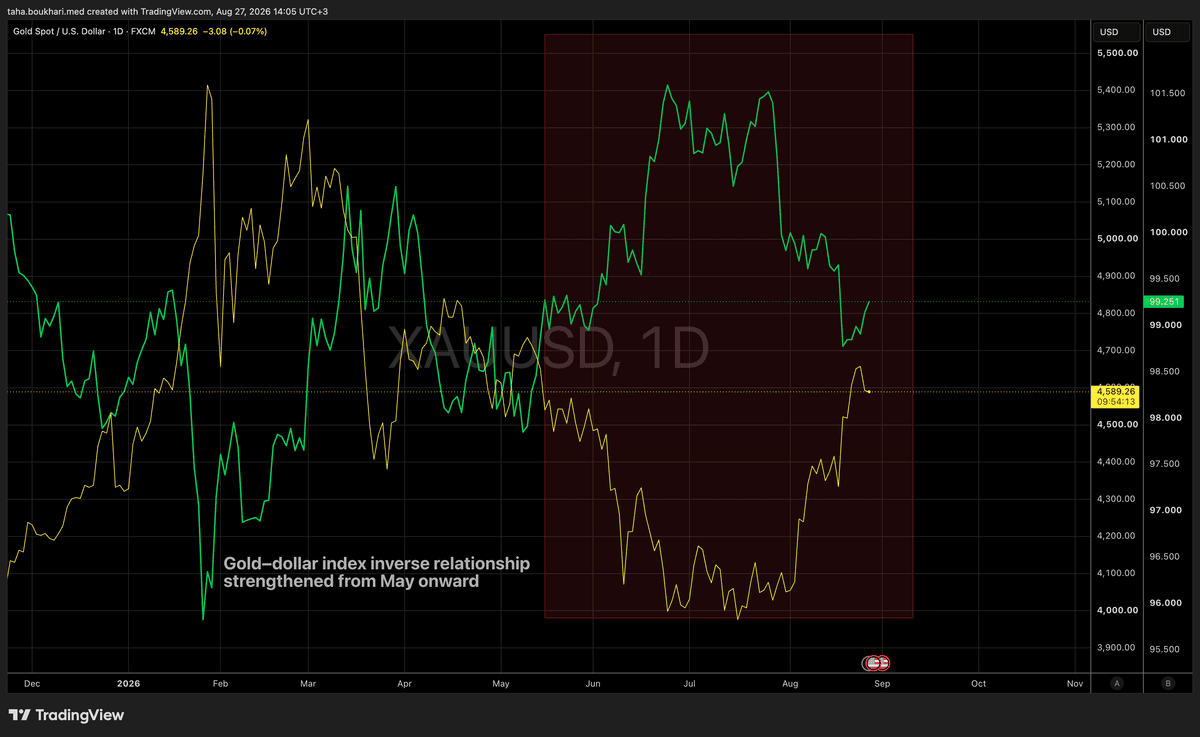
The possibility of another rate hike therefore remains uncertain but has not disappeared. This was clear at the latest Federal Reserve meeting, where rates were kept unchanged but three members voted in favour of a 25-basis-point rate increase. The earlier repricing toward higher interest rates was negative for gold, as stronger rate expectations pushed the dollar and U.S. yields higher and increased the opportunity cost of holding the non-yielding metal. Gold consequently lost more than 25% of its value from its peak before beginning the latest reversal.
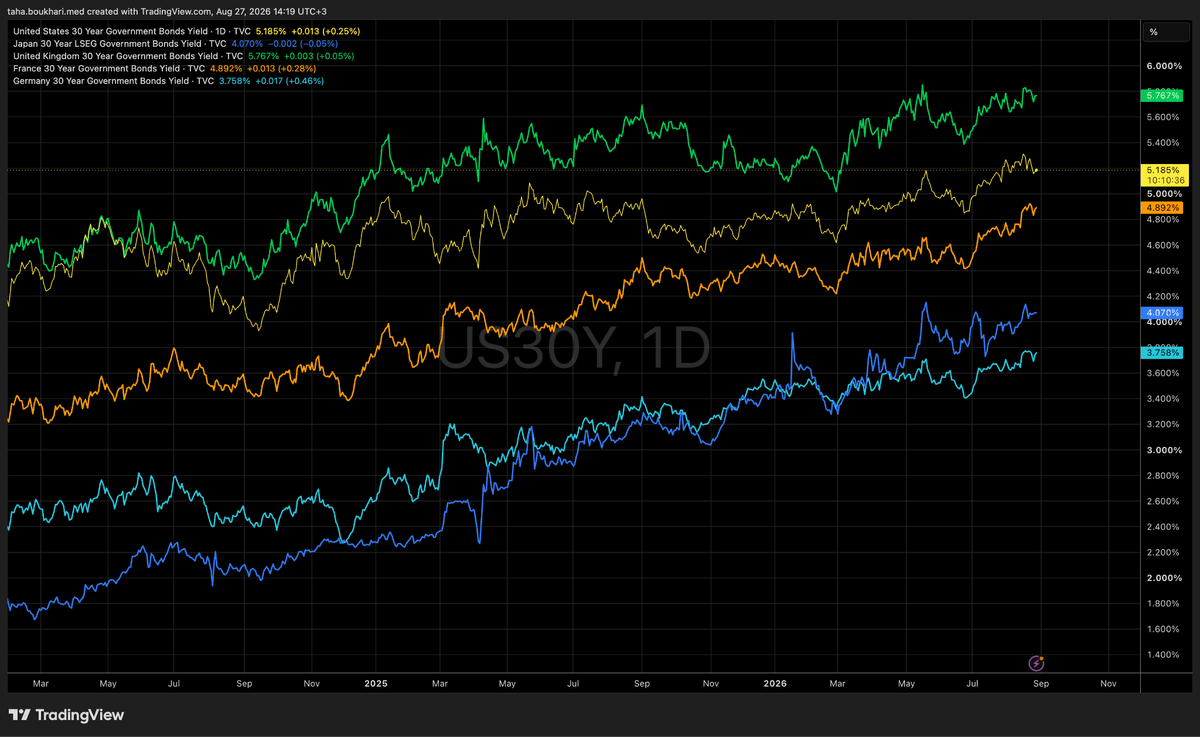
Pressure from the Treasury market has added another important dimension to the outlook. Long-term U.S. Treasury yields climbed to their highest levels in almost two decades, with the 30-year yield reaching its highest level since 2007. Investors have increasingly demanded higher yields, or a larger term premium, to hold long-dated U.S. government debt as concerns around fiscal sustainability and future financing requirements have increased. U.S. federal debt has crossed $40 trillion, while large financing needs from AI-related investment and major corporations are also competing with government borrowing for investor capital. These factors have weighed on the Treasury market and contributed to pressure on the U.S. dollar.
The rise in long-term yields eventually led the U.S. Treasury to expand some of its long-duration bond-buyback operations in an effort to support market functioning. Although the size of these operations remains limited compared with the overall Treasury market, the move was important because it showed that the increase in long-term borrowing costs had become significant enough to trigger a policy response. Together with growing concerns around U.S. debt and fiscal credibility, this helped gold recover part of its traditional role as a hedge and diversification asset in what can increasingly be described as a debasement trade.
The challenges in bond markets are also not limited to the United States. Similar pressure has appeared across several other major developed economies, including France, the United Kingdom, Germany and Japan, where long-term government bond yields have moved toward multi-year or multi-decade highs. The drivers are not identical in every country, but rising government financing needs, fiscal deficits, larger debt issuance and country-specific political and economic pressures have all contributed to investors demanding greater compensation for holding long-duration sovereign debt. This broader repricing across developed bond markets provides another potential source of support for gold as investors look for diversification outside traditional sovereign assets.
Demand for gold has also remained significant. Central banks purchased approximately 289 tonnes during the second quarter, up 62% year-on-year and representing a record level for a second quarter. This marked a strong rebound from the weaker first quarter and kept the longer-term trend of reserve diversification supportive for gold, with China among the central banks continuing to increase their holdings. Official-sector demand has been an important factor behind gold's strength in recent years and is likely to remain a significant source of support as central banks continue diversifying their reserve portfolios.
Taken together, these developments increase the possibility that gold is entering a renewed bullish cycle supported by more than a temporary change in interest-rate expectations. One of the most important longer-term developments is the deterioration in fiscal conditions across several developed economies, combined with growing financing requirements and increasing term premia in sovereign bond markets. If these pressures continue, demand for gold as a diversification and hedging asset could remain strong.
The Federal Reserve is facing its own difficult conditions. U.S. growth slowed to an annualised 1.5% in the second quarter from 2.1% in the first quarter, while the labour market has softened and inflation remains persistent. This makes another rate hike possible but increasingly difficult, as additional tightening could put further pressure on the economy, increase government financing costs and create additional stress in interest-rate-sensitive sectors such as housing.
The outlook therefore remains supportive for gold, but the behaviour of yields and the dollar will remain critical. A renewed rise in real yields accompanied by a stronger dollar would remain a significant headwind for the metal. On the other hand, if higher long-term yields increasingly reflect fiscal pressure and rising term premia rather than stronger economic conditions, while governments become more concerned about their financing costs, gold's role as a hedge and diversification asset could become increasingly important.
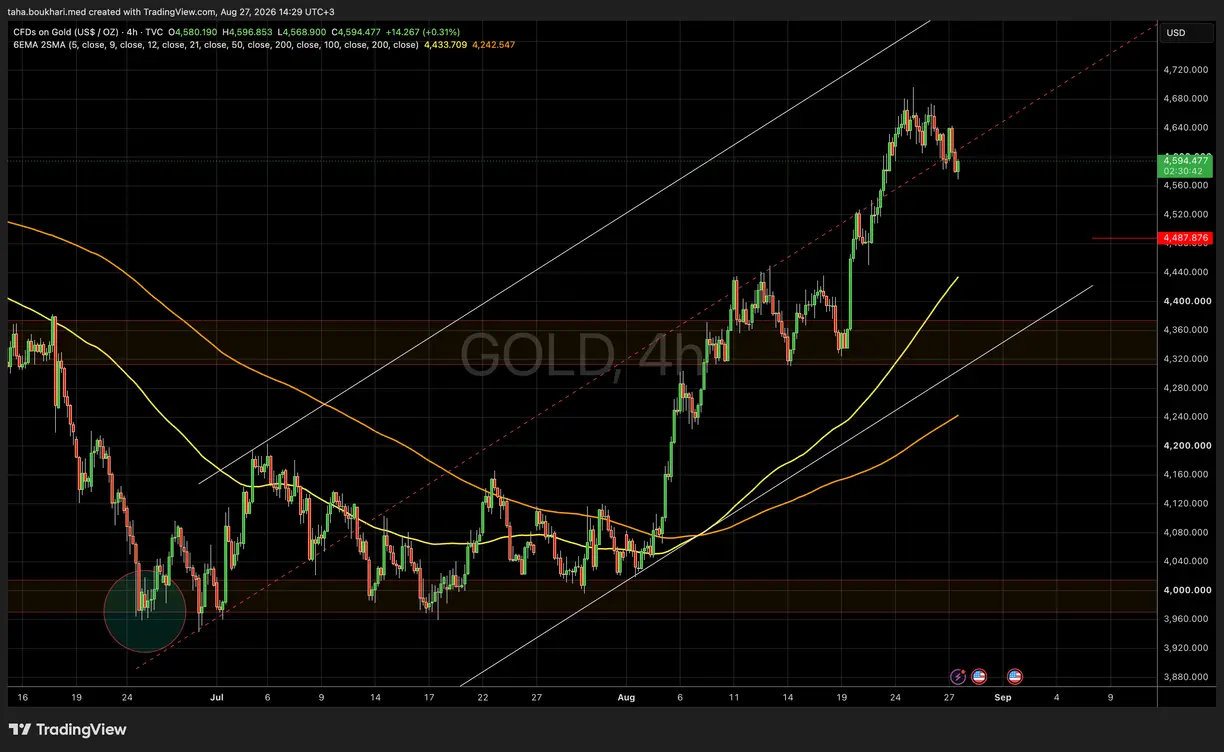
The technical structure shows a pause in momentum around the $4,650–$4,700 resistance area, followed by a modest correction after the strong August advance. Sticky PCE inflation this week kept the possibility of another Federal Reserve rate hike materially priced, while attention now turns to Fed Chair Kevin Warsh’s Jackson Hole speech on Friday for further signals on the monetary-policy outlook.
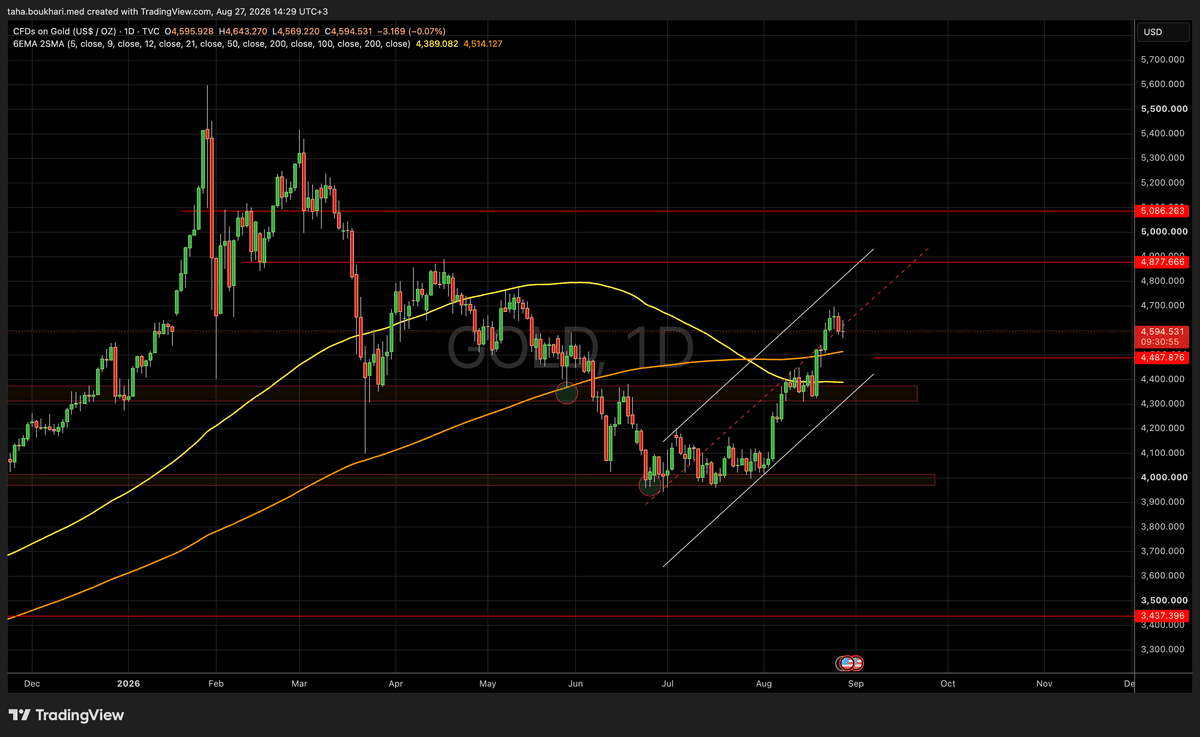
A deeper correction could take gold toward the $4,500 area, where the 200-day moving average could provide an important support zone. On the other hand, if Warsh signals greater patience toward further rate hikes, this could support another recovery in gold. In the case of a renewed move higher, the next important resistance areas stand around $4,870, followed by $5,080.