


Gold and silver traded relatively flat on the day, with gold futures posting a fractional decline of 0.11% while silver futures gained a moderate 1.14%. The metals are reacting to the same drivers behind last Monday’s massive drop, when gold fell $172 and silver lost $3.60. It is the same mechanics as last Monday, only this time the sentiment has reversed.
Last Monday, markets reacted strongly to the rejection of Iran’s offer and the apparent disconnect between Iran’s demands for reopening the Strait of Hormuz and the terms the US will actually accept. That raised concerns of higher energy prices for the foreseeable future, likely leading to elevated inflation for longer, and futures traders responded by putting the chances of a second consecutive 0.25% hike of the fed funds rate in October at 70.9%.
Throughout last week that number fell consistently, returning to levels close to where it sat one month ago (15.8%), and it is now pegged at a 22.7% chance of a hike this month. The reversal comes mainly from the supply side. Reports of undisclosed tankers already traversing the Strait, along with the “east-west” pipeline returning to full operational capacity, calmed fears of US oil spiking above $100 a barrel again and brought the odds of a hike back to where they had been for most of the month. The supply side has also been boosted by a release of additional reserves from the G7 nations, and the US is faring better than Europe and other nations, a gap that would widen if Trump enacts the temporary ban on diesel exports he just said he may impose. According to the CME’s FedWatch tool, the odds have essentially flipped from seven days ago, from a hike priced in the seventies last Monday to a hold priced in the seventies this Monday.
Oddly enough, gold did not rally on the news that crude oil shipments and deliveries have returned to pre-war levels. Instead, traders shifted their focus from the Fed’s next move to something outside of the Fed’s direct control: yields on longer-dated debt. Yields on the 10-year US government bond hit a new multi-decade high, reaching 5.349% intraday on Monday. Together with weakness in the euro, this helped the US dollar index reach an 80-week high of 102.52, with no technical resistance until approximately 104. That added pressure has been capping any move to the upside in gold, and it could easily be enough to push gold lower if the dollar index does reach 104.
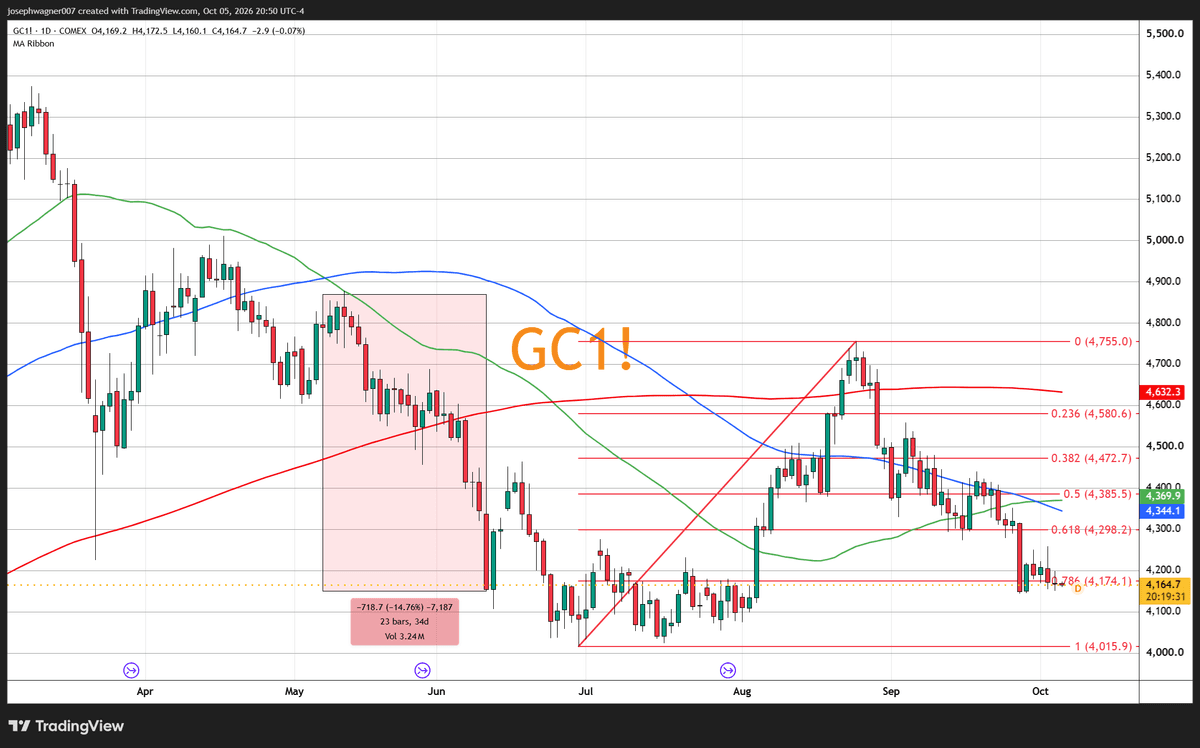
Technically, gold is sitting beneath the 78.6% retracement of the August rally at $4,174. This is gold’s first challenge, and it must be overcome if gold is to avoid a test of the summer lows just above $4,000 in futures which represents gold’s next real level of support. On the bullish side, gold did register a bull cross of the 50- and 100-day simple moving averages, with the shorter-term 50-day crossing above the 100-day. The pair had been in a bearish formation, with the longer-term average on top, since May 7, and that bear cross was followed by 23 trading days in which gold futures declined by $718, or nearly 15%.
Until we get closer to the next FOMC meeting, it is the Iran war and oil narrative driving prices in gold and, to a lesser extent, silver.
Wishing you, as always, good trading.
For more daily gold market analysis, visit us at thegoldforecast.com
