
Strengths
- The Office of the Comptroller of the Currency (OCC) granted final approval to Ripple National Trust Bank on October 26, allowing the cryptocurrency company to operate a specialized bank under federal supervision. The bank will manage reserves backing Ripple's RLUSD stablecoin and provide regulated digital asset custody services to institutional clients. Launched in December 2024, RLUSD has reached approximately $2.5 billion in market capitalization. Ripple also expects to exit 2026 with a $900 million annualized product revenue run rate, supported by threefold growth in customers and partners using multiple solutions. These developments point to growing commercial adoption of blockchain-based financial services and deeper integration between digital assets and traditional banking.
- Prediction-market platform Polymarket introduced five-minute cryptocurrency price contracts on October 28 through its U.S. platform, operated by QCX LLC under Commodity Futures Trading Commission (CFTC) oversight. The contracts allow traders to predict whether Bitcoin, Ethereum, Solana or XRP will rise or fall over five-minute intervals. Correct predictions pay $1 per share, while incorrect ones pay nothing. The launch follows growing demand for crypto-based event contracts, with rival Kalshi recording more than $1 billion in crypto contract trading in March 2026. The expansion highlights continued innovation in digital asset markets, creating new trading opportunities and potentially attracting additional participants.
- Blockchain infrastructure provider Chainlink introduced a continuous pricing service for tokenized equities, commodities and other traditional financial assets, extending market data availability through weekends and holidays. Decentralized lending platform Aave is the launch partner, integrating the service into its blockchain-based financial infrastructure. The development addresses a key limitation in tokenized asset markets: traditional exchanges operate during fixed trading hours, while blockchain networks function continuously. Reliable, around-the-clock pricing could improve collateral valuation, risk management and the efficiency of decentralized financial applications, strengthening the infrastructure supporting real-world asset tokenization.
Weaknesses
- Binance, one of the world's largest cryptocurrency exchanges, suffered an estimated $6.3 billion theft on October 29 after attackers exploited internal systems to drain its hot wallets in approximately 20 minutes. The exchange said it allocated $6.34 billion in corporate resources to restore affected customer balances, while industry partners froze approximately $3 billion in stolen assets. Blockchain analytics firms linked the attack to North Korean hackers with high confidence. The breach triggered sharp losses in smaller cryptocurrencies, including a more than 90% collapse in FUNToken within a Uniswap liquidity pool. Binance temporarily suspended withdrawals for security checks. The incident highlights cybersecurity and investor protection risks across the digital asset ecosystem.
- The U.S. Securities and Exchange Commission (SEC) sued Blox Lending LLC, Digital Licensing Inc. and three individuals, alleging they raised more than $200 million from over 100,000 investors through a fraudulent cryptocurrency investment scheme. The defendants allegedly marketed digital tokens backed by commodity royalties from mining and other natural resource operations while misrepresenting the underlying assets and returns. The SEC claims the operation violated federal securities laws and exhibited characteristics of a Ponzi scheme. The case highlights ongoing concerns about transparency, due diligence and investor protection in the cryptocurrency industry.
- U.S. spot Ether exchange-traded funds recorded approximately $1.4 billion in net outflows during October, according to Bloomberg Intelligence, as falling prices pushed aggregate holdings below their estimated average cost basis of $3,200 per Ether. Since the October 10, 2025, market crash, cumulative outflows have reached $2.5 billion, reversing much of the $3 billion in inflows recorded between July and September 2026. Ether has also fallen approximately 52% from its August 2025 peak above $4,900. The withdrawals point to weakening investor demand and potential challenges for institutional participation in digital assets.
Opportunities
- The U.S. Intercontinental Exchange (ICE), owner of the New York Stock Exchange, will acquire a minority stake in Trade[XYZ], although the investment amount was not disclosed. The proposed platform would support 24/7 trading in products linked to equities, equity indexes, commodities and currencies, with dedicated clearing, know-your-customer (KYC) and anti-money-laundering (AML) systems. Trade[XYZ]'s Hyperliquid markets have generated more than $650 billion in trading volume in just over a year. The partnership highlights growing institutional interest in decentralized trading infrastructure and regulated blockchain-based derivatives.
- Switzerland's financial regulator, FINMA, approved the Bitcoin Fund ETF (BBIT) on October 20, granting an exemption from diversification requirements that allows the fund to invest entirely in Bitcoin. The ETF is expected to begin trading on SIX Swiss Exchange in November, with access through approximately 90 participating institutions. Unlike many European Bitcoin products structured as debt securities, BBIT will hold Bitcoin in a regulated fund with assets legally separated from those of its manager, providing additional investor protections. The approval could encourage further cryptocurrency ETF launches and expand institutional access to digital assets.
- Nasdaq-listed Canton Strategic Holdings (CNTN) announced plans to tokenize its shares through TSV LLC, a trading platform built on the Canton Network, with trading expected to begin as early as November 2. The company partnered with SEC-registered transfer agent Fairmint to issue tokenized shares and maintain official ownership records. Unlike competing platforms such as OKX–ICE, which have faced objections from corporate issuers, TSV uses an issuer-sponsored model that avoids the 30-day objection period under the SEC's five-year Innovation Exemption. The platform plans to offer 24/7 trading and simultaneous settlement of shares and payments, potentially improving market efficiency and accelerating institutional adoption of blockchain-based equities.
Threats
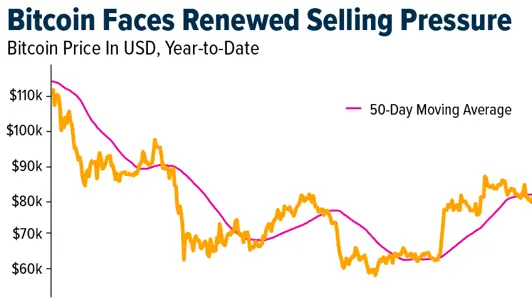
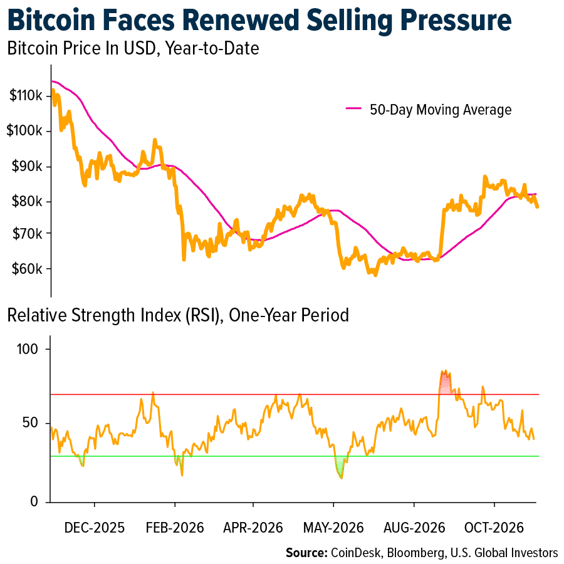
Bitcoin fell to approximately $77,327 on October 30 as weakness in technology stocks and a hawkish Federal Reserve weighed on cryptocurrency markets. Crypto futures recorded $356 million in liquidations over 24 hours on October 29, including $205 million in long positions. Adding to volatility, approximately $11 billion in Bitcoin options were scheduled to expire on October 30, representing roughly one-third of outstanding options on Deribit. Bloomberg data showed Bitcoin trading below its 50-day moving average of $81,943, while its 14-day relative strength index (RSI) fell to 35.1, approaching oversold territory.
- Walmart, Eli Lilly and three other companies have objected to plans by crypto exchange OKX and New York Stock Exchange parent Intercontinental Exchange (ICE) to offer tokenized stock trading, bringing total objections to 38, according to CoinDesk. Under the Securities and Exchange Commission's (SEC) five-year Innovation Exemption, companies have 30 days to reject unauthorized third-party tokenization of their shares. The opposition highlights concerns over issuer control and market structure, potentially slowing adoption of blockchain-based equity trading and tokenized real-world assets (RWAs).
- The U.S. Treasury Department's Office of Foreign Assets Control (OFAC) sanctioned 10 individuals and one entity on October 28 for allegedly using fraudulent North Korean IT workers to fund the country's weapons programs. Two Russian nationals allegedly facilitated approximately $5.5 million in cryptocurrency conversions, while six workers tied to a North Korean-controlled organization in Russia generated more than $750,000 since 2025. Authorities also identified eight cryptocurrency addresses on Ethereum and Tron linked to the sanctioned individuals. The case highlights ongoing money laundering and sanctions-evasion risks in digital assets, potentially increasing regulatory scrutiny and compliance costs for cryptocurrency platforms.
