
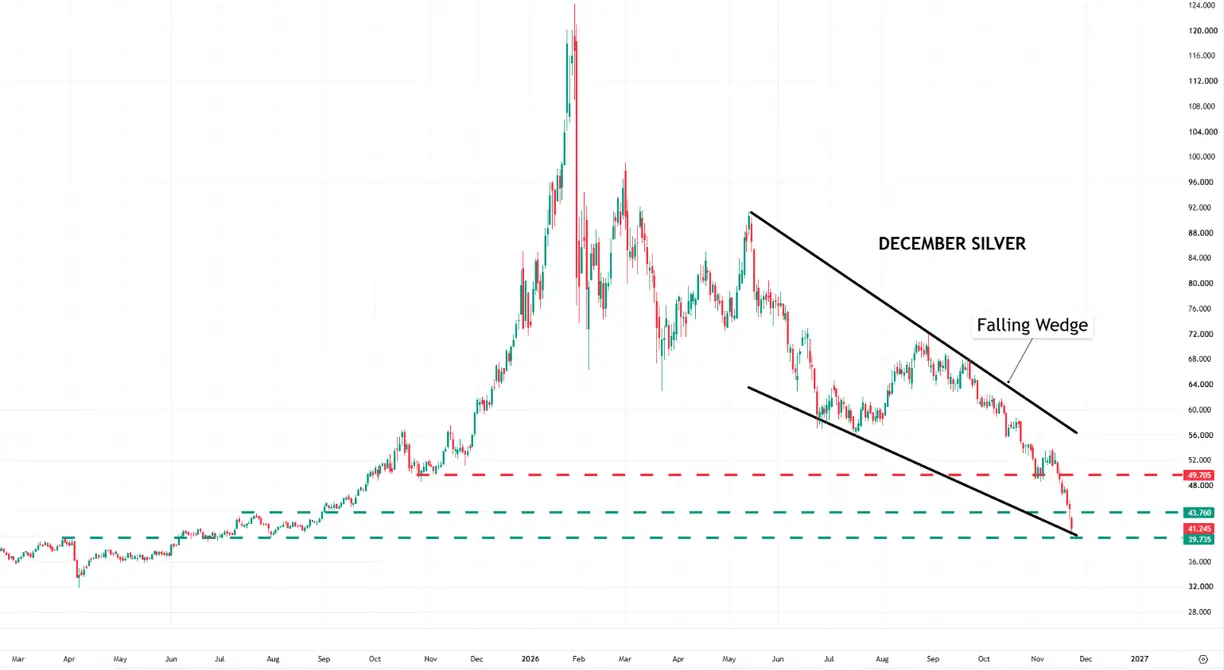
(Kitco Commentary) - Silver has dropped nearly 30% in a month, from around $58 to about $41. Every client I talk to is asking me the same thing: where’s the bottom, and when does the bleeding stop?
Here’s the truth: nobody rings a bell at the bottom. I’ve been working with clients in futures and commodities for more than two decades, and I’ve watched a lot of people go broke trying to pick the exact low. A bottom isn’t a price. It’s a process. The selling dries up, the things that were pushing silver lower start to turn, and the market quietly tells you it’s done going down. So over a decade ago, I stopped trying to guess where a commodity’s low would be. Instead, I watch for the signals that show up around it, and I start small. Here’s the checklist I use, and how I’d build a position without betting the farm on the first one.
Want to know which signals are flashing before Monday’s open? Every weekend in Navigating the Week Ahead, our free weekly newsletter, I walk through yields, the dollar, the Fed calendar and positioning so you start the week with a plan. Subscribe to Navigating the Week Ahead here
No single signal calls a bottom. I want to see several of them lining up at the same time. One is a hint. Three or four is a pattern. Here’s what I’m watching.
- Bond yields roll over. Silver doesn’t pay you to hold it, so rising yields make it more expensive to own. This week the 10-year finally broke back below 5%. That’s the first signal flashing, but I want to see yields stay down, not just dip.
- The dollar starts to pull back. Silver and the dollar have been moving almost exactly opposite each other. The dollar is still near its highs, so that headwind is still blowing. We’re not there yet.
- The Fed starts to sound softer. Fed funds futures put the odds of a December rate hike near 98%. You don’t need a cut. You need those odds to start falling, because that knocks yields and the dollar down at the same time.
- ETF flows turn from selling to buying. People keep buying the dips in silver ETFs. That’s not a bottom signal. It usually just means they’re early. I want to see total holdings rise for a few weeks in a row.
- The crowd gets washed out. The CFTC’s Commitments of Traders report shows speculators have cut their silver longs toward the low end of their range, but they haven’t fully given up. When they do, there are few sellers left, and it doesn’t take much to spark a rally.
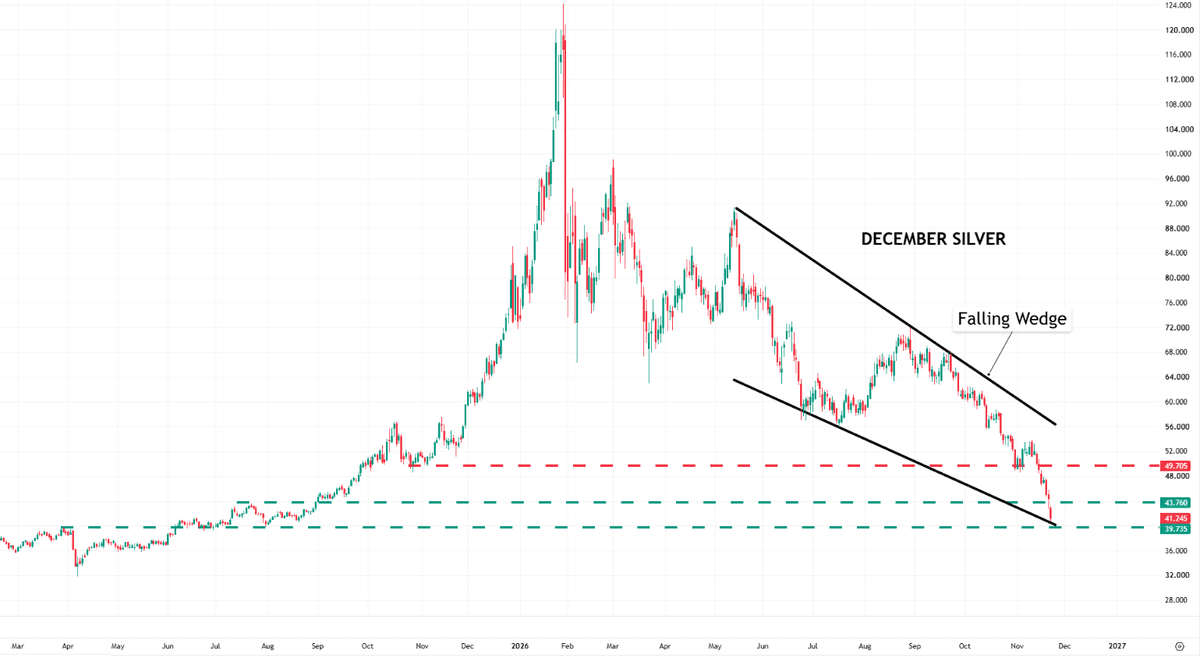
- Price stops making new lows. Price is the trigger. Silver just made another new low. Until it holds that low, puts in a higher low and climbs back into the mid-40s, the trend is still down.
How to scale in: the 100-ounce silver contract
You don’t have to pick the low. You can scale in with the CME’s 100-ounce silver contract. Every $1 move is worth $100, so you can build a position in small pieces. Here’s how I’d do it with March:
- Start small. Take a first piece when two or three signals line up, not before.
- Define your risk up front. Put a stop below the recent low. If it gets hit, the bottom wasn’t in, and the loss stays small.
- Add on confirmation, not hope. Add the next piece only after a higher low or another signal flips.
- Know your target before you get in. Decide where you’ll take some profit, so the trade has a plan on both sides.
Timing helps, too. Silver has often firmed from late December into the first quarter, so now is when I want to be paying attention.
Want a heads-up when the odds start to shift? Nobody can call the exact low, but when these signals start lining up, we’ll send a specific silver setup through Metals Edge, our free daily metals report. Sign up for Metals Edge here so you have a plan ready instead of watching from the sidelines.
Futures trading involves a substantial risk of loss and may not be suitable for all investors. Therefore, carefully consider whether such trading is suitable for you in light of your financial condition. Trading advice is based on information taken from trade and statistical services and other sources Blue Line Futures, LLC believes are reliable. We do not guarantee that such information is accurate or complete and it should not be relied upon as such. Trading advice reflects our good faith judgment at a specific time and is subject to change without notice. There is no guarantee that the advice we give will result in profitable trades. All trading decisions will be made by the account holder. Past performance is not necessarily indicative of future results.
