
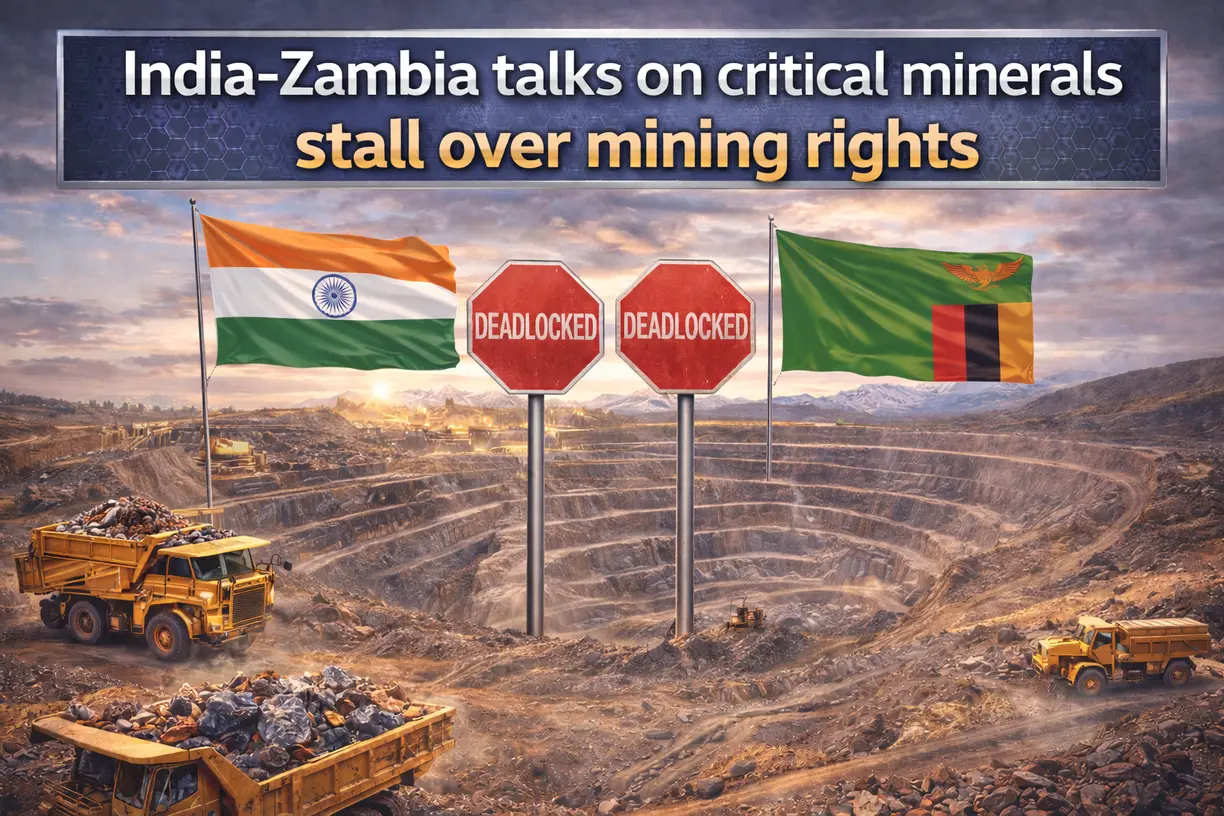
India’s talks with Zambia over critical minerals mining have stalled amid a lack of assurances from Lusaka on mining rights, two sources familiar with the matter told Reuters.
India last year received an allocation of 9,000 square km (3,474.92 square miles) to explore cobalt — a key component in batteries for electric vehicles and mobile phones — as well as copper, widely used in power generation, electronics and construction.
India dispatched a team of geologists last year, who have since returned with samples of minerals, including cobalt and copper.
The exploration program in Zambia was set to run for three years, after which New Delhi had planned to invite private sector companies to participate, subject to securing mining rights.
It was not immediately clear why Zambia was withholding assurances for mining rights.
New Delhi is making efforts to restart discussions with Zambia, but the situation is still uncertain, one of the sources said.
They declined to be identified as the discussions are not public. India’s federal Ministry of Mines did not respond to a Reuters request for comment.
India has been in talks with several African countries to acquire critical mineral blocks on a government-to-government basis, while also exploring opportunities in Australia and Latin America.
The Indian government last year held internal discussions over the country’s growing vulnerability to a tightening global copper market and ways to secure supplies from resource-rich countries during ongoing trade negotiations.
India’s copper imports have risen sharply since the 2018 closure of Vedanta’s Sterlite copper smelter. The country imported 1.2 million metric tons of copper in the fiscal year ending March 2025, up 4% from the previous year.
India is almost entirely dependent on cobalt imports, with shipments of cobalt oxide rising 20% in 2024-25 to 693 metric tons, government data showed.
(By Neha Arora; Editing by Mayank Bhardwaj and Janane Venkatraman)
