
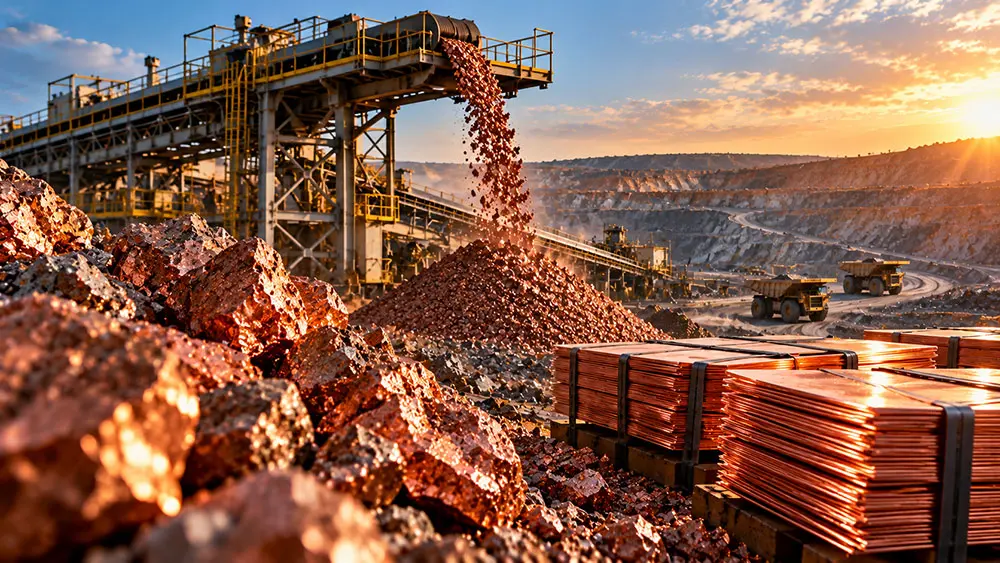
In 1899, the Mt Lyell mine in Tasmania produced some 9,500 metric tons of copper. That made it the largest copper mine in the British Empire, though small by today’s standards.
In September, after 12 years idle, owner Sibanye-Stillwater (JSE: SSW) approved a restart of Mt Lyell, putting it among a string of copper mines around the world being revived due to expectations for a structural shortage of the industrial metal.
Consultancy Benchmark Mineral Intelligence is tracking almost a million tons of potential annual copper production from mine restarts by 2030, equivalent to over 4% of current output.
About half of that is from the huge Cobre Panama project and the long-closed Panguna mine in Papua New Guinea, but for both, a potential restart is as much a political as a market consideration.
While most idled mines are small, they have infrastructure, known ore bodies and permitting histories, meaning they can produce copper many years sooner than discoveries in new locations, which take an average of 17 years to reach production, according to S&P Global Energy.
Johannesburg-based Sibanye, which paid $10 million for Mt Lyell in 2023, expects to spend around $340 million to restart it, with plans to ramp up to 26,000 tons of annual production after it comes back online in 2029.
As part of its modernisation of the facility, the company has digitised filing cabinets of hand-drawn geological and mine plans dating back more than a century.
“It’s all millimetre-perfect, but drawn by hand,” Barry Harris, an executive vice president at Sibanye-Stillwater, told Reuters.
Cheaper and faster, but smaller
Record prices, with the benchmark London Metal Exchange copper contract hitting $14,875 a ton on September 10, have made some idled mines viable again, but it is the prospect of medium- to long-term shortages that is prompting operators to restart them.
“Many of these operations are relatively small, but collectively they can make an important contribution to bridging the copper mine supply gap over the medium term,” said Craig Lang, principal analyst at CRU.
Global copper demand is projected to rise 50% to 42 million tons a year by 2040, driven by the energy transition and data centers, S&P Global Energy predicts. It expects nearly half of new mine supply to come from restarts and expansions of existing resources, but even then the market could face a structural shortfall of 10 million tons.
“Brownfield additions can buy the market valuable time, but they cannot replace the need for brand-new, world-class tier-1 discoveries to satisfy that scale of demand,” said Eillen Grace Dela Cruz, principal analyst at S&P Global Energy.
In Zambia, partial production has restarted in the upper section of the Luanshya mine, which was offline for over two decades, and underground infrastructure is now being built, a Zambian mines ministry spokesperson said.
The mine is majority owned by China Nonferrous Mining Corp (CNMC) 1258.HK and has a target production of 100,000 tons per year by 2030.
In Argentina, global commodities trader and miner Glencore (LON: GLEN) has said it plans to revive production at its Alumbrera mine, shuttered since 2018, in the second half of 2027, to produce a total of 75,000 tons of copper over four years. The restart is intended to support the ramp-up of the undeveloped Agua Rica pit nearby, which has the potential to produce more than 200,000 tons of copper per year.
More than flipping a switch
Potential hurdles abound for some of these plans, such as flooding, run-down plants and outdated tailings dams, along with protesters and stricter environmental rules.
“A dormant mine is not simply waiting for someone to turn the power back on,” said Charles Cooper, head of copper research at Wood Mackenzie. “The key question is why the mine closed in the first place.”
The pool of viable restart candidates is “relatively small” and output from revived mines averages around 33,000 tons a year, according to Wood Mackenzie’s historical analysis, against more than 100,000 tons for many extensions at existing mines, which therefore matter more for lifting supply.
In Bougainville, an autonomous region of Papua New Guinea that is seeking independence, the government wants to reopen Panguna, which was once among the world’s biggest open-pit copper mines but has been shut since 1989, when a brutal civil war broke out.
Last month, a mining camp at Panguna was attacked, with personnel assaulted and equipment destroyed.
“Environmental, social and political issues can ultimately prove more challenging than the mining itself,” Cooper said.
Mine modernisation
Mt Lyell was shuttered in 2014 after three workers were killed in two accidents within six weeks of each other.
The closure cost about 200 jobs in Queenstown, a town of nearly 2,000 people. A planned restart was shelved in 2015 when copper prices fell, and workers drifted away. LME copper closed that year at $4,705 a ton. Sibanye says Mt Lyell will cost around $5,644 a ton to keep running.
The company expects to employ about 300 people and is refurbishing accommodation and building housing in Queenstown rather than a workers’ camp.
One of the accidents before the mine’s closure involved a mud rush that struck a worker operating a loader. Some loaders will be operated remotely when the mine reopens, Harris said, adding that some of Mt Lyell’s previous workers have expressed interest in returning.
“They’re going to be coming from very manual activities, all the way from start through to finish, into an operation that will be at modern industry standard, with digitisation and automation all the way through.”
(Reporting by Solomon Cefai; additional reporting by Maxwell Akalaare Adombila, Melanie Burton, Tom Daly, Clara Denina, Chris Mfula, Divya Rajagopal and Ernest Scheyder; Editing by Tony Munroe and Sonali Paul)
