
Strengths
- Mastercard Incorporated secured a New York State BitLicense, one of the most stringent crypto regulatory approvals in the United States, as it continues expanding its digital asset and stablecoin services. The company has partnered with more than 100 crypto and fintech firms, including Binance, Circle, PayPal, and MetaMask, to integrate blockchain-based payments with traditional financial rails. The approval strengthens the link between traditional finance and digital assets while reinforcing institutional confidence in regulated crypto infrastructure.
- Tether Holdings Limited said supply of its regulated stablecoin USA₮ grew nearly 540% month-over-month (MoM), rising from about 22 million tokens in March to more than 140 million in April. USA₮ was launched to align with proposed U.S. stablecoin regulations under the GENIUS Act and is issued by Anchorage Digital Bank, the first federally chartered crypto-native bank in the United States. The rapid growth highlights rising demand for regulated digital dollars and reinforces the expanding role of stablecoins within the traditional financial system.
- The Bank for International Settlements (BIS) said its Project Agorá initiative successfully demonstrated how tokenization and blockchain technology could make wholesale cross-border payments faster, more efficient, and less exposed to settlement risk. The project includes seven major central banks, including the Federal Reserve Bank of New York, Bank of England, and Bank of Japan, alongside more than 40 financial institutions. The initiative highlights growing institutional confidence in blockchain-based financial infrastructure and reinforces the expanding role of tokenization in the global financial system.
Weaknesses
- BlackRock, Inc. saw its spot Bitcoin ETF, the iShares Bitcoin Trust (IBIT), record nearly US$528 million in outflows on Wednesday, marking the fund’s second-largest daily withdrawal since launch. The selloff contributed to an eight-day streak of net outflows across U.S. spot Bitcoin ETFs, totaling roughly US$2.6 billion, as Bitcoin fell below US$75,000. The sustained withdrawals highlight weakening institutional demand and softer investor confidence in digital assets, adding pressure to Bitcoin prices and the broader crypto market.
- Bitcoin remained under pressure and failed to recover above US$73,000 even after reports of a potential U.S.–Iran agreement boosted equities and pushed oil prices lower. The muted reaction compared to traditional markets highlights softer investor confidence and reduced momentum in crypto. At the same time, inflation concerns continue weighing on digital assets, with the Federal Reserve’s preferred inflation gauge, the Personal Consumption Expenditures (PCE) Index, rising to 3.8%, its highest level since 2023, reinforcing expectations that higher interest rates could continue to pressure cryptocurrencies.
- Argentina introduced a bill that would prohibit banks, payment providers, and crypto firms from servicing unauthorized online gambling platforms, increasing regulatory pressure on parts of the digital asset industry. The proposal would allow authorities to block crypto-related transactions tied to unlicensed operators and impose additional compliance requirements on exchanges and payment providers. The measure highlights how rising regulation around crypto-linked betting and prediction market platforms could limit activity and create new operational challenges for parts of the crypto ecosystem.
Opportunities
- Samsung affiliates are deepening their exposure to the digital asset industry through a US$408 million investment in Dunamu, operator of Upbit, South Korea’s largest cryptocurrency exchange. Samsung Securities will acquire a 2% stake, while Samsung Card and Samsung SDS will also participate. The deal highlights growing institutional confidence in crypto infrastructure and deeper integration between traditional finance, technology, and digital assets in one of Asia’s most active crypto markets.
- VanEck launched the first U.S. spot BNB ETF on Nasdaq, expanding institutional access to digital assets beyond Bitcoin and Ethereum. BNB is the native token of BNB Chain, a blockchain network supporting decentralized applications, digital payments, and crypto transactions. The ETF allows investors to gain exposure to BNB through traditional brokerage accounts without directly holding the token, underscoring the scale of the ecosystem, which processes more than 14 million daily transactions and holds over US$16 billion in stablecoins.
- Megapot, a decentralized blockchain lottery protocol, partnered with Protocol Guild, a funding collective supporting Ethereum core developers, to launch what it describes as the crypto industry’s first programmable charity lottery. The model automatically directs 100% of referral fees from ticket sales to Ethereum developers via smart contracts, reducing reliance on traditional donations and centralized funding. The initiative comes as Protocol Guild estimates Ethereum may require US$30 million to US$60 million annually to support long-term development and scalability.
Threats
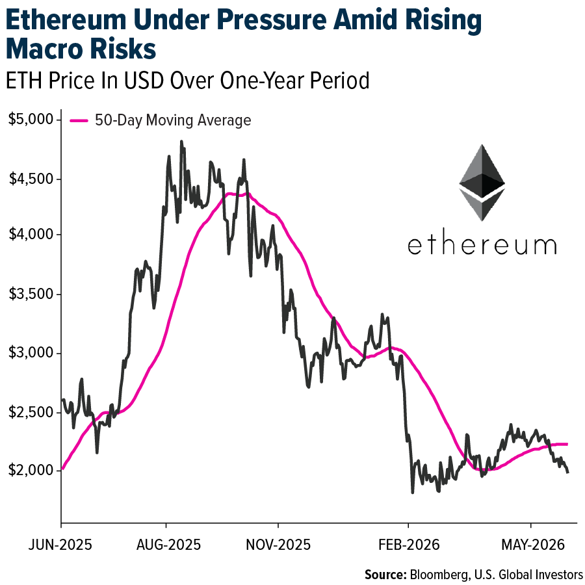
- Geopolitical tensions in the Strait of Hormuz triggered a broad, risk-off move across global markets, pushing Ether below $2,000 for the first time since March. The selloff led to nearly US$959 million in crypto liquidations, including $897 million in long positions. Ethereum open interest rose to a record 16.39 million ETH ($32.6 billion) even as prices fell, signaling growing bearish positioning and highlighting risks from rising oil prices and inflation pressures on digital assets and broader risk assets.
- Speculative capital continues rotating out of cryptocurrencies and into artificial intelligence and semiconductor equities, weakening momentum across digital assets. While Bitcoin surged more than 650% from its 2022 lows to nearly US$126,000 in 2025, attention has shifted toward AI infrastructure and memory-chip names such as Micron, which rose from a US$70 billion valuation to over US$1 trillion in a year. The trend underscores the risk that crypto markets may lag as investors pursue newer high-growth themes and mega-IPO opportunities such as SpaceX and OpenAI.
- UniCredit warned that the EU’s Markets in Crypto-Assets (MiCA) regulation could increase systemic risk by tying stablecoin reserves more closely to the banking system. MiCA requires issuers to hold reserves in bank deposits and government securities, raising exposure to bank stress events. UniCredit also pointed to limited deposit insurance in Europe versus the U.S., referencing the 2023 Silicon Valley Bank collapse, when Circle briefly lost its USDC peg after revealing US$3.3 billion in reserves at SVB.
