
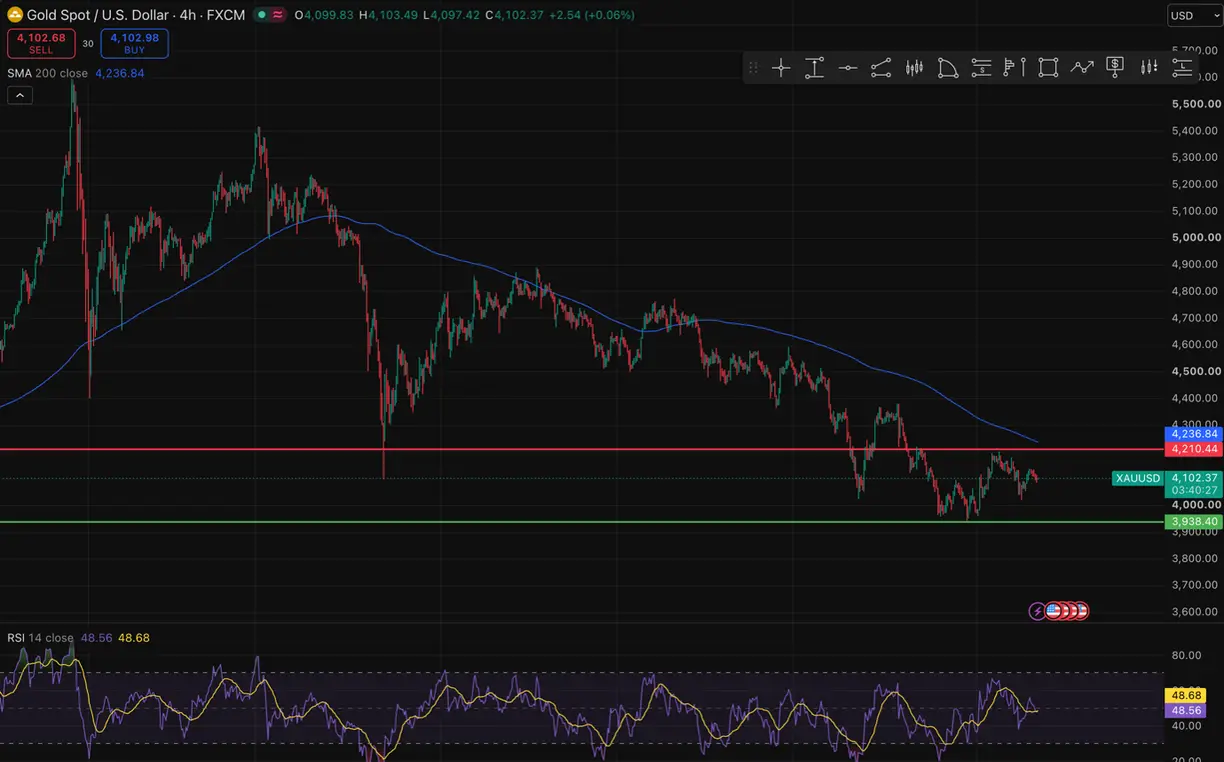
Spot gold is currently trading around US $4,120 per ounce, based on the latest confirmed market check. Gold is holding firm because investors are reacting to renewed U.S.-Iran tension, Strait of Hormuz risk, fresh U.S. airstrikes, Iranian retaliation threats, and rising oil-price concerns. With no major economic calendar release today, the market has fewer data distractions, so gold traders are likely to focus more heavily on geopolitical headlines, oil prices, the U.S. dollar, and bond yields.
Geopolitical Risk Keeps Safe-Haven Bid Alive
The comments from President Trump suggest that the ceasefire risk premium has returned to the market. When shipping routes, energy supply, and Gulf security become uncertain, gold usually gains support as investors look for protection outside equities and risk assets.
However, the influence on gold is not purely bullish. If oil prices rise sharply because of Hormuz disruption fears, inflation expectations can climb, and that can keep bond yields elevated. Higher yields and a stronger U.S. dollar can slow gold's upside, even when safe-haven buying remains active.
Resilient Labour Data and Sticky Inflation Pressures Cap Upside
Yesterday's economic data also shaped gold sentiment. Initial jobless claims fell to 215,000 versus 217,000 expected, the 4-week moving average declined to 219,000, and continuing claims held at 1.814 million, showing the labour market remains resilient. Revolving consumer debt fell $5.3 billion, mortgage applications dropped 2.2%, the 30-year mortgage rate edged up to 6.58%, used vehicle prices rose 2.1% year-over-year, and used EV prices jumped 12.0%. Wage growth rose to 3.6%, job stayers were at 3.4%, and job switchers were at 4.1%.
Tariff-related pricing pressure also remains alive, with 47% of service firms and 44% of manufacturers planning further price increases. This combination creates a mixed but supportive gold backdrop: geopolitical stress helps gold because investors want safety, while sticky inflation and resilient jobs data make it harder for markets to price a fast move toward easier policy.
Technical Analysis: Gold Battles Key Resistance Near $4,090
On the four-hour chart, gold remains under a long-term descending trendline, keeping short-term sellers in control and reinforcing a pattern of lower highs and lower lows. The first major resistance sits near $4,091, where the descending trendline converges with what was previous support. Clearing that level on a sustained basis would improve the near-term outlook and open the path toward the next upside targets at $4,157 and $4,222. The 200-period Exponential Moving Average, positioned near $4,257, remains a tougher ceiling that has repeatedly capped recovery attempts.
On the downside, immediate support holds near $4,210. A break below that level would strengthen bearish momentum and open the door to $3,938, followed by a broader support zone near $3,903. Momentum readings remain tilted bearish, with the Relative Strength Index sitting in the low-to-mid 40s, reflecting fading selling pressure without buyers yet gaining full control.
In short, gold needs a decisive close above $4,091 to shift the near-term bias back in favour of the bulls. Until then, price action is likely to stay range-bound between the $4,024 support shelf and the $4,091–$4,157 resistance band, with U.S.-Iran headlines acting as the primary tie-breaker.
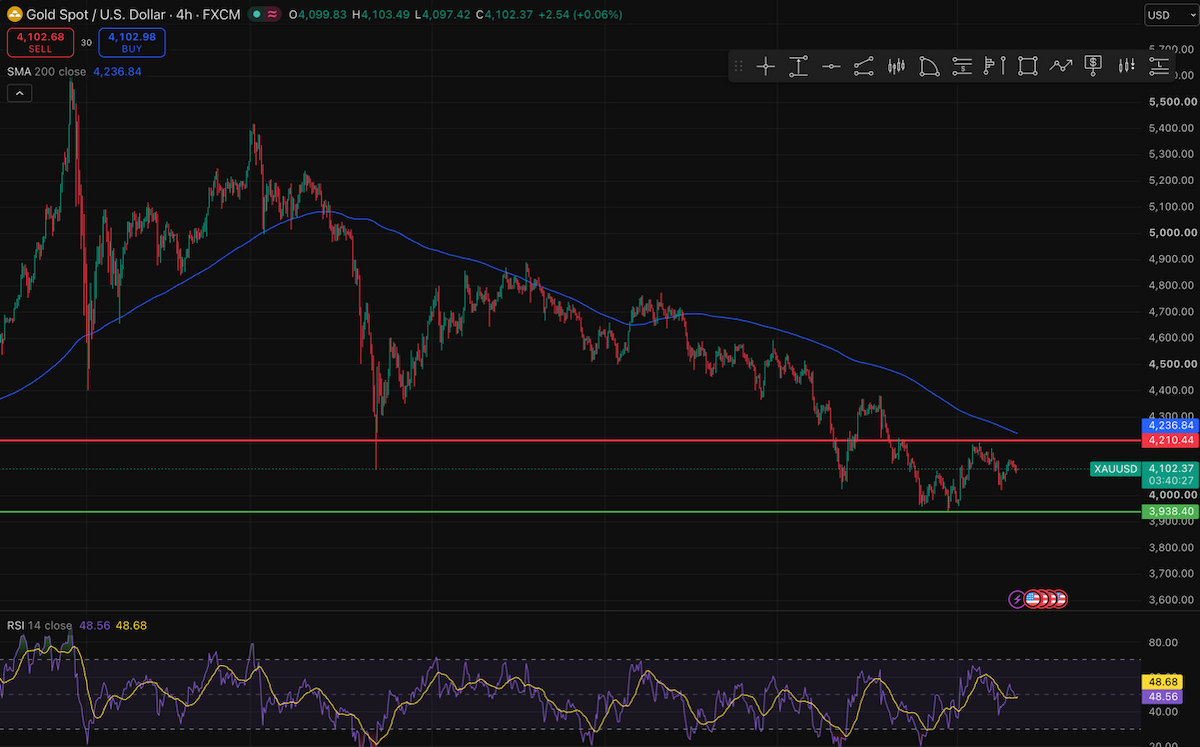
Online trading Platform showing gold chart
What to Watch: Key Triggers Ahead
Traders should monitor:
- Developments in U.S.-Iran tension, including retaliation threats and Strait of Hormuz shipping risk
- Oil-price moves and their pass-through into inflation expectations
- U.S. dollar strength and bond-yield direction
- Upcoming labour-market and inflation data for confirmation of the resilient-economy narrative
- Tariff-driven pricing plans from service and manufacturing firms
Final Word
In simple terms, gold is supported by fear, but restrained by yields and the dollar. The key signal is clear: as long as U.S.-Iran tension remains active and today's calendar stays quiet, gold can remain supported, but a stronger dollar or higher bond yields could limit the next upward move.