

Gold futures managed to hold steady on Monday, even as they gapped lower from Friday's close in reaction to a perceived hawkish speech from Fed Chairman Kevin Warsh at Jackson Hole.
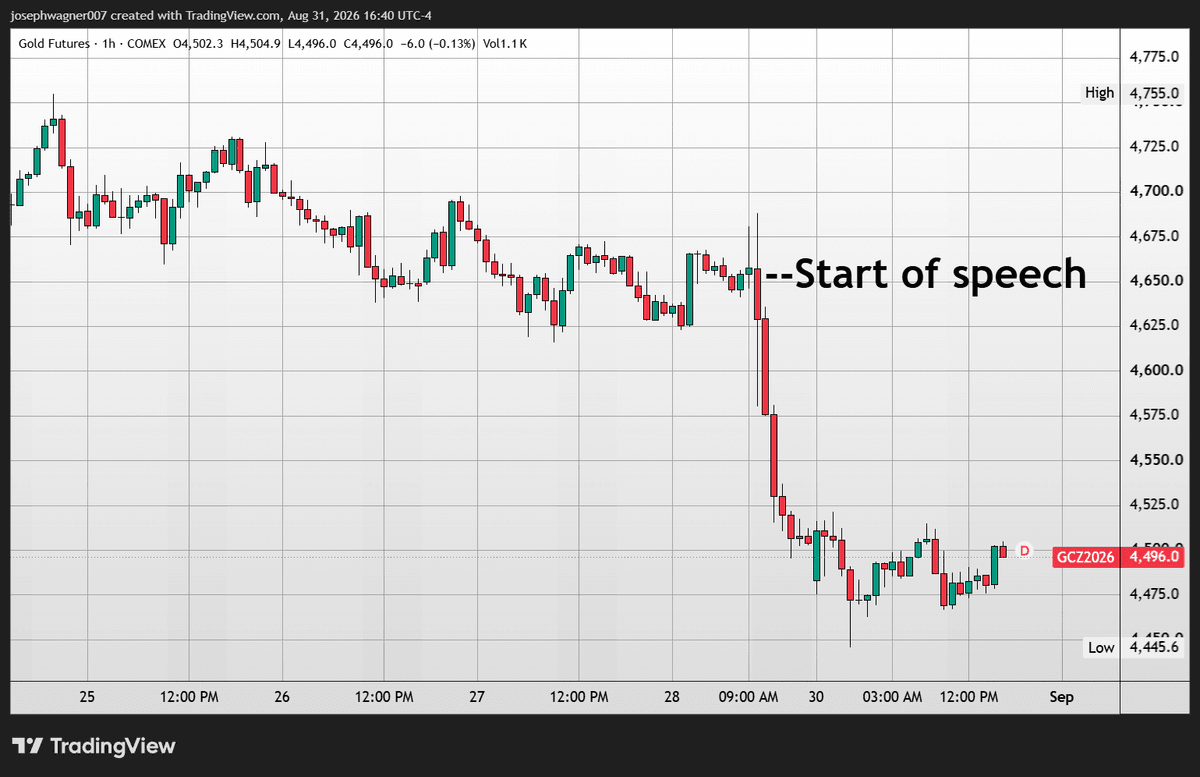
The initial reaction was sharp. The precious yellow metal tumbled by $150 on the day, a move whose direct correlation to Warsh's remarks is clearly visible on an hourly chart, which shows gold futures sliding from $4,657 at 10:00 PM ET — the start of the speech — down to $4,495 over the next 4 hours. Gold has done little since to extend that decline, a sign that traders may have overreacted to the keynote address.
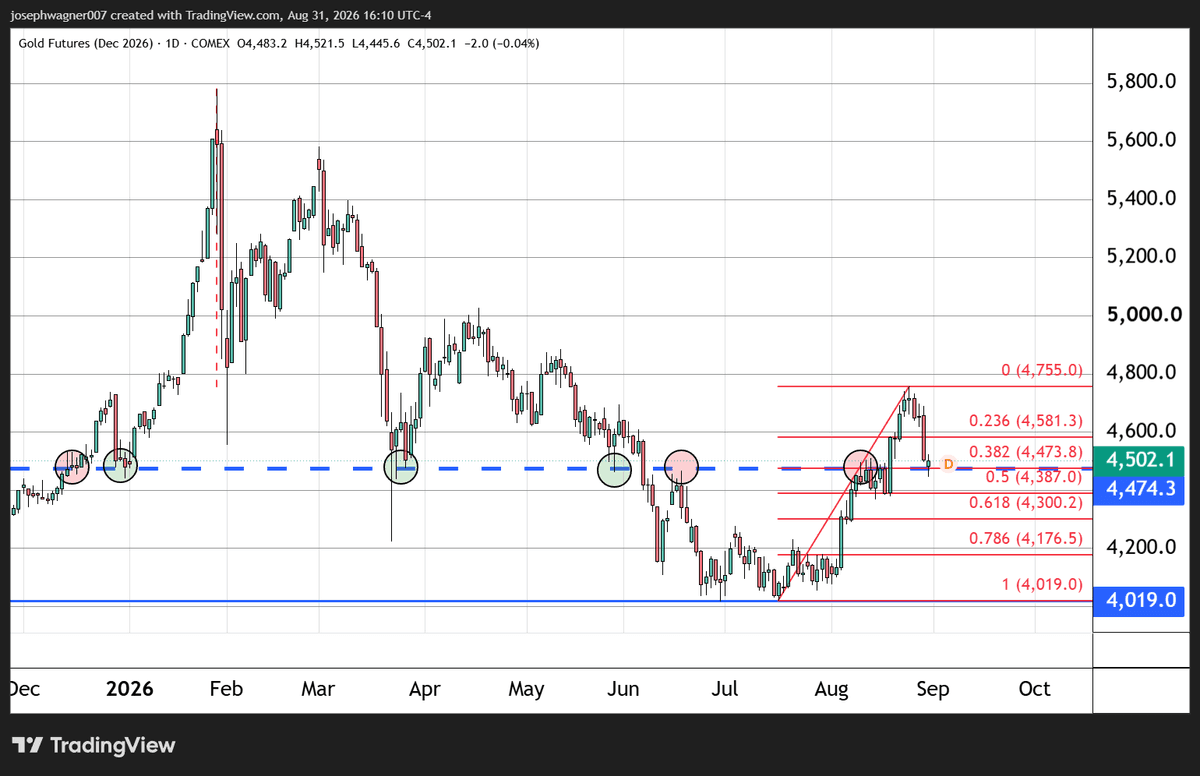
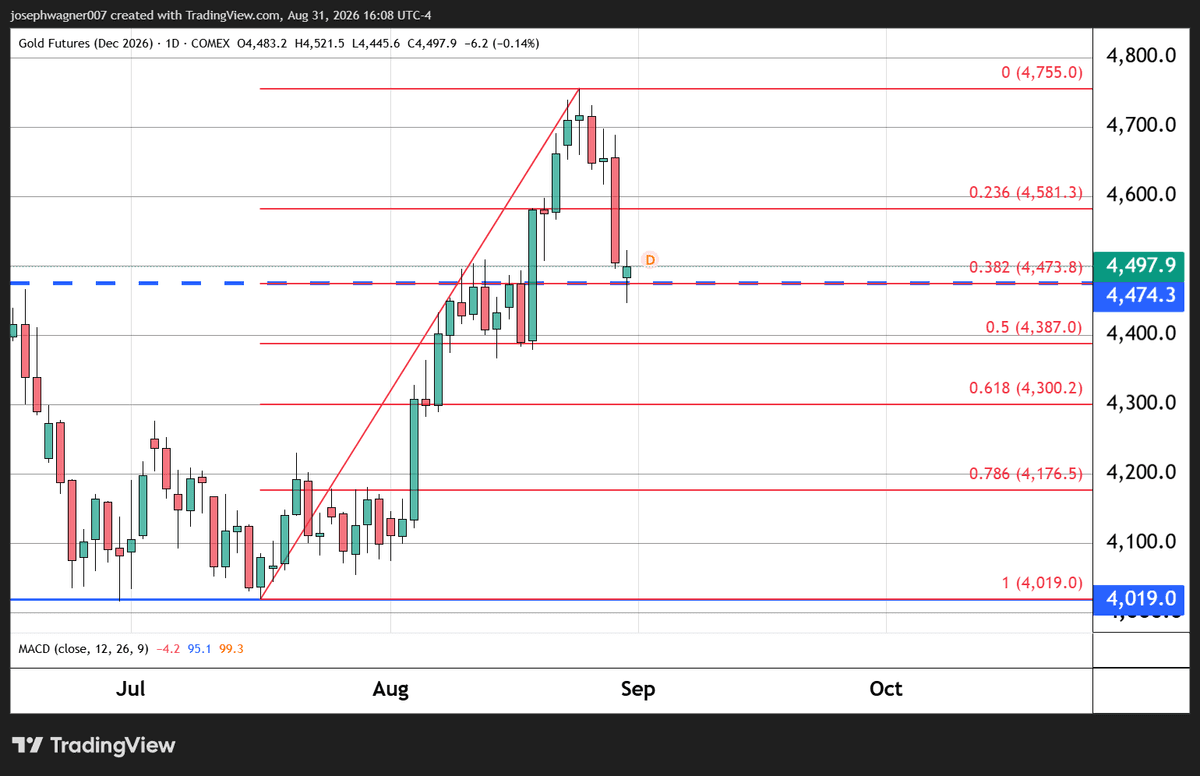
By today's session, gold opened $20 below Friday's close, forming a gap in price, though at the time of writing it has clawed back much of that ground and is down only $5 on the day. Crucially, gold futures have managed to remain above a key support zone formed by a historical area of support and resistance dating back to the end of 2025 at $4,474, which lines up closely with the simple 100-day moving average, now at $4,468. That historical support also aligns perfectly with the 38.2% Fibonacci retracement at $4,474. The retracement data set is of gold’s recent advance from its lows around $4,000 to recent highs made above $4,700. As long as gold can defend this level, it will most likely continue higher, at least in the short term.
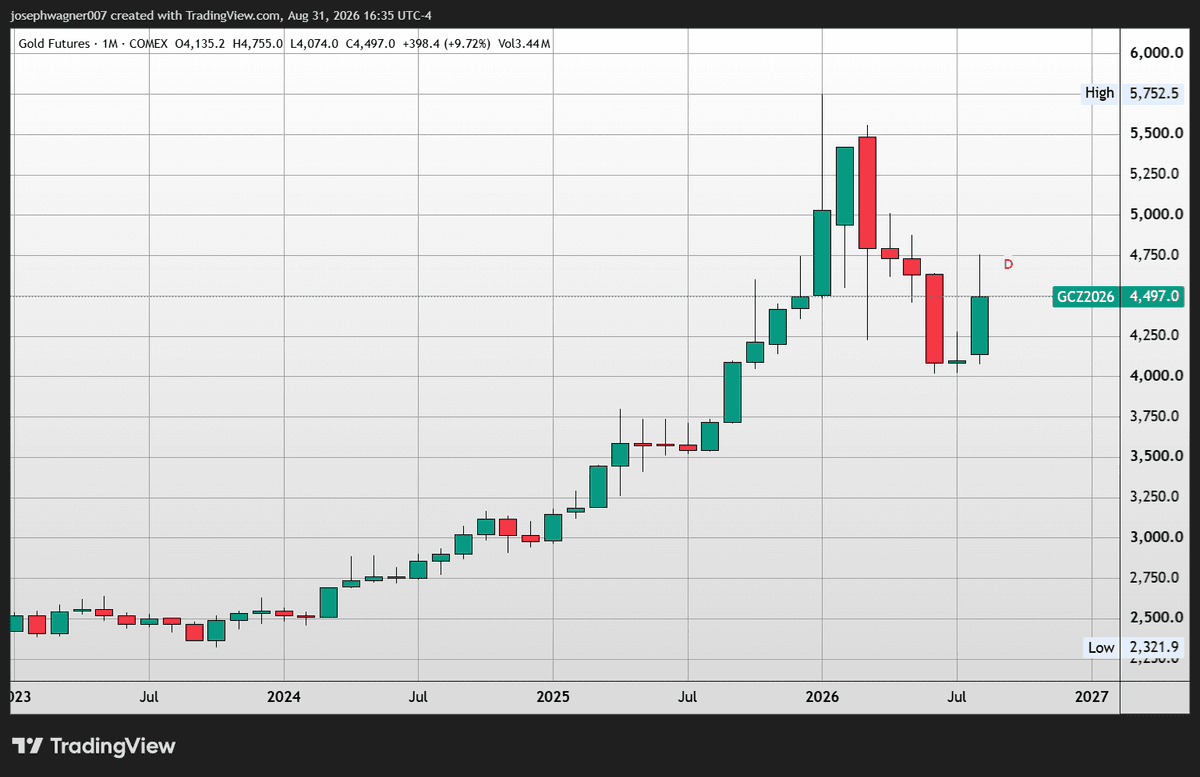
The resilience stands out given the backdrop. Even after its worst week since June 1st, gold futures still managed to score their biggest monthly advance since February, gaining $404, or just under 10%, for the month of August.
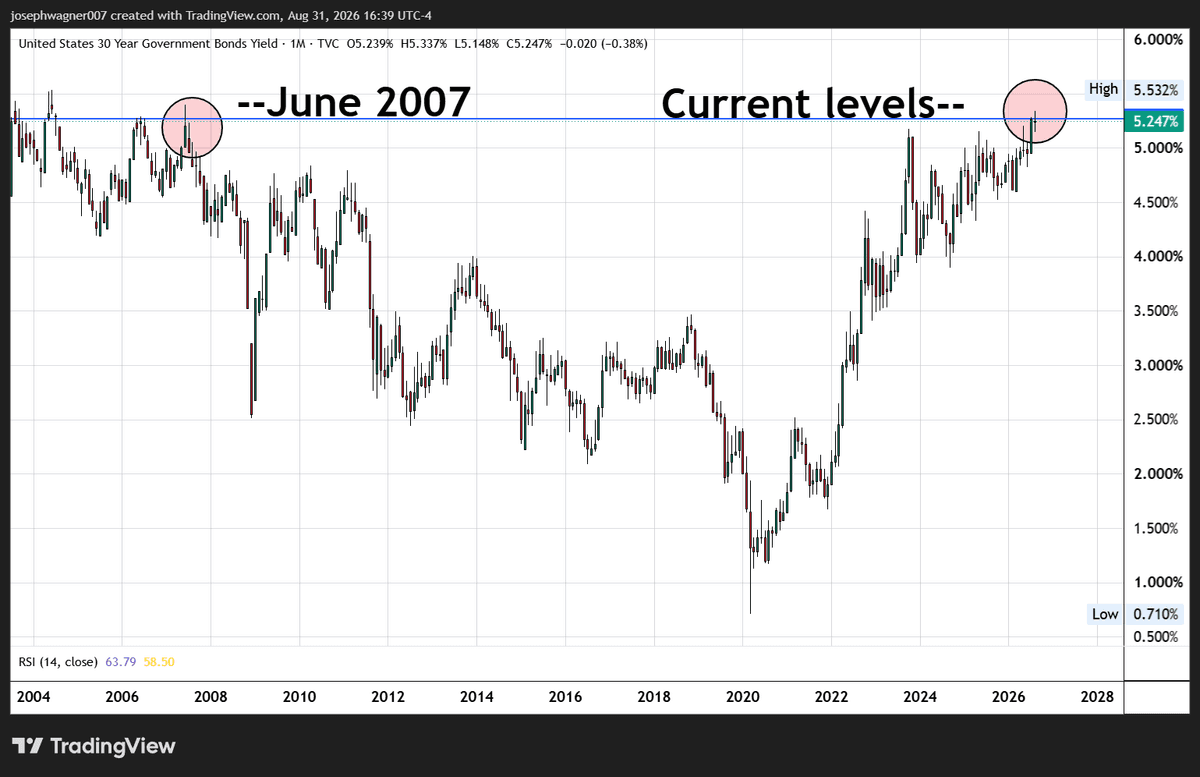
Warsh's keynote did not have the effect of lowering longer-term securities, which continued their ascent instead. The 30-year U.S. government bond is now within 0.10% of levels last seen in June 2007, just months before the 2008 financial crisis.
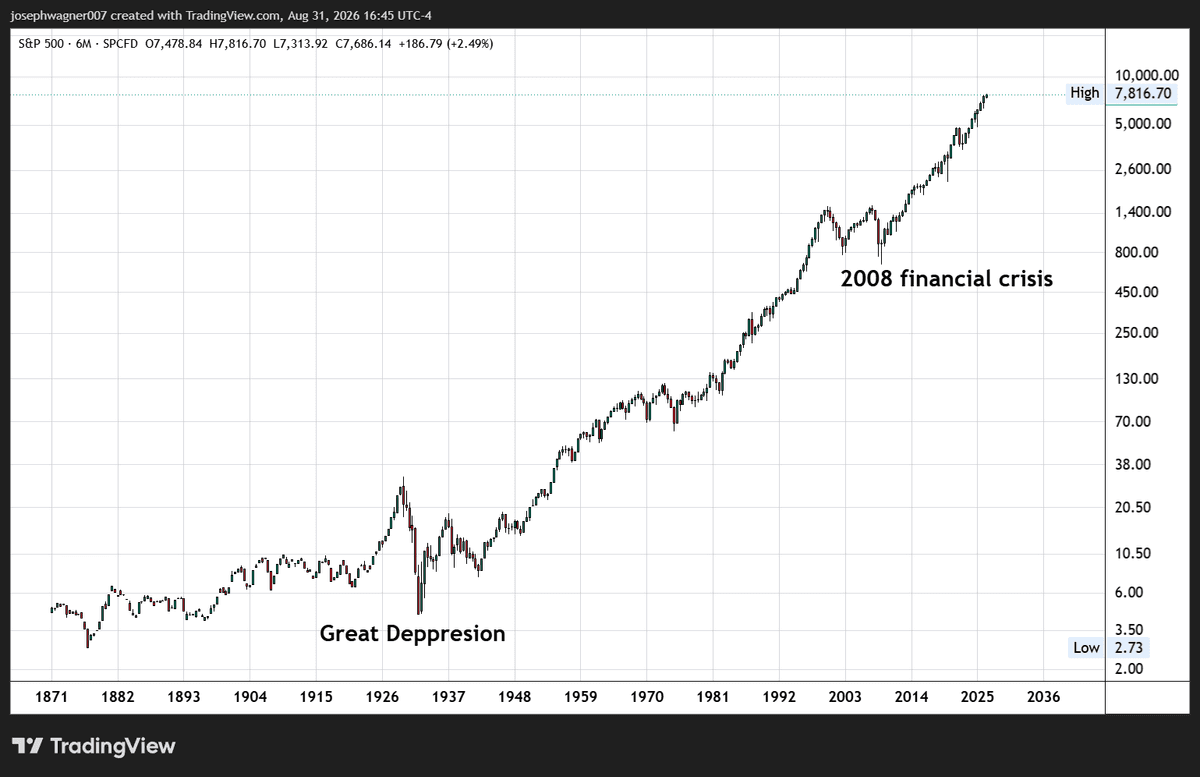
That crisis, also predicated on borrowing and lending practices, took the S&P 500 down 55% over an 18-month period — the steepest decline in the index's nearly 200-year history outside of the Great Depression, which cut the S&P by 86% over 36 months beginning in 1932.
Taken together, the session captures a tension worth watching. Gold's initial selloff was a fairly standard reaction to a Fed chairman warning that inflation remains too elevated and hinting the central bank may still have work left to do — a stance that argues for higher real rates and a firmer dollar, both usually unfriendly for bullion. Yet gold's quick stabilization above the $4,468–$4,474 confluence, and its ability to close out its best month since February despite Friday's shock, hints that something sturdier than a single speech is underpinning the metal. That something may be the same force pushing the 30-year bond toward levels last seen on the eve of the 2008 crisis: not inflation alone, but mounting unease over the scale of government borrowing and the premium investors now demand to hold long-dated debt — a structural pressure Warsh's remarks did nothing to relieve, especially given his continued reluctance to spell out a clear reaction function. Historically, that combination — elevated long-term yields, a restless bond market, and uncertainty over how policymakers will respond — has been fertile ground for gold as a hedge against both inflation and financial instability, even as its daily moves continue to track short-term rate expectations. As long as the $4,468–$4,474 zone holds, gold's path of least resistance remains higher, and the very bond market stress that briefly rattled it on Friday may end up being its strongest ally.
For more daily gold market analysis, visit thegoldforecast.com.
Wishing you, as always, good trading.
