
Strengths
- Wintermute reported that institutional investors accounted for a record 72% of OTC spot trading volume during the first half of 2026, up from 61% in the prior six months. The growing institutional presence has coincided with lower market volatility and nearly 50% growth in tokenized real-world assets to $31 billion, highlighting the continued maturation of the digital asset ecosystem.
- Stablecoin issuer Circle acquired IBM's blockchain patent portfolio, adding 680 patent families and nearly 1,000 issued patents worldwide. The acquisition makes Circle the largest U.S. holder of blockchain patents, reinforcing its technological leadership and highlighting continued investment in digital asset infrastructure.
- Morgan Stanley said the era of traditional banking hours is ending as tokenized assets and 24/7 markets gain traction. Following the launch of spot Bitcoin, Ether and Solana ETFs and expanded crypto trading, the firm expects tokenized money market funds and equities to accelerate institutional adoption of blockchain technology.
Weaknesses
- Institutional demand for Bitcoin ETFs remains subdued. U.S. spot Bitcoin ETFs attracted just $205 million in net inflows in July, putting them on track for their weakest month on record after $2.43 billion and $4.52 billion in net outflows during May and June, respectively. The data suggests institutional participation has yet to recover meaningfully despite recent market stabilization.
- Anchorage Digital and other industry groups argued the Federal Reserve’s proposed payment account lacks critical features, including FedACH access, intraday liquidity and interest on reserve balances. The limitations would force crypto firms to continue relying on intermediary banks, slowing integration with the U.S. payment system.
- Invest said the digital asset sector is entering its largest consolidation phase as investor capital increasingly flows to a handful of dominant protocols. Hyperliquid and Pump.fun account for 67% of crypto application revenue, while the top three platforms generate nearly 80%, contributing to exchange closures and mounting pressure on smaller market participants.
Opportunities
- MoonPay, a leading digital asset payments platform, launched PayBox, enabling ChatGPT and Claude to execute blockchain-based payments and, soon, DeFi transactions through a secure, non-custodial infrastructure. Backed by industry standards supported by Visa, Mastercard, Stripe and other major firms, the platform highlights the growing convergence of artificial intelligence and digital asset ecosystems.
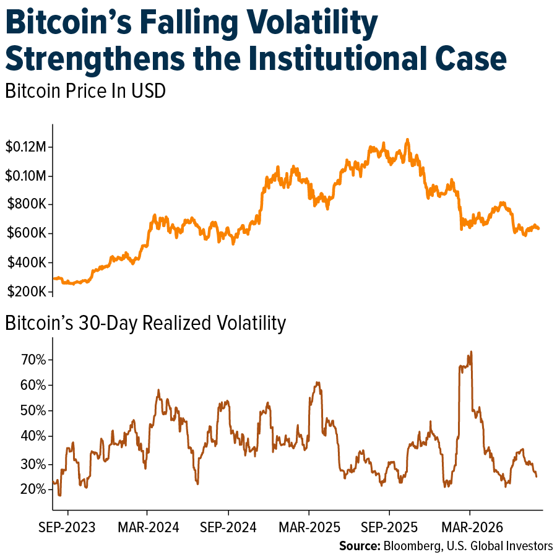
- Bloomberg Intelligence expects Bitcoin's improving risk-return profile and lower volatility to support larger allocations from pension funds, endowments and corporations. Combined with more than $125 billion in spot Bitcoin ETF assets, the trend highlights the digital asset market's growing maturity and institutional appeal.
- BlackRock, Fidelity, Franklin Templeton, Goldman Sachs and SoFi publicly endorsed the CLARITY Act, arguing that clear digital asset regulations would strengthen investor protection, provide regulatory certainty and enhance U.S. competitiveness. The broad industry support could improve the prospects for a comprehensive crypto market framework.
Threats
- North Korean authorities arrested former military hackers accused of laundering stolen state funds through cryptocurrency, underscoring the country's role in global crypto-related cybercrime. According to Chainalysis, North Korea-linked groups stole a record $2 billion in crypto last year, while TRM Labs estimated they accounted for 76% of all crypto hack and scam losses through April 2026.
- JPMorgan said the probability of the CLARITY Act passing the U.S. Senate this year has fallen to 37%, reducing one of the industry's key regulatory catalysts. The bank warned that prolonged delays could slow institutional adoption and allow tokenization activity to migrate toward traditional financial infrastructure rather than public blockchain networks.
- Reuters reported that a Dubai-based crypto exchange allegedly facilitated a $4 billion sanctions-evasion network linked to Iranian entities, moving hundreds of millions of dollars through major global exchanges. The case underscores persistent anti-money laundering and sanctions compliance risks that continue to draw heightened regulatory scrutiny across the digital asset sector.
