
On July 31st, we wrote here on Kitco that gold and silver weren't waiting for September to bottom. On August 7th, we wrote again that the turn was underway and $5,000 gold was back in play. Both calls are looking right, and we bring that up not to pat ourselves on the back, but because the same thesis that just drove gold's best week since January is now loading up in silver. And we think the bigger move may still be ahead.
Every Sunday in our Navigating the Week Ahead report, we map the key levels and setups in gold and silver before the trading week opens. If you want the roadmap for next week in both markets, sign up here.
Silver is up roughly 20% this month and sitting near $71. The question we keep getting is simple: did I miss it? Our answer is no, and here is why. The backdrop that is driving this move keeps getting stronger. The August 7th jobs report showed the economy lost 23,000 jobs, killing September rate hike expectations. Then this week, Treasury Secretary Bessent doubled the government's bond buyback program targeting 10- to 30-year debt and signaled he is willing to go further. Yields cratered. When the Fed is backing away from hiking and the Treasury is actively trying to push long-term rates lower, that is not one tailwind for precious metals; it is two. Add to that silver's sixth consecutive annual supply deficit with exchange stockpiles drawing down for five straight years, and the bull case here is not a trade. It is structural.
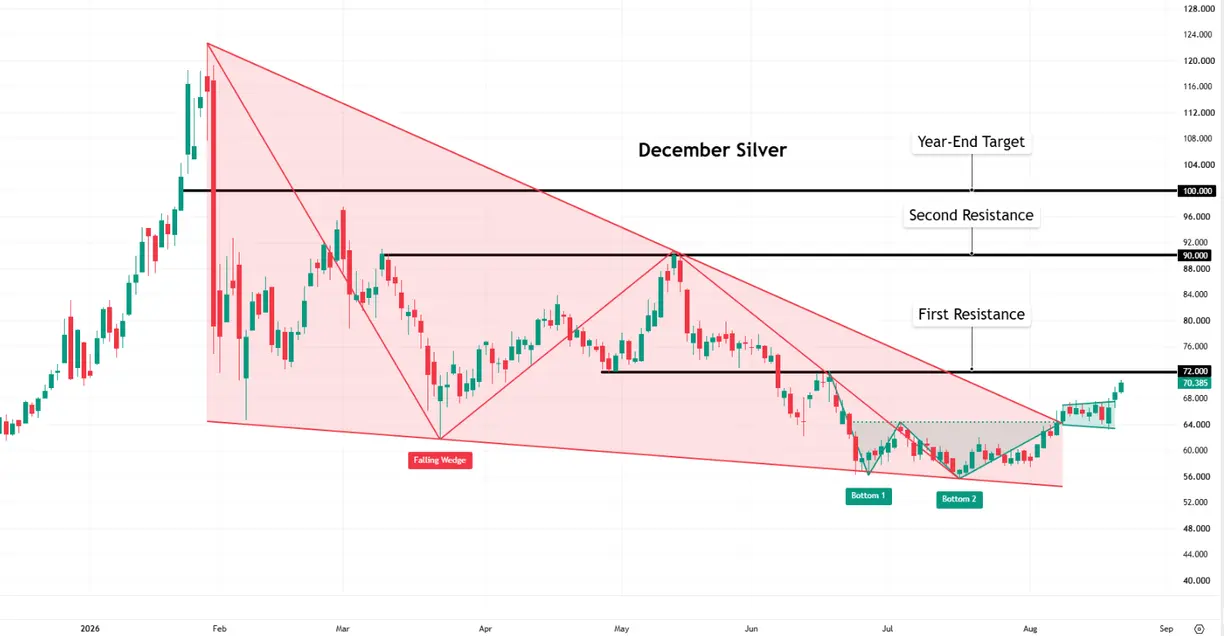
Daily Silver Chart
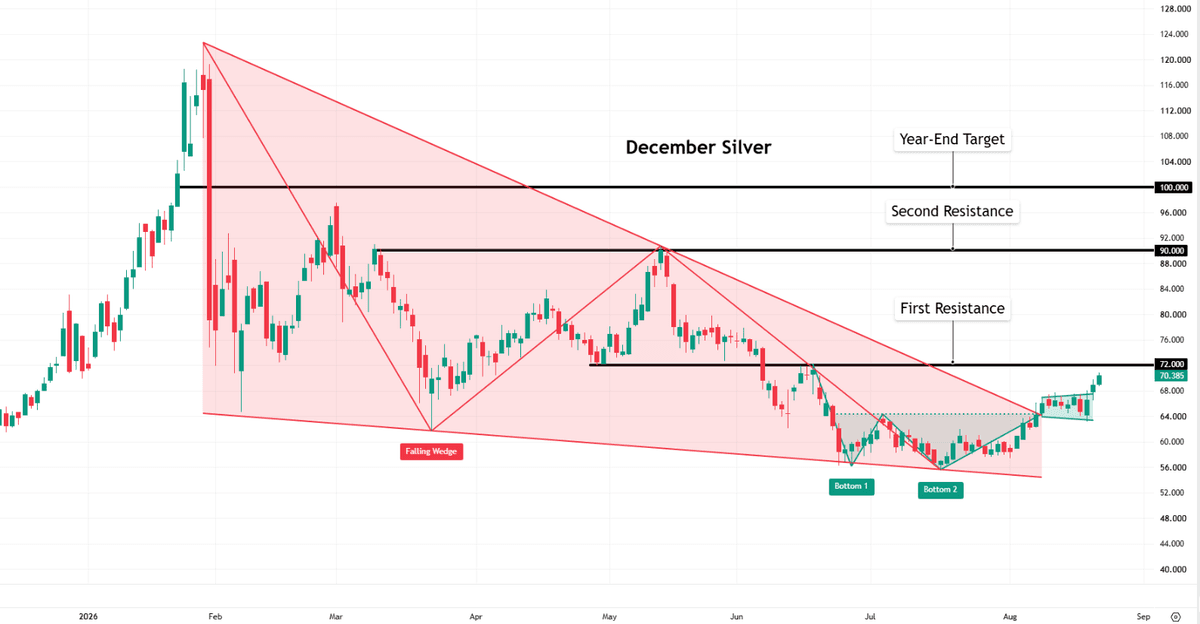
The technicals reinforce it. Silver is breaking out of a falling wedge pattern that has been building since the highs, and the upside levels we are watching are $74 first, then $90, and ultimately $100 before year-end. On the downside, $63 to $60 are the floors we need to hold.
For those looking to get involved, there are a few different ways to participate depending on your experience and risk tolerance.
Example 5,000-Ounce Silver Call Spread
Example 5,000-Ounce Silver Call Spread: For traders who want defined-risk exposure to the next leg, a long-dated bull call spread on COMEX silver futures is worth considering. For example purposes only, one could purchase a January silver 90 call while selling the January 100 call against it. The approximate cost is $4,700 to $5,000 per spread, and that is the maximum you can lose, known on day one. If silver closes above $100 at expiration on December 28, the spread pays $50,000 less the cost of the spread and transaction fees. Breakeven at expiration is approximately $91. Silver would need to rally roughly 40% from current levels for this spread to pay in full, so participants should size accordingly.
For active traders comfortable with futures margin, the standard 1,000-ounce COMEX silver contract offers direct exposure to every dollar move in the silver price. For those newer to the futures markets, the 100-ounce Micro Silver contract allows you to participate with a fraction of the margin and risk. To receive more information on trading the 100-ounce Micro Silver futures, sign up here.
Performance Disclaimer
Hypothetical performance results have many inherent limitations, some of which are described below. No representation is being made that any account will or is likely to achieve profits or losses similar to those shown. In fact, there are frequently sharp differences between hypothetical performance results and the actual results subsequently achieved by any particular trading program.
One of the limitations of hypothetical performance results is that they are generally prepared with the benefit of hindsight. In addition, hypothetical trading does not involve financial risk, and no hypothetical trading record can completely account for the impact of financial risk in actual trading.
For example, the ability to withstand losses or to adhere to a particular trading program in spite of trading losses are material points that can also adversely affect actual trading results. There are numerous other factors related to the markets in general or to the implementation of any specific trading program that cannot be fully accounted for in the preparation of hypothetical performance results all of which can adversely affect actual trading results.
