
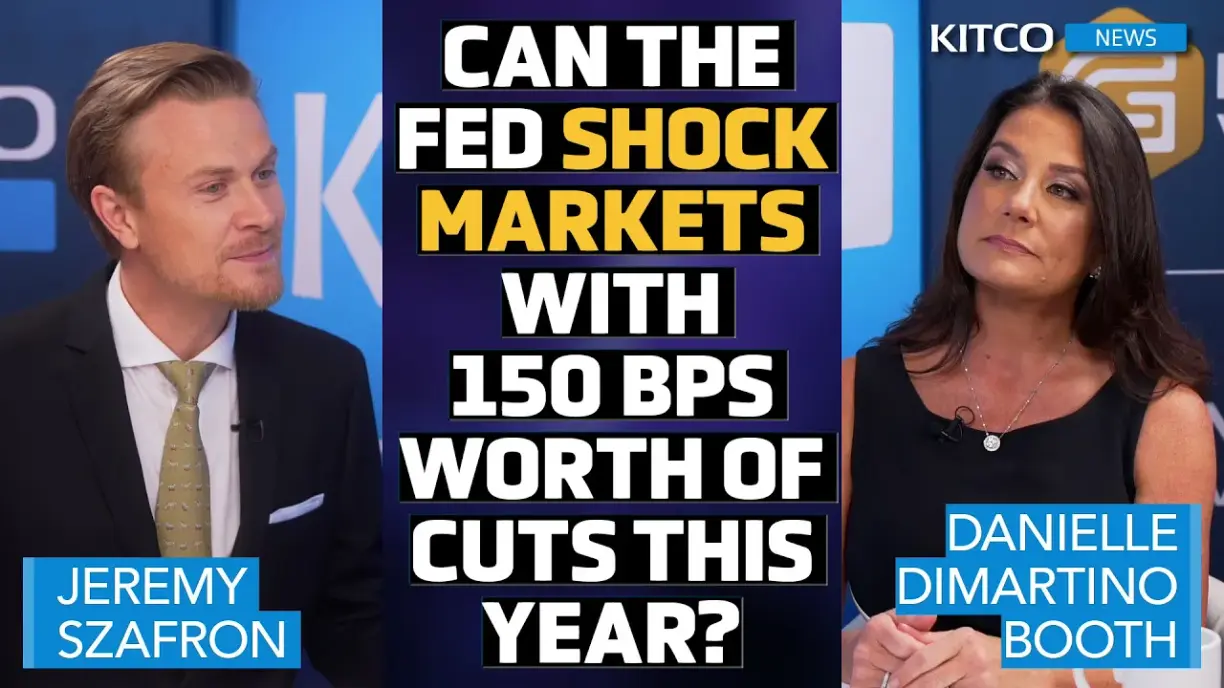
(Kitco News) - Markets are pricing in the Federal Reserve's first rate cut to come in September, but will it be too late to avert a looming consumer debt crisis?
In a recent interview with Jeremy Szafron, Anchor at Kitco News, Danielle Di Martino Booth, a former Federal Reserve advisor and CEO of QI Intelligence, said that Powell's commitment to maintaining high interest rates, despite economic indicators suggesting otherwise, could be exacerbating the financial instability facing American households.
The Fed's indecision is becoming a focal point as American households face unprecedented debt levels and rising bankruptcy filings. As of July 2024, U.S. consumer debt has reached historic highs, surpassing $4.5 trillion, with credit card debt alone exceeding $1.27 trillion, according to the Federal Reserve and the New York Federal Reserve.
Consumer debt crisis: Are rate cuts coming too late?
DiMartino Booth highlighted the gravity of the situation. "The average U.S. household is spending more to service non-mortgage debt than they are to service their mortgage debt. We've never seen this. It's unprecedented."
This debt burden, coupled with stagnant wage growth, is straining household budgets and pushing many towards financial instability, she added.
Powell's strategy might involve aggressive rate cuts later this year, DiMartino Booth tells Kitco News.
"We could get to September and it might be 50 basis points. And it might be followed right after that in the November 7th meeting and right after that in the December meeting such that we could possibly have 150 basis points of rate cuts in theory if he's going to be playing catch up," she said.
However, the delayed rate cuts might be too little, too late, as the damage from high interest rates has already impacted consumer spending and debt servicing abilities, DiMartino Booth warned. For more on what can go wrong, watch the video above.
The real impact of Artificial Intelligence on jobs
Elon Musk's drastic job cuts at Twitter in late 2022 set a precedent for the tech industry, DiMartino Booth pointed out.
Musk's reduction of Twitter's workforce by approximately 75% was initially met with skepticism, but the platform's continued operation without major disruptions challenged conventional management practices.
"Elon Musk cutting to the extent that he did preceded the revolution in artificial intelligence and how many employees being replaced, especially at a middle management level by artificial intelligence and or I can work from anywhere, translating into the offshoring of white-collar positions to places like India and the Philippines," DiMartino Booth explained.
On the impact of AI on the middle management and other trends impacting the labor market, watch the video above.
Rising Bankruptcy Filings: A Sign of Economic Trouble
The increase in bankruptcy filings in 2024 is a clear indicator of economic distress. According to Standard & Poor's Global, there have been 436 Chapter 11 filings this year, the highest since 2010.
"2024 is like 2023 on steroids. It’s hurried up because a lot of the job losses that we’re seeing this year are triggering 60 to 90 days of severance. And that’s why we’re seeing the very steady march increase in jobless claims week after week," DiMartino Booth described.
This surge in bankruptcies signals a broader economic challenge that policy changes need to address urgently, according to DiMartino Booth. To hear more on these pressing economic issues, watch the video above.
What DiMartino Booth reveals next might just change your perspective on the future of the economy. Don't miss out—watch the full interview above.
Coverage of the Rick Rule Symposium 2024 is brought to you by G Mining Ventures.