

(Kitco News) - Hopes for a stabilizing U.S. housing market were bolstered after the number of potential home buyers rose beyond expectations last month, according to the latest data from the National Association of Realtors (NAR).
The U.S. pending home sales index rose 3.3% in November, the NAR announced on Monday. The data was significantly better than forecasts, as economists expected a 1.0% rise. October’s print was revised to 2.4% from the initial reading of 19.%. Month-over-month pending home sales rose in the Northeast, Midwest, South, and West.
For the year, pending home sales rose 2.6% against expectations for a -0.6% decrease and following the unrevised -0.4% drop in October. Year-over-year sales also increased in all four regions.
"Homebuyer momentum is building. The data shows the strongest performance of the year after accounting for seasonal factors, and the best performance in nearly three years, dating back to February 2023," said NAR Chief Economist Lawrence Yun. "Improving housing affordability – driven by lower mortgage rates and wage growth rising faster than home prices – is helping buyers test the market. More inventory choices compared to last year are also attracting more buyers to the market.”
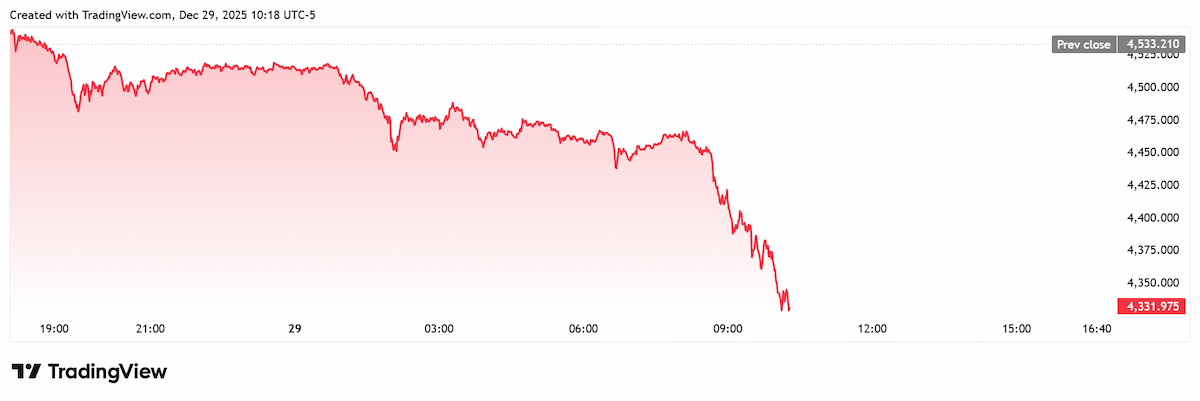
Spot gold was trading just off session lows in the minutes following the housing data. It last traded at $4,335.14 per ounce for a loss of 4.37% on the day.
November's REALTORS Confidence Index survey showed that 22% of NAR members expect an increase in buyer traffic over the next three months, up from 17% in October but down from 24% one year ago, the report noted. 18% also expect an increase in seller traffic, up from 16% last month and down from 22% in November 2024.
Economists pay close attention to pending home sales because the report is a leading indicator of existing home sales, given that contracts are signed a few months before homes are actually sold.
The U.S. housing market has been trying to stabilize after seeing significant weakness over the past two years, as many potential home buyers were priced out of the market due to rising prices and high mortgage rates.
