
(Kitco News) - Recent volatility in the precious metals market has delivered a gut punch to investors to start the year. After a strong start, gold and silver prices were hit with a historic selloff, which was followed almost immediately by one of the strongest rallies on record. The extreme volatility has left even seasoned market participants questioning whether gold and silver are behaving as they should.
Michael Khouw, chief strategist at YieldMax and a veteran options trader with deep roots in the commodities markets, said in an interview with Kitco News that this is exactly how commodities behave.
“Commodities go farther, faster, and for longer than people expect,” Khouw said. “And when they rise quickly, volatility isn’t a sign of dysfunction—it’s the natural byproduct of the move.”
Khouw’s comments come as gold and silver begin to carve out some stability, holding well off last week’s lows but still below key resistance points. Spot silver last traded at $81.21 an ounce, down 2.45% on the day; meanwhile, spot gold last traded at $5,038 an ounce, down 0.40% on the day.
With investors looking to get back into gold and silver as price action calms down, one of the most common mistakes they make, Khouw said, is applying equity-market logic to commodities.
“In equities, rising prices usually coincide with falling volatility,” he said. “In commodities, it’s the opposite. As prices rise—especially rapidly—volatility increases.”
This dynamic, known as positive skew, means that upside call options trade at a premium relative to downside puts. The result is an unusually attractive risk-reward profile for investors who understand how to structure positions properly.
“This setup allows for zero-cost collars in metals,” Khouw noted. “In silver, for example, you can often finance a 10% out-of-the-money put by selling a 20% out-of-the-money call. That creates asymmetric upside with defined downside risk.”
As investors process precious metals’ recent price action, Khouw said that after their near-parabolic rally into late January, a sharp correction was not only predictable—it was healthy.
“Parabolic moves always invite violent pullbacks,” he said. “History shows that clearly. What surprises people is not that it happens, but how quickly it happens.”
Although there is still a great deal of bullish sentiment in the marketplace, Khouw warned that significant corrections inevitably create a new layer of resistance. Some analysts have said they are watching initial resistance in gold at $5,100, while the $90 area could cap silver prices.
“There’s now a cohort of recent buyers who just want to get back to breakeven,” Khouw said. “As prices recover, those investors tend to sell into strength, which slows the advance.”
However, he added that this does not invalidate the long-term bull case.
“It just means the market needs time to digest the move.”
Khouw said one of the biggest misconceptions following last week’s selloff is that institutional investors are exiting precious metals altogether.
“What’s really happening is rebalancing,” Khouw explained. “If gold and silver become outsized positions due to rapid appreciation, portfolio managers are natural sellers—even if they remain bullish.”
This is especially true for funds that use risk-weighted allocation models.
“If gold’s volatility jumps from 20 to 80, you can’t hold the same notional exposure,” he said. “You either reduce the position or hedge it.”
At YieldMax, Khouw said the firm trimmed metals exposure a day before the historic selloff—not because of a bearish outlook, but because allocations had become disproportionately large.
“We’re still long,” he said. “We just manage risk around it.”
Despite the dramatic pullback, Khouw pointed to fund-flow data showing continued institutional interest.
In one YieldMax gold miners fund, net creations remained positive even as prices declined—a signal that investors were buying weakness rather than fleeing the space.
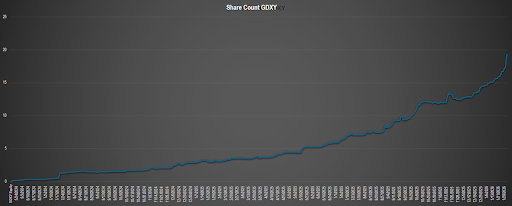
“That tells you confidence hasn’t broken,” Khouw said. “If investors were abandoning gold, you wouldn’t see inflows during a drawdown.”
Despite higher volatility, Khouw said gold’s role as a store of value remains intact. He noted that investors only need to compare home prices relative to the precious metal.
“If you look at how many ounces of gold it took to buy the median U.S. home in the 1960s versus today, it actually takes fewer ounces now,” he said. “That’s gold doing exactly what it’s supposed to do.”
Periods when that relationship breaks, he explained, often signal opportunity rather than failure.
“When gold dramatically underperforms real assets, that’s usually when it’s cheapest. Gold and silver aren’t broken,” he said. “They’re behaving exactly as commodities do during powerful secular moves. You don’t need to put everything into metals,” Khouw said. “But ignoring them entirely, especially in a world of debt monetization and currency debasement, is a far greater risk.”
