
(Kitco News) - As many analysts expected, central banks used gold’s further selloff last month to tactically increase their official gold reserves, with the People’s Bank of China continuing to dominate the market.
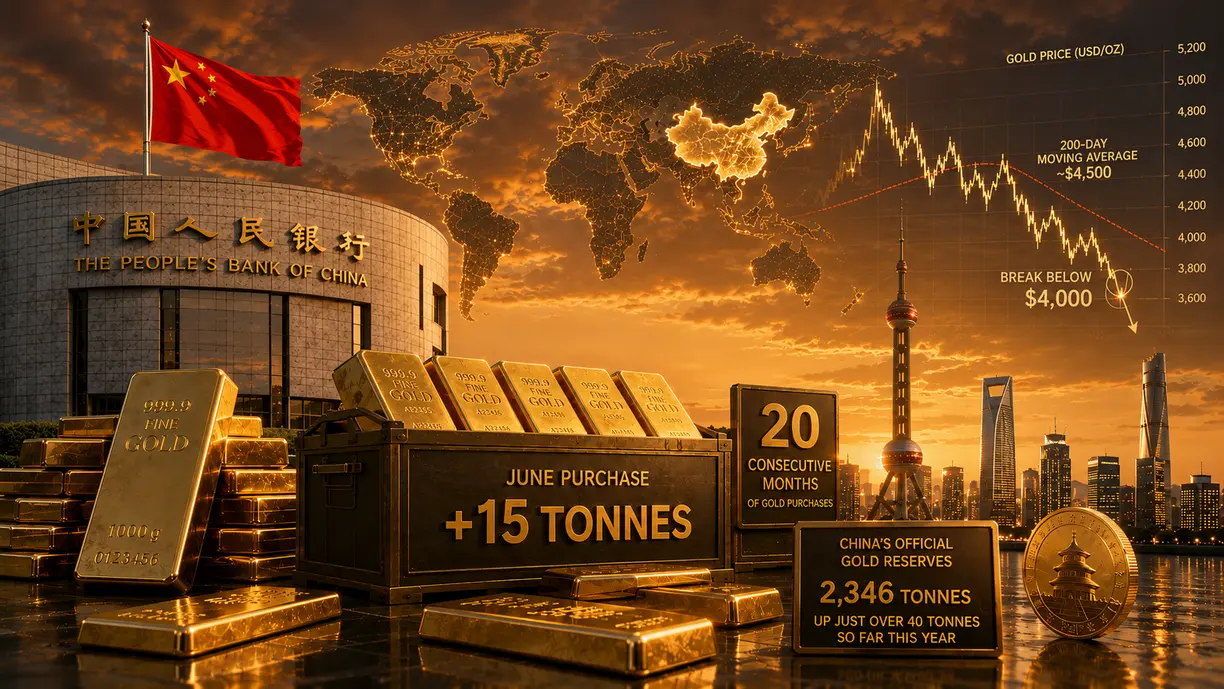
According to updated reserve data, China’s central bank bought 15 tonnes of gold last month, its largest purchase so far this year. The purchase also marks the 20th consecutive month the PBOC has increased its official gold reserves.
In a social media post, Krishan Gopaul, Senior Analyst for EMEA at the World Gold Council, noted that China’s official reserves have increased by just over 40 tonnes so far this year, bringing total holdings to 2,346 tonnes.
China’s increased activity came as the gold market experienced a significant technical breakdown, with prices falling below their 200-day moving average at around $4,500 an ounce. The selling momentum eventually pushed gold prices below $4,000 an ounce.
Although gold continues to struggle to attract consistent bullish momentum, analysts said the market appears to be building a solid floor around $4,000 an ounce. They added that persistent central bank demand is providing critical support for the precious metal.
While China is seen as the dominant player in the gold market, its central bank is not the most active buyer.
In a separate social media post, Gopaul noted that the Central Bank of Uzbekistan added another 9 tonnes to its official reserves in June.
“This lifts its YTD net purchases to 41 tonnes - making it the second largest buyer based on available data,” he said.
The National Bank of Poland has not yet published its updated reserve data. However, the central bank continues to lead all official buyers. As of May, it had increased its official gold reserves by 64 tonnes.
Central bank gold demand has been volatile in recent months as some nations have been forced to monetize their gold reserves to support their currencies and navigate the global energy crisis created by the war in Iran.
However, analysts said that, with the worst of the crisis over, they expect official-sector demand to strengthen during the second half of the year.
In a recent interview with Kitco News, Jerry Prior, Chief Operating Officer and Senior Portfolio Manager at the KraneShares Mount Lucas Managed Futures Index Strategy ETF (NYSE: KMLM), said the reasons central banks are increasing their gold reserves haven't changed.
"There's a long-term de-dollarization theme that is structural, and I think it'll be persistent,” he said. “If countries are producing more oil and income starts flowing again... we don't see that capital going into the Treasury market. We see it going back into the gold market."
