
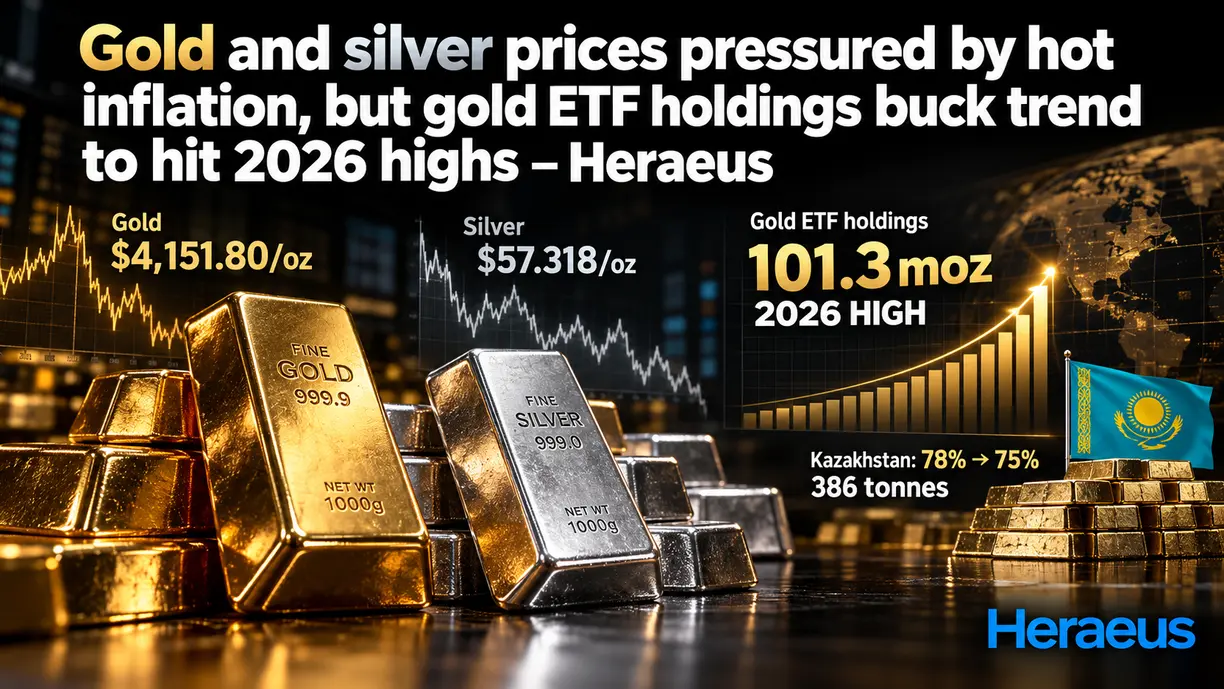
(Kitco News) – Gold and silver both came under renewed pressure following last week’s elevated CPI and PPI prints. Still, gold ETF demand has bucked the earlier trend to rise to annual highs despite the oil and rate headwinds. At the same time, India’s evolving import tax rules continue to impact precious metals demand, according to precious metals analysts at Heraeus.
In their latest update, the analysts noted that gold prices held critical support levels last week amidst a challenging macro backdrop.
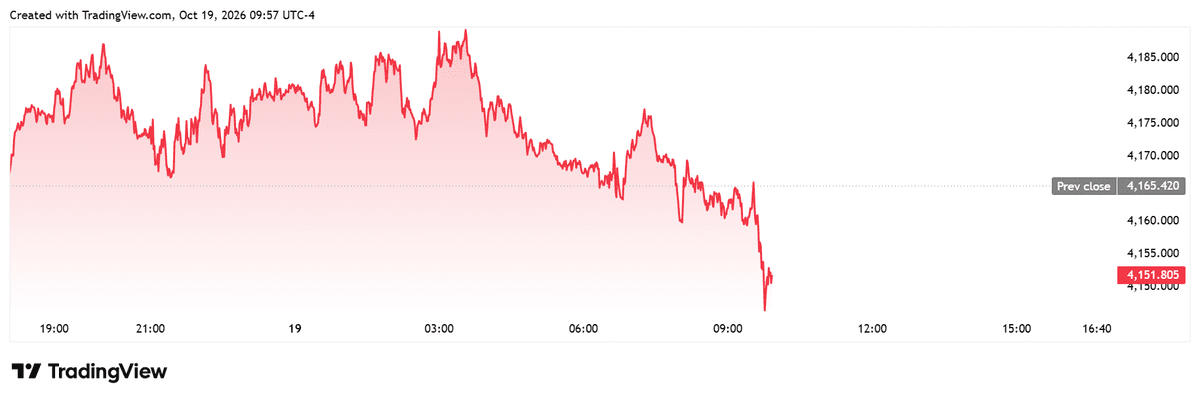
“Gold briefly wicked below $4,100/oz following the September US CPI release, as the initially hawkish market reaction pushed Treasury yields and the dollar higher and increased expectations for another Fed hike,” they noted. “That reaction has since partly reversed, with the implied probability of a 25 bp increase at the 28 October meeting falling and gold recovering the support at $4,100/oz as yields and the dollar have eased.”
Gold ETF holdings have also climbed to their highest levels of the year to date despite the significant pressures on the gold price.
“Bloomberg-tracked holdings reached a year-to-date peak of 101.3 moz on 8 October, up 5.3% from the year-to-date low of 96.2 moz on 20 July and around 2% higher than at the start of the year,” the analysts noted. “Holdings have since remained just above 101 moz, even as gold has struggled at around $4,100-4,200/oz, well below its January peak.”
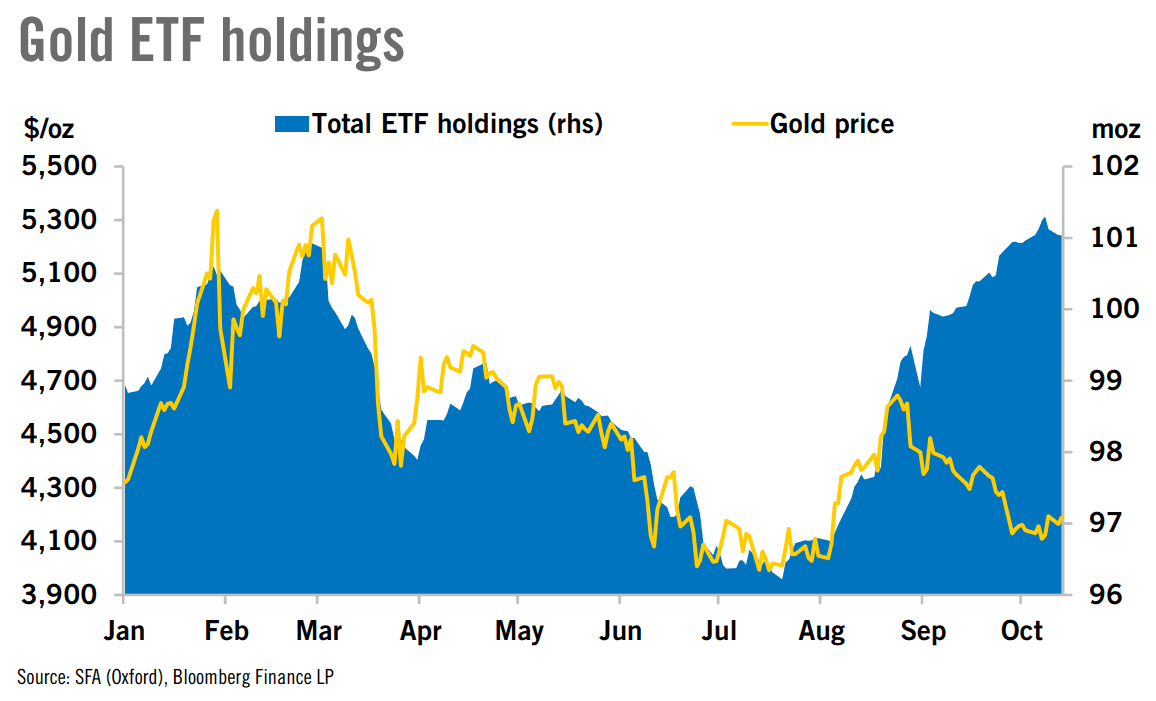
“For much of 2026, changes in ETF holdings have broadly tracked the gold price, falling during the correction from the January high before recovering as prices rebounded through August, but the two have since diverged,” they said. “ETF holdings often lag turning points in the price, as investors tend to hold positions, or add on dips, in anticipation of a renewed rally until it becomes clear that one is not imminent. Demand has also broadened geographically, with Asian-listed funds accounting for almost half of the increase in global holdings over the 12 months to September, compared with around 30% from US-listed funds and 20% from Europe.”
And after being among the largest sovereign buyers of 2026, the central bank of Kazakhstan is reducing its gold holdings.
“The National Bank of Kazakhstan plans to lower gold's share of its international reserves from around 78% to 75% by year-end, after holdings climbed to 386 tonnes,” the analysts said. “The bank was the world's fourth-largest reported central-bank buyer through August, adding around 36 tonnes during the first eight months of the year. The planned reduction will be split between options and sales of physical bullion, as elevated US Treasury yields increase the relative appeal of dollar assets and the central bank seeks to reduce concentration risk in its reserves.”
“At current reserve values, a 3-percentage-point reduction in gold's share would represent roughly 15 tonnes of gold exposure, although the amount of physical metal sold will depend on prices and the use of derivatives,” they noted. “The move is therefore primarily a portfolio rebalancing exercise rather than evidence of a broader reversal in central-bank gold demand.”
Spot gold continued to trade near session lows early in the early part of the North American session, and last traded at $4,151.80 per ounce for a loss of 0.33% on the daily chart.
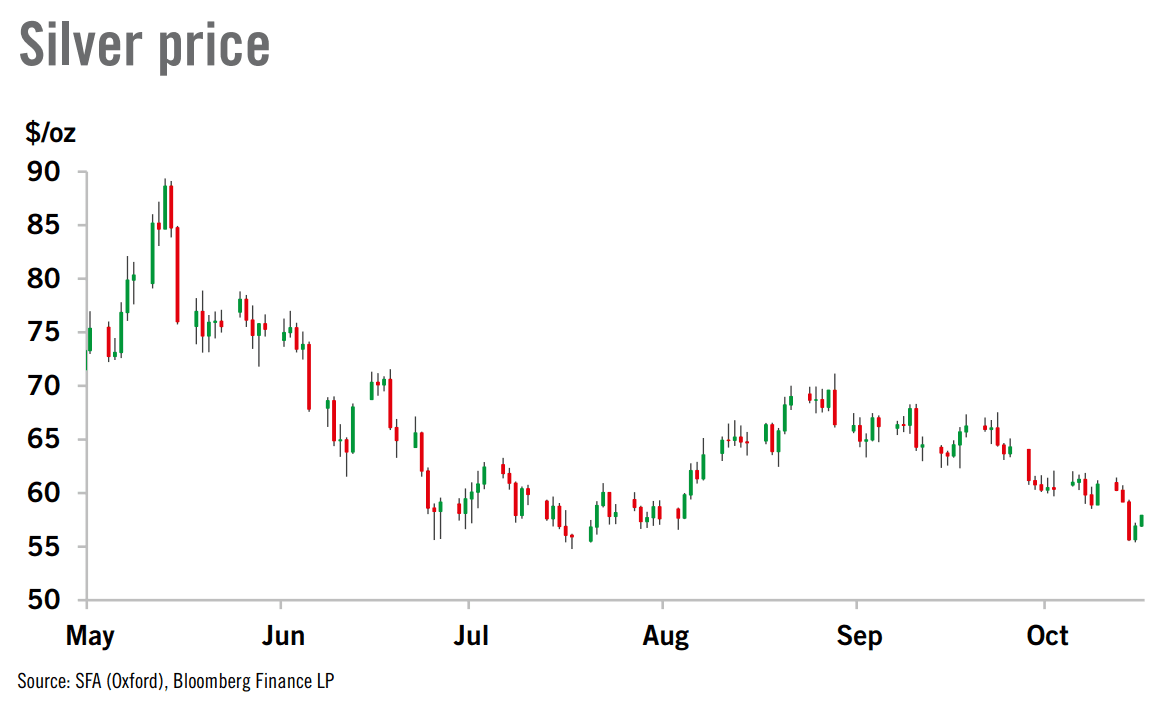
Turning to silver, Heraeus analysts pointed out that the gray metal was also under pressure following last week’s hotter-than-expected inflation reports.
“The silver price fell through support around $60/oz and briefly approached the July lows around $55/oz, as the data strengthened expectations for another Fed rate hike and initially pushed Treasury yields and the dollar higher,” they said. “That reaction has subsequently eased, with the implied probability of a 25 bp increase at the 28 October meeting falling to below 30%, while the 10-year Treasury yield and dollar have both moved lower, down from recent yearly highs. Silver consequently recovered above $57/oz, although the break below $60/oz leaves the technical picture weaker and highlights the metal’s sensitivity to changes in real yields and monetary-policy expectations.”
And India’s import tax regime for precious metals continues to evolve, impacting banks and wholesale demand.
“The Indian government has confirmed that silver, gold and platinum imports by banks and nominated agencies are subject to 3% Integrated Goods and Services Tax,” the analysts wrote. “The government said on 8 October that the exemption for these channels had not been extended beyond 31 March, putting all import routes on an equal tax footing. Banks have, in practice, been paying the tax since April, after a month-long pause in imports while the rules were unclear. As the levy is recoverable as an input tax credit, its main effect is on working capital rather than final costs, and the confirmation removes uncertainty rather than adding a new obstacle to Indian silver imports. India imported 232 moz of silver in 2025, equivalent to around 20% of global demand.”
Silver prices were also giving back some of their early gains on Monday morning, but they remained in positive territory on the session.
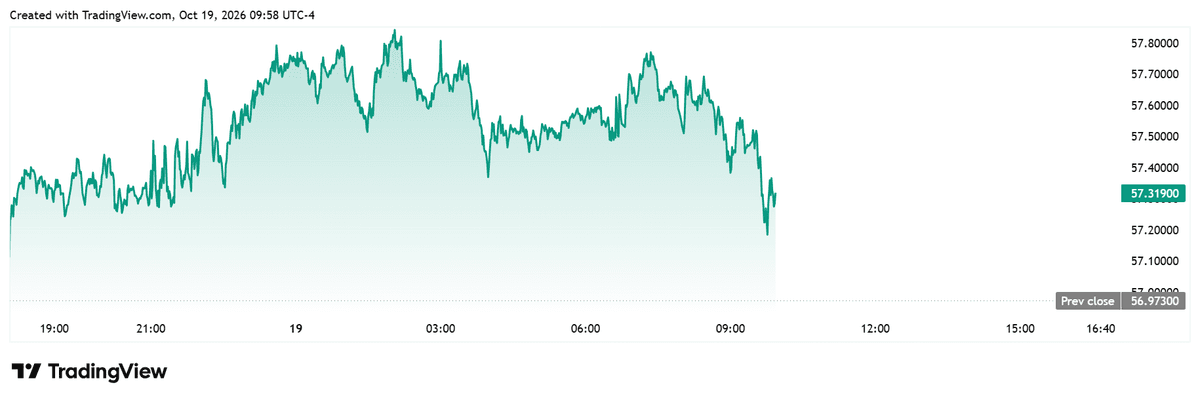
Spot silver last traded at $57.318 per ounce for a gain of 0.61% on the daily chart.
See live precious metals prices for gold, silver, platinum and palladium — in USD, CAD and 12 more currencies.
