
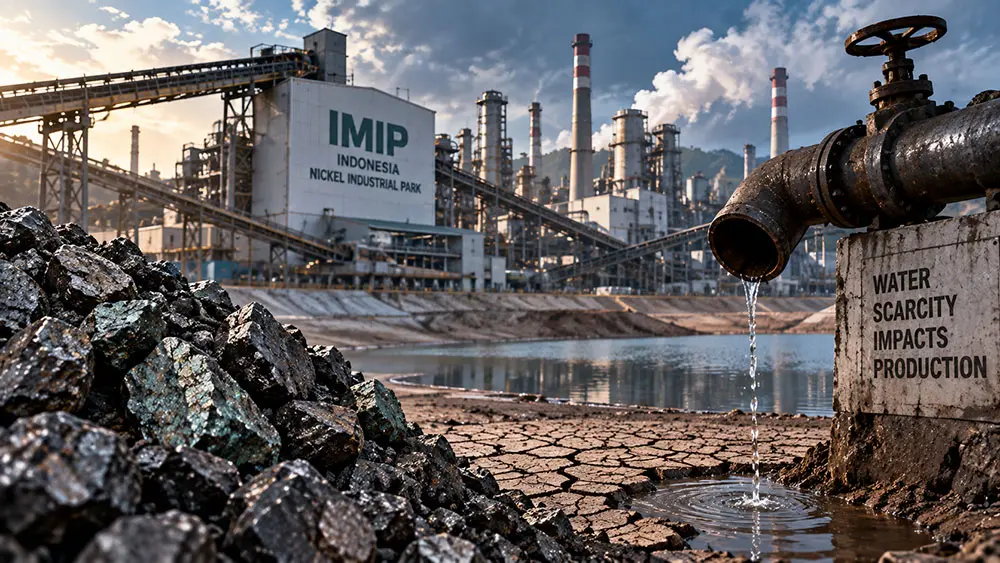
Indonesian nickel hub PT Indonesia Morowali Industrial Park (IMIP) on the island of Sulawesi said on Tuesday that a water shortage linked to this year’s El Niño weather pattern has forced some smelters to reduce their nickel pig iron production.
IMIP informed companies at the weekend that they would need to reduce production of nickel pig iron due to water shortages, Bloomberg reported on Tuesday, citing sources.
In response, IMIP spokesperson Dedy Kurniawan confirmed to Reuters that the shortage has led to the reduction of nickel pig iron production at some smelters.
IMIP has not received exact figures from tenants on the extent of the production cuts, Dedy said.
“However, the effect has not caused smelter operations to stop or even led to workforce reductions so far,” Dedy said, adding that the hub and some tenants are adjusting production targets and seeking alternative water supplies.
PT IMIP is the largest nickel-processing hub in resource-rich Indonesia and has over 50 tenants, mainly makers of nickel products used in stainless steel and EV battery materials, according to the company’s website.
Nickel pig iron, a low purity nickel metal and a key input for stainless steel, makes up the majority of Indonesia’s nickel exports.
(Reporting by Fransiska Nangoy; Writing by Stanley Widianto; Editing by David Stanway)
