
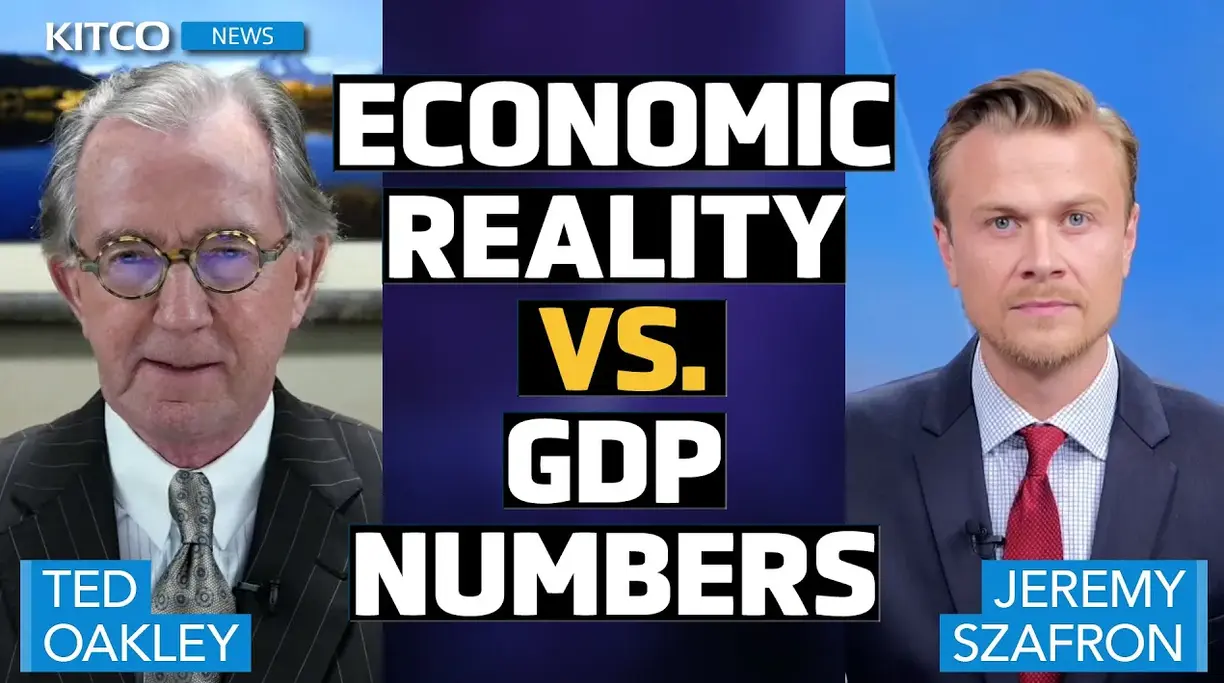
(Kitco News) - The U.S. economy is grappling with an escalating debt crisis, raising concerns about the sustainability of growth and its economic health. As the government borrows heavily to fund various initiatives, it raises questions about the long-term impacts on the nation's financial stability.
According to Ted Oakley, Managing Partner and Founder of Oxbow Advisors, the excessive focus on government debt might be crowding out other critical areas of the economy. "You do get in a situation after a while where you're using so much of the money you create in the country to buy your own bonds," he told Kitco News Anchor Jeremy Szafron. Oakley predicts significant challenges within the next five years unless decisive actions are taken.
GDP Growth: An Inflation Illusion?
The reported GDP growth has been a contentious topic, with Oakley suggesting that current figures may not accurately reflect the economic reality for many Americans. "A lot of GDP right now comes from inflation," he stated, pointing out that rising prices inflate GDP figures without the corresponding real economic growth.
The GDP growth figures have been misleading, as they often fail to account for the inflation that inflates these numbers. For example, in the first quarter of 2024, GDP growth was reported at a rate 25% higher than initially forecasted, but much of this growth was attributed to inflation rather than real economic progress.
This disconnect between GDP figures and actual economic conditions is evident in consumers' struggles. Over half of the U.S. population is currently facing financial hardship, struggling to meet basic expenses amid soaring costs. The Consumer Price Index (CPI) has risen significantly, impacting household budgets and contributing to a widening economic disparity.
Fed Rate Cuts: Temporary Relief?
The Federal Reserve's actions on interest rates are closely watched by investors and economists alike. The current federal funds rate stands at 5.5%, and there is speculation about potential cuts as the election approaches. However, Oakley cautions that these cuts might provide only short-term relief. "If the Fed funds rate is five and a half, how many times do you think they'll cut before election time? My guess is if they did anything, it would be one... As a trade, that doesn't make any sense to us," he remarked, suggesting that any market response to rate cuts could be fleeting.
Inflation continues to be a pressing issue, with the latest CPI data indicating persistent upward pressure on prices. This inflationary environment complicates the Fed's decisions, balancing the need to control inflation with the desire to stimulate economic growth.
Market Dynamics and Consumer Debt
Market volatility has been another defining feature of 2024, with significant gains in the indexes driven primarily by a few key stocks, notably the "Magnificent Seven"—Amazon, Apple, Google, Microsoft, Meta, Tesla, and Nvidia. Nvidia, in particular, has shown remarkable performance, reporting a first-quarter revenue of $26.04 billion, up 262% from the previous year.
Consumer debt and delinquencies are also on the rise, adding another layer of concern. Credit card delinquency rates have surged, and auto loan delinquencies have reached troubling levels, exacerbated by high interest rates and economic uncertainty. These trends reflect broader financial strains among consumers, who are grappling with high costs and low wage growth.
To find out more about Ted Oakley's take on the US economy and how to invest accordingly, watch the full interview on Kitco News above.