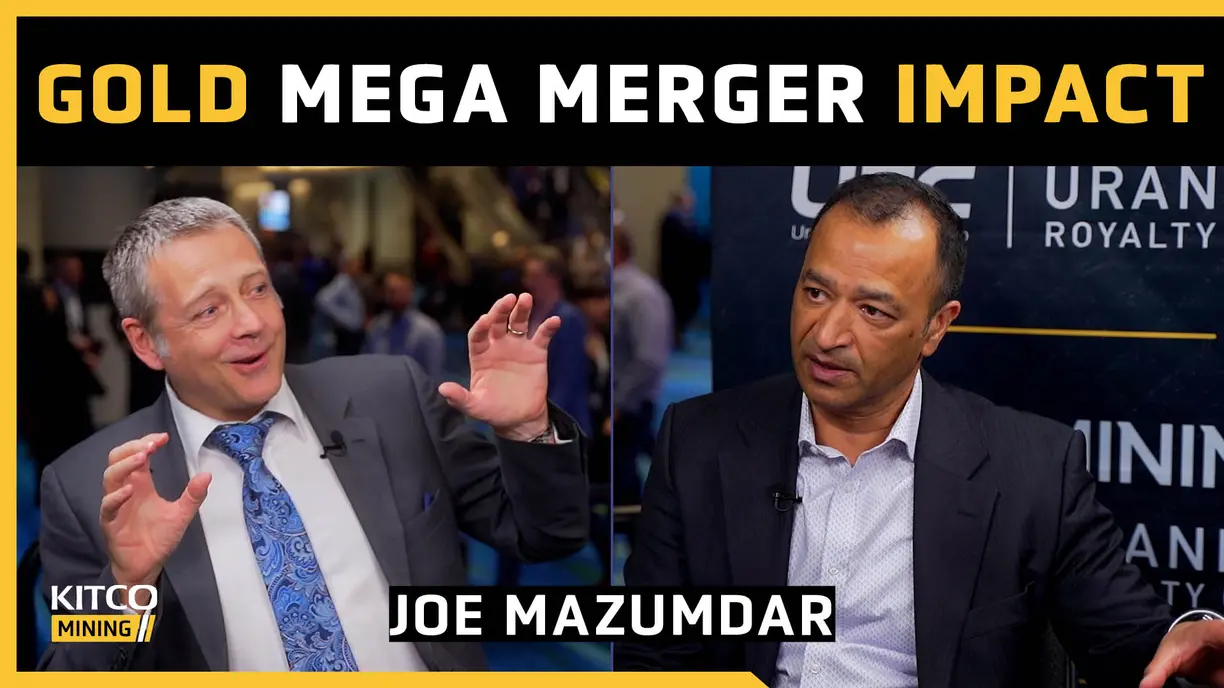
(Kitco News) - Concerns over rising resource nationalism in West Africa and the potential impact of U.S. tariffs are casting a shadow over the mining industry, according to Joe Mazumdar, Editor and Analyst at Exploration Insights.
Speaking at the 2025 Prospectors & Developers Association of Canada conference (PDAC) in Toronto, Mazumdar highlighted a shift in investment sentiment and analyzed a recent major mining merger.
Mazumdar, recently returning from Africa, noted a significant concern regarding the increasing demands from governments in countries like Mali and Burkina Faso. "There's been a lot happening in Mali and elsewhere, resource nationalism and whether it's a good place to invest still or not," he told Kitco Mining in the latest episode of Digging Deep.
He pointed to "creeping nationalism with respect to increasing free carries" and rising royalties, making these regions "a little less attractive" despite their mineral endowment.
This has led to a potential shift in investment focus towards "Côte d'Ivoire to Senegal to Guinea … More people arel also thinking about Guyana Suriname and places like that."
Mazumdar indicated his own investment strategy reflects these concerns: "I'm not really touching anything in Burkina Faso because my other concern is a potential contagion of higher rents to countries that potentially don't have the security risk."
Turning to corporate activity, Mazumdar discussed the recent merger between Equinox Gold and Calibre Mining, describing it as "a fractal of what happened with Newmont and Newcrest in terms of scaling."
He suggested the move aimed to attract generalist investors but questioned the ability of such large gold producers to compete with royalty companies.
While the deal is seen by some as more favorable for Equinox, Mazumdar pointed out potential risks for Calibre related to the ramp-up of its Valentine gold mine and a $75 million loan associated with the transaction.
Looking ahead, the prospect of U.S. tariffs under a potential second Trump administration is creating further uncertainty. Mazumdar highlighted potential tariffs on copper, similar to those on steel and aluminum, which could "fragment economies and potentially send Canada into a recession and maybe Mexico as well."
He noted the low sentiment for base and industrial metals, exacerbated by both weak Chinese demand and the threat of tariffs impacting China's ability to sell to U.S. consumers.
However, Mazumdar sees a potential bright spot for domestic copper cathode producers, such as Arizona Sonoran Copper, as their product wouldn't require overseas smelting and could stay within the U.S. manufacturing supply chain.
Despite this, he cautioned that tariffs on steel and Chinese mining equipment could increase input costs for mine construction, potentially offsetting some benefits.
"Everything else being equal, the inputs to build a mine are going to get more expensive," Mazumdar explained.
He also warned about the inflationary impact of broad tariffs on Chinese goods, which could negatively affect consumer demand for metal-intensive products like cars.

Subscribe on Apple Podcasts, Amazon Music and Spotify. You can also add the RSS link to your favorite podcast player: LINK