
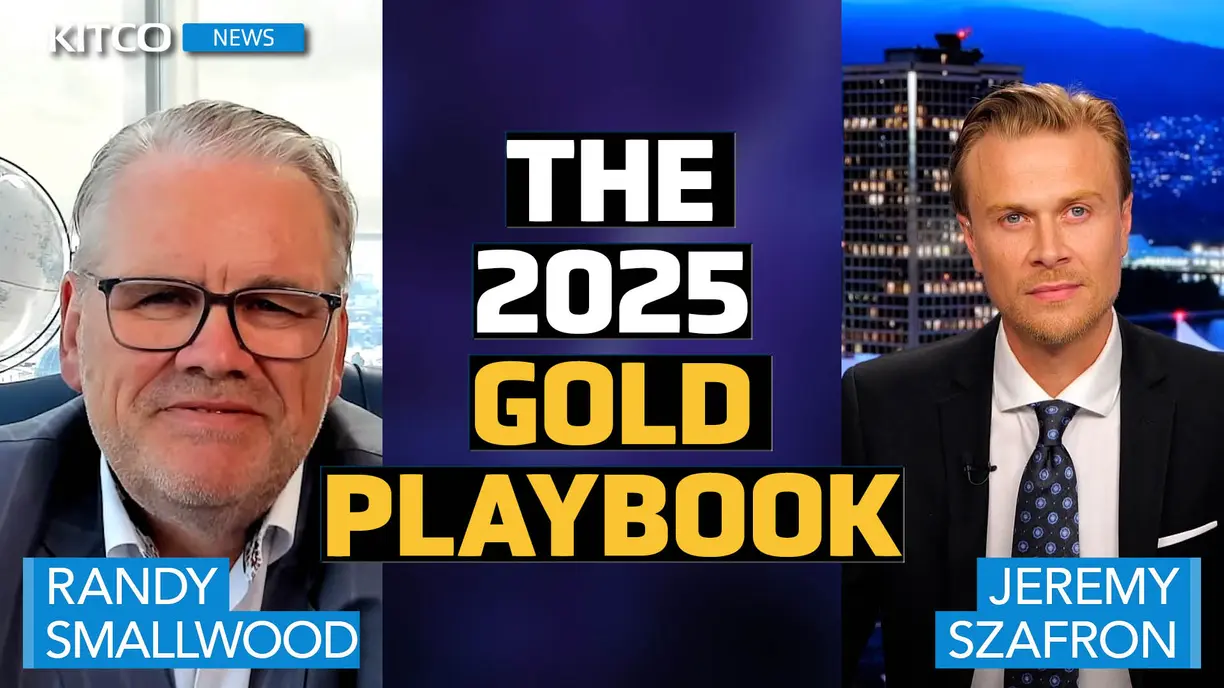
(Kitco News) - The highest U.S. tariffs since the 1930s are a surprising “net positive” for the global mining industry, according to Randy Smallwood, President and CEO of Wheaton Precious Metals.
In a wide-ranging interview with Kitco News, Smallwood offered a sharp, contrarian take on a trade environment where U.S. tariffs have reached an effective rate of 18.6%. While conceding that the tariffs are undeniably inflationary and “will drive costs up”, he argued the long-term effect is a beneficial shift toward de-globalization.
"I do think it makes a lot of countries and a lot of regions... sit back and look within themselves," he said. For decades, he argued, Europe has been "happy to consume all the products of the mining industry as long as it's mined somewhere else". Now, de-globalization is creating "broader support for the mining industry" within those regions as they seek to become more self-reliant.
A New World Order for Gold
This fracturing of global trade is happening alongside a deeper shift in the monetary system. Citing data that shows gold overtook the Euro in 2024 to become the world's second-largest reserve asset, Smallwood described a "growing momentum... to try and back away from the reliance on the US dollar as the main reference currency". He said gold is now "climbing as a reference currency within the central banks.”
This rush to gold has put the market's internal structure under scrutiny. The conversation referenced a recent Financial Times article by refining industry veteran Bernhardt Snellman, who argued the gold market is "too important to be left to private clubs". Snellman pointed specifically to the London Bullion Market Association (LBMA), which dominates trade with "very little accountability." In response to these warnings from the European Central Bank about "systemic risk," Smallwood confirmed the World Gold Council is developing a "digital gold token" to increase transparency and liquidity. "We're not far off of that," he noted.
A Warning on Industry M&A
Even as the macro environment for metals strengthens, Smallwood delivered a blunt critique of the industry's M&A discipline, pointing specifically to the recent $3.5 billion all-stock takeover of Sandstorm by Royal Gold. When asked if the deal proved his long-held skepticism of roll-ups was correct, he was unequivocal.
"I would just point to the share price performance of the companies to answer that question, I don't think anything else has to be said," he remarked, noting the market "did not respond well.”
He elaborated that the multiples streaming companies trade at are a "reward" for good, value-creating acquisitions. "The moment we start justifying or using that multiple to justify acquisitions... that's when you start losing shareholders' confidence," Smallwood warned.
This discipline, he argued, is key as Wheaton capitalizes on the strong environment with what he called a "dramatic increase" in production. The company is on a path to grow its output by "50%... over the next five, six years," climbing towards one million gold equivalent ounces annually from four new mines, including Blackwater and Goose. He added that 2027 will be a "substantive bump" in growth, pushing production "well over 800,000 ounces".
He remains confident in the outlook for precious metals, stating he doesn't think gold is "stopping at 3,300". He also expects silver to outperform as retail interest picks up, suggesting it "wouldn't surprise me to see silver... have at least touched 40" by the end of the year.
For Randy Smallwood's full, in-depth analysis of the macro trends, industry shifts, and his complete 2025 playbook, watch the full interview.