
(Kitco News) - Surging investment demand is adding new momentum to an already hot market, and while prices can continue to move higher, momentum could slow as one pillar of the rally weakens, according to one market analyst.
In his latest note on gold, Bernard Dahdah, Precious Metals Analyst at Natixis, warned investors of the old market adage: “Higher prices cure higher prices.”
Dahdah said that higher prices are taking their toll on jewelry demand, particularly in critical Asian markets.
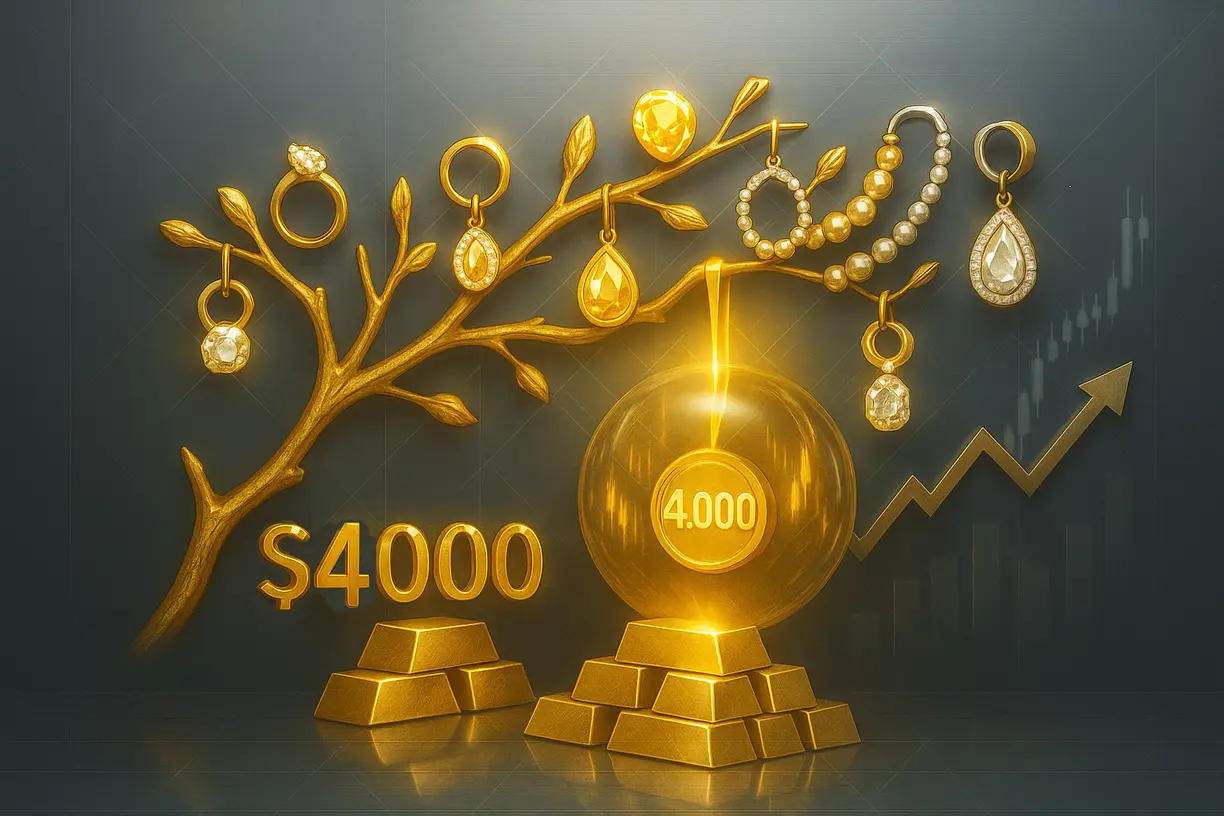
“At prices above $3,200/oz, we are starting to see indications of demand destruction through the gold jewellery sector. The sector is the largest source of demand for gold and accounts for 45% of total demand for the metal,” he said.
In August, Chinese jewelry demand fell sharply, declining by 17 tonnes in the last 12 months—the weakest pace since August 2010, according to data from the World Gold Council.
Dahdah said there is also evidence of dwindling gold demand in the Middle East.
“Anecdotal evidence from media sources report that one of the largest importers of gold jewellery into the Middle East has witnessed a 30% drop in volumes during the first eight months of the year and is now offering more affordable, lower-karat jewellery,” he said.
However, in a good-news/bad-news scenario, Dahdah said that he doesn’t expect weak jewelry demand to halt gold’s momentum; he just expects it to slow down.
“We are not particularly concerned about this demand destruction as the increase in investor demand alone is able to compensate for this. Eventually, jewellery demand could adapt to the current high price levels,” he said.
Looking ahead, Dahdah said that by the end of September he expects physical holdings in global gold-backed exchange-traded funds to see their sharpest quarterly rise since the start of 2022.
Last week, the world’s biggest gold-backed ETF, SPDR Gold Shares (NYSE: GLD), saw its largest single-day inflows on record with more than 18 tonnes. Despite the renewed investment demand, gold holdings in global ETFs remain well below the record levels set in 2020.
Along with rising investment demand, Dahdah expects central bank demand to support gold’s long-term uptrend. In April, he was one of the first analysts to highlight gold’s path to $4,000 an ounce by year’s end.
He added that economic and geopolitical uncertainty is damaging the role of the U.S. dollar and U.S. Treasuries as safe-haven assets.
“As Trump rattles the global system and seemingly strangles globalization, the role of the U.S. dollar and U.S. Treasury as safe-haven assets is weakening,” Dahdah said in April. “In our view, any continuous outflows from MMFs can benefit gold and eventually drive prices above $4,000/oz by the end of the year.”
