(Kitco News) A series of asset sales and policy disputes is highlighting a persistent challenge for global miners: once projects become large enough, political leverage can shift toward host governments.
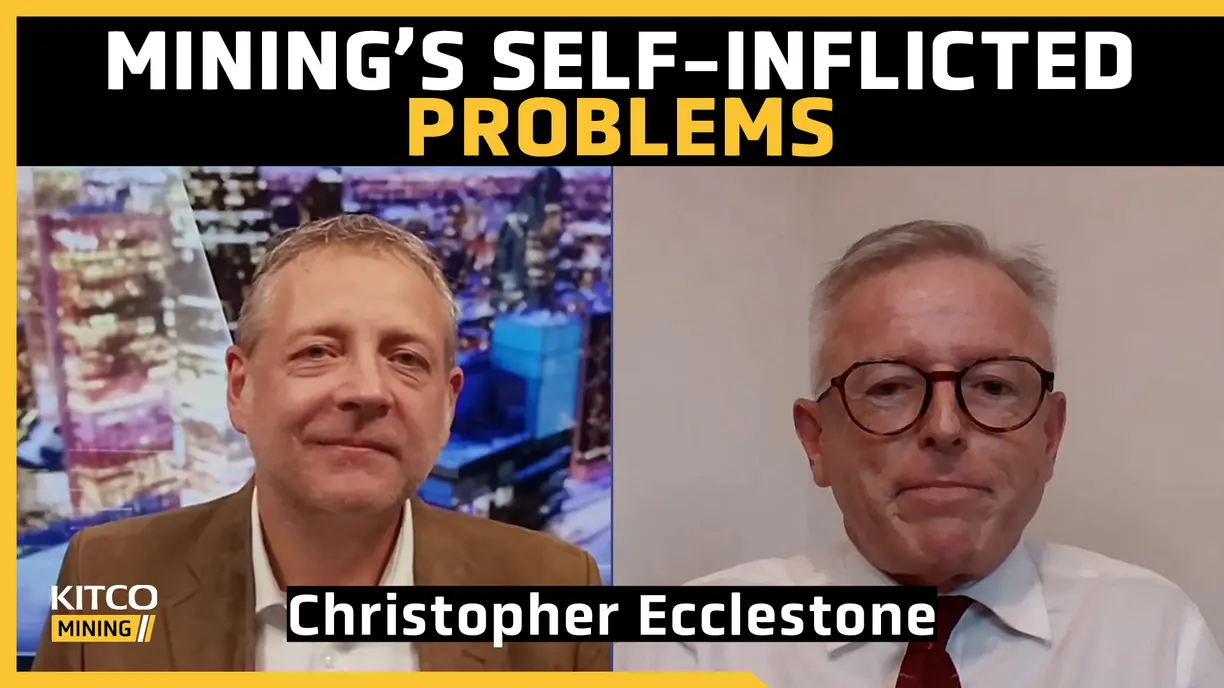
Christopher Ecclestone, principal and mining strategist at Hallgarten + Company, said developments in Türkiye, Colombia, and Mongolia illustrate how projects that require billions in capital can become difficult to defend once governments or communities reassess the economic balance of those investments. Speaking with Kitco Mining’s Digging Deep, Ecclestone said the dynamic emerges when a mine becomes too central to a company’s operations to abandon.
“Once you're in there with such an enormous investment and so much of a part of your business model, then the government can apply the squeeze to you, and you're much more vulnerable,” he said. The issue has surfaced in several recent transactions.
Earlier this month, SSR Mining agreed to sell its 80% stake in the Çöpler gold mine in Türkiye for $1.5 billion in cash. Operations at the mine have been suspended since a heap leach incident in February 2024 that killed nine workers. Ecclestone said the deal reflects how companies may choose to exit jurisdictions where operational disruptions intersect with political pressure.
“SSR is getting a good price to get the hell out of Dodge,” he said.
In Colombia, AngloGold Ashanti is also stepping back from a major development. The company agreed to sell the La Colosa gold project to Mineros for $10 million upfront, with up to $60 million in contingent payments tied to development milestones. Exploration at the project has largely been suspended since a local referendum in 2017 opposing mining in the Cajamarca municipality.
Mineros said the project carries a historical mineral resource estimate reported by AngloGold in late 2024 totaling about 23.35 million ounces of gold in the indicated category and 4.98 million ounces inferred, which it has not yet verified as a current mineral resource.
Ecclestone said projects designed around very large open pits can face increasing resistance once environmental or social concerns intensify. “Once again, this obsession of big miners with big pits, they cannot get over it,” he said. “This gigantism in the mining sector is part of the problem.”
Beyond permitting disputes, Ecclestone said governments may also revisit fiscal terms once large projects begin generating substantial revenue. In Mongolia, debates over the economic balance of the Oyu Tolgoi copper mine intensified after a parliamentary resolution late last year and continued in discussions between Rio Tinto and Mongolian officials.
“The bigger the project is, the harder they fall,” he said.
Ecclestone said disputes of this kind often emerge when host governments reassess whether early project agreements adequately capture the value of major deposits.
At the same time, he said mining companies can contribute to those conflicts by misjudging political risk or persisting with development strategies that fail to adapt to local conditions.
“There are a lot of self-inflicted injuries in the mining space,” he said.
While some jurisdictions are becoming more challenging, others are attempting to attract new investment. Argentina introduced a new investment framework known as RIGI to accelerate large-scale resource development. Recently, AbraSilver said its Diablillos silver-gold project in Salta had received formal approval under the regime.
Ecclestone said the policy is designed to encourage companies to commit capital sooner rather than delaying projects in hopes of higher commodity prices.
“He wants to see the financial benefit now. He wants to see the jobs created now,” Ecclestone said.
For miners evaluating new investments, Ecclestone said the broader lesson is that scale alone does not guarantee stability once political and economic expectations begin to shift.
Watch the full video on the Kitco Mining YouTube channel.