
(Kitco News) – Interest rates are still the key driver for precious metals prices even as the conflict between the United States and Iran escalates further, with gold and silver facing continued downside risk, according to Rhona O'Connell, Head of Market Analysis for EMEA & Asia at StoneX.
“After a period of uncertainty that has kept retail investors on the sidelines, there are signs of some buying in parts of the Far East – but this is being offset by continued sales elsewhere in the region, leading more or less to a zero-sum game,” O’Connell wrote in the firm’s weekly precious metals roundup on Monday. “Narrow ranges remain the order of the day and we continue to believe that the downside is marginally more likely than sustained rallies.”
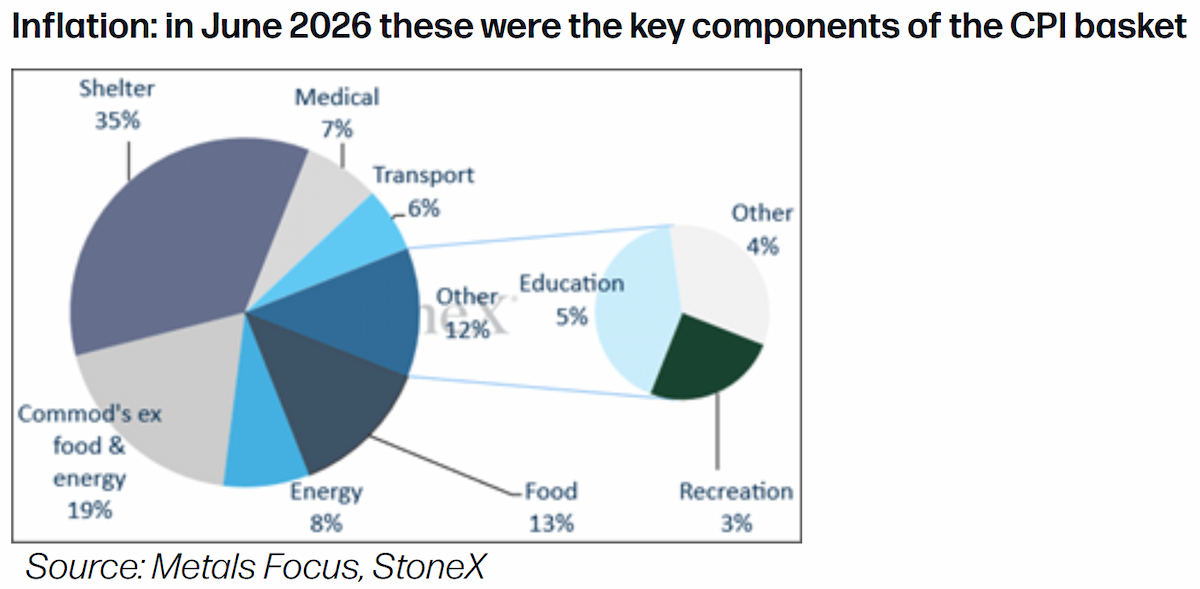
O’Connell also analyzed the CPI breakdown for June, noting the outsized impact that energy costs exerted on overall spending.
“Obviously, shifts in prices modify the different inflationary contributions from different sectors, but energy itself was ~8% of total in June (compared with the more normal historical 6-7%), but indirectly its contribution is higher due to energy’s influence on transport, manufacturing and logistics,” she noted. .”
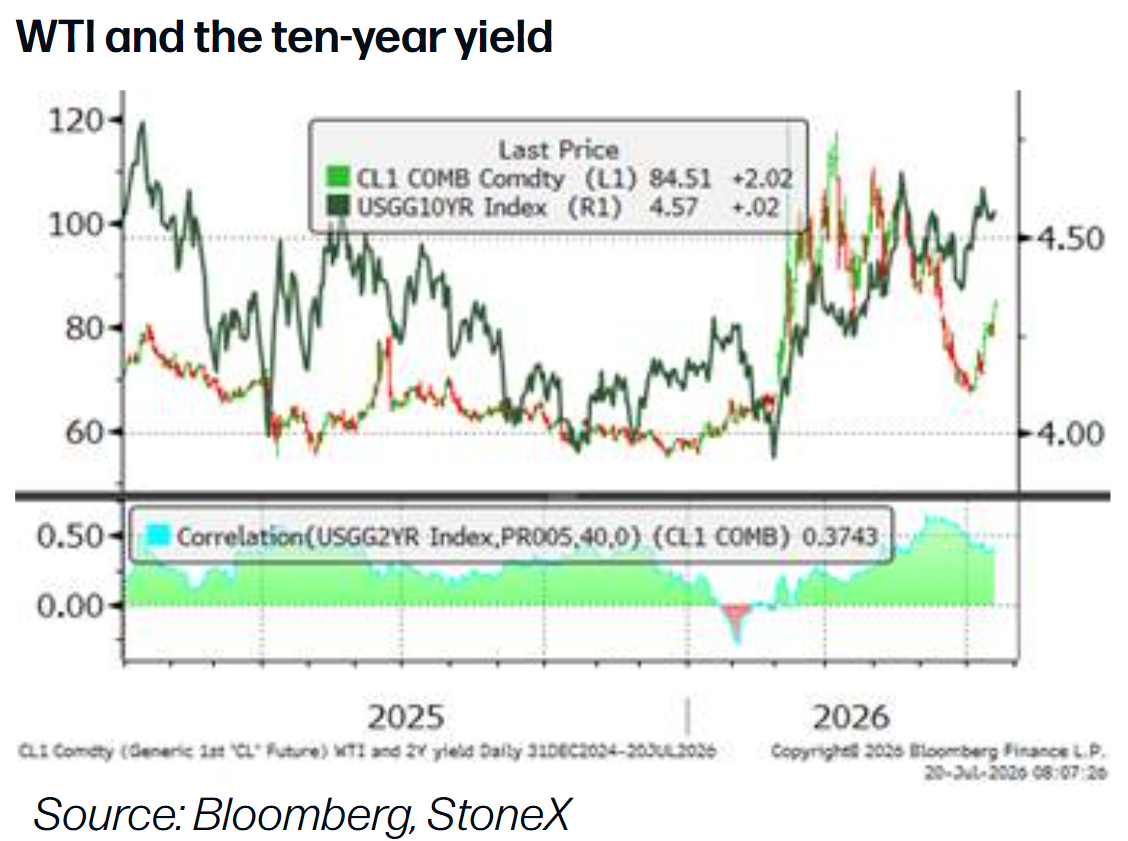
O’Connell pointed out that even though WTI crude oil was down 26% from its high of $113 set on April 6, it remains 24% higher year-over-year. “Given the strains in the Middle East we should expect prices to persist in the new range,” she said.
O’Connell said the Federal Reserve is in a very difficult and delicate position as this month’s monetary policy decision approaches. “The Committee remains divided and appears to be broadly 50% in favour of further tightening if inflation persists, with the rest preferring to remain steady.”
“Meanwhile the 10-year yield is a visible and flexible parameter, and the rise from below 4% at end-February to 4.6% now tells its own story, and provides a clear headwind for gold and, with its industrial bias, for silver,” she cautioned.
Turning to precious metals futures, O’Connell noted that interest in gold has risen while silver positions declined further, and longs still remain well below historical averages.
And regarding Exchange Traded Funds (ETF), O’Connell cited the latest World Gold Council figures showing a year-to-date gain of just 15 tonnes for a total of 4,045 tonnes as of July 10. “Falls of 67t (3%) in North America, a gain of just 12t in Europe (1%) and of 68t (16%) in Asia,” she wrote.
Meanwhile, silver funds have shed even more this year though some buyers returned late last week to take advantage of lower prices. “Silver ETFs are reported at 24,413t, a drop of 2,408t in the year to date, with bargain hunting appearing in the latter part of last week, picking up 128t,” O’Connell said.
