
(Kitco News) – The U.S. government is effectively engaged in multiple major quantitative easing operations, and gold prices have moved higher as a result, with potential for plenty more gains ahead, according to Charlie Morris, CIO and founder of ByteTree.
In the latest Atlas Pulse Gold Report, Morris said Treasury Secretary Scott Bessent’s new gambit of doubling the department’s purchases of long-dated Treasuries is an attempt to keep the government’s borrowing costs down.
“Gold’s trend is improving,” he wrote. “We could be back above the 200-day moving average before you can spell S-T-A-G-F-L-A-T-I-O-N.”
Morris pointed out that the United States’ public debt recently hit $40 trillion, with the rate of growth rising from 3.7% per year in the 1990s, to 7.8% until the pandemic, and 8.6% since.
“The total value of the world’s above-ground gold supply has kept up with the total outstanding US debt over a century,” he noted. “The gold supply can only rise at around 2% [per year] and so the gold price has had to do the rest.”
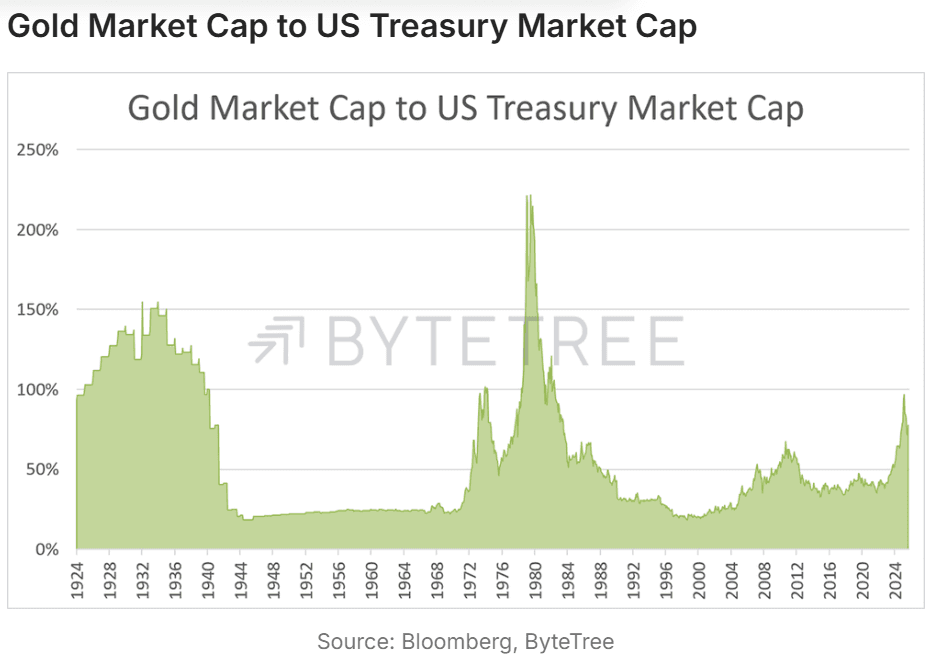
Morris said gold’s value relative to debt was very high during the Great Depression, the 1970s inflation crisis, the Credit Crisis, and today.
“The world’s gold is worth $31 trillion, or 77% of US debt. It has been over 100% several times, so it still has room to climb higher,” he said. “Let’s not forget that this revaluation comes on top of the 8.6% rate of debt growth.”
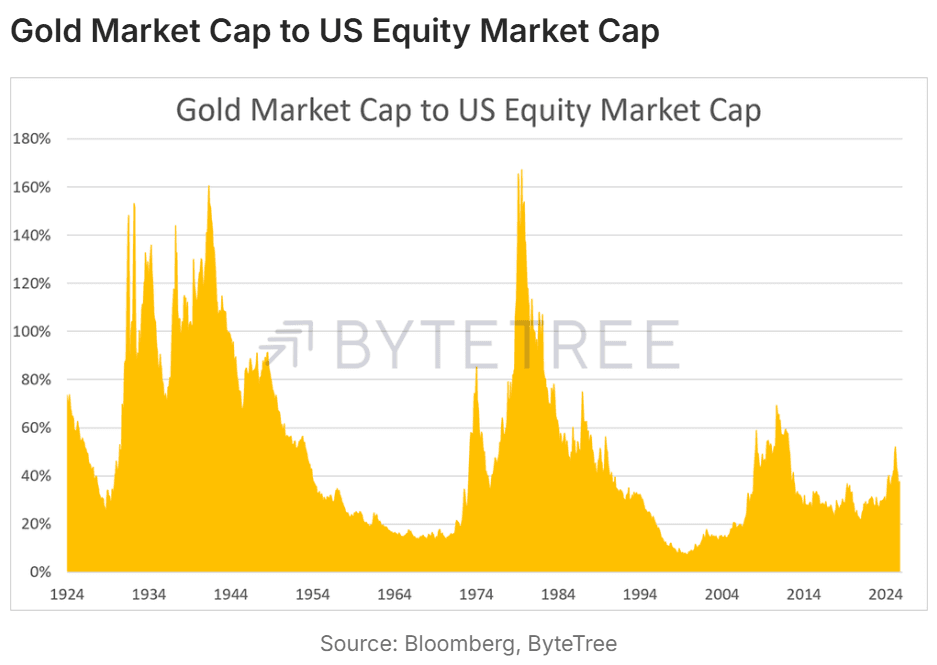
But the world’s gold holdings only represent 37% of the value of U.S. equities, and Morris believes there’s plenty of room for that number to rise. “During the Great Depression and the 1970s, it managed 160%, which is 4x from here.”
“We know there is a debt problem because it is growing faster than nominal GDP (6.5%), and sooner or later, that becomes unsustainable,” he said. “More importantly, the US Treasury Secretary and guru macro hedge fund manager from the Soros School, Scott Bessent, is intervening in the markets.”
Morris said gold began to rally in late July when Bessent announced the Treasury’s intervention to spend billions to support the yen. “Naturally, he can print these new dollars, but gold is watching his every move,” he said. “Then yesterday, Bessent made a fresh attempt to rein in the cost of borrowing by buying long-dated Treasuries at double the rate. Is the government buying bonds? That sounds like QE to me, and gold likes that too.”
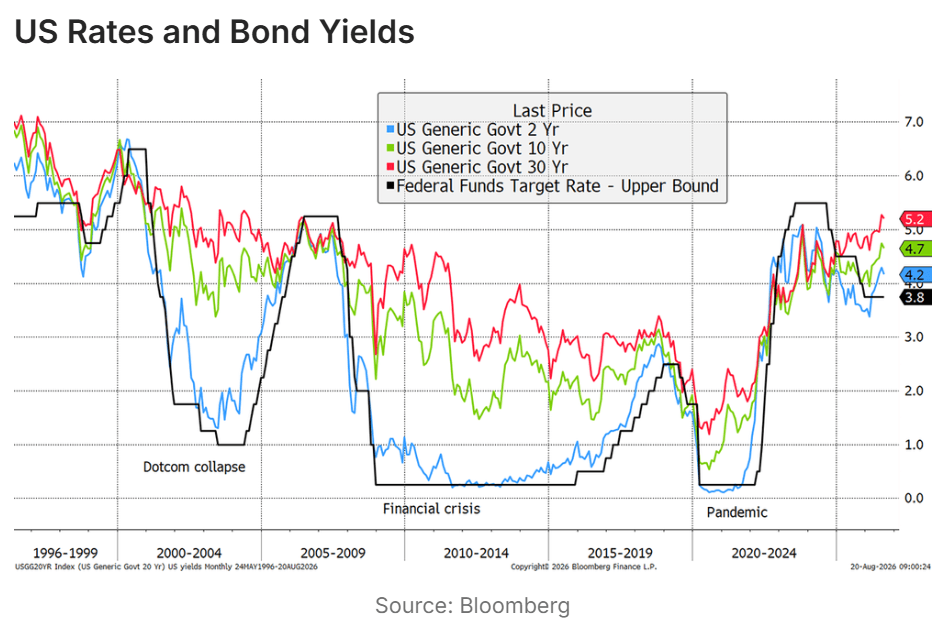
The problem with this strategy, Morris said, is that there are relatively few longer-dated bonds compared to shorter-dated ones. “Buying back the debt with printed money may reduce long-term yields in the short-term, but to keep those yields down, you have to keep on going,” he said. “Post 2008, in a world of debt deflation, that was one thing, but in a reflating environment, it is another thing entirely.”
The annual supply of US government debt combines the deficit, the debt interest, and refinancing as short-dated bonds roll off. In 2027 and 2028, that’s $3 trillion of refinancing, which will presumably grow. Little wonder they want to keep interest rates low.
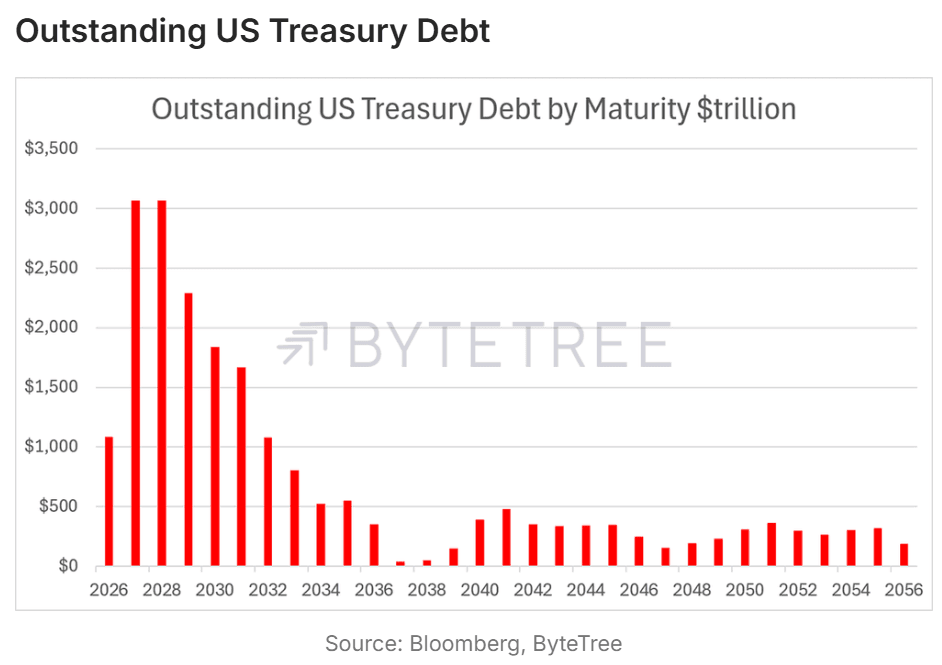
Morris said this, is the main reason why central banks are buying gold. “If they reject Treasuries, what else is big, liquid, and a long-term store of value with limited supply? All paths lead to gold.”
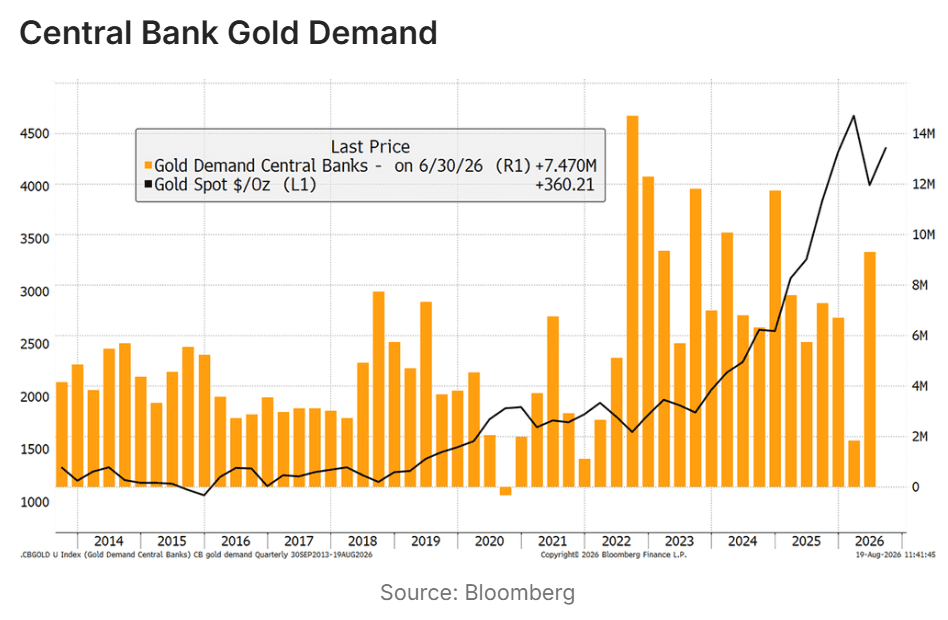
He noted that while Russia and Turkey were net sellers of gold in Q1, overall central bank demand has seen a strong rebound. “China has a trade surplus of $1 trillion per year, and a decent share of that flows into gold,” he said.
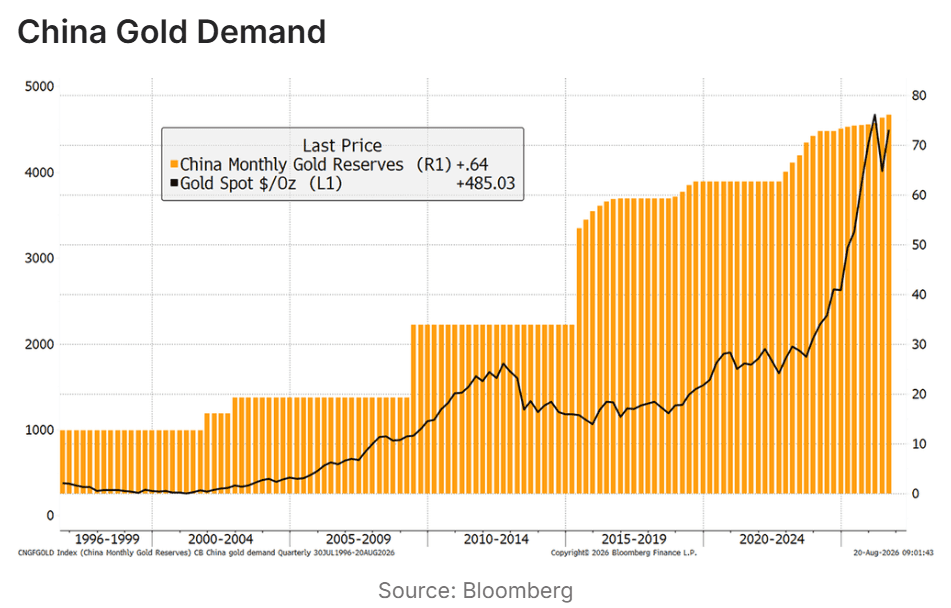
“Many believe, and with good reason, that China’s gold reserves are significantly understated, perhaps by a factor of 3x,” Morris wrote. “As global partnerships become more unstable, gold is the must-have asset.”
