

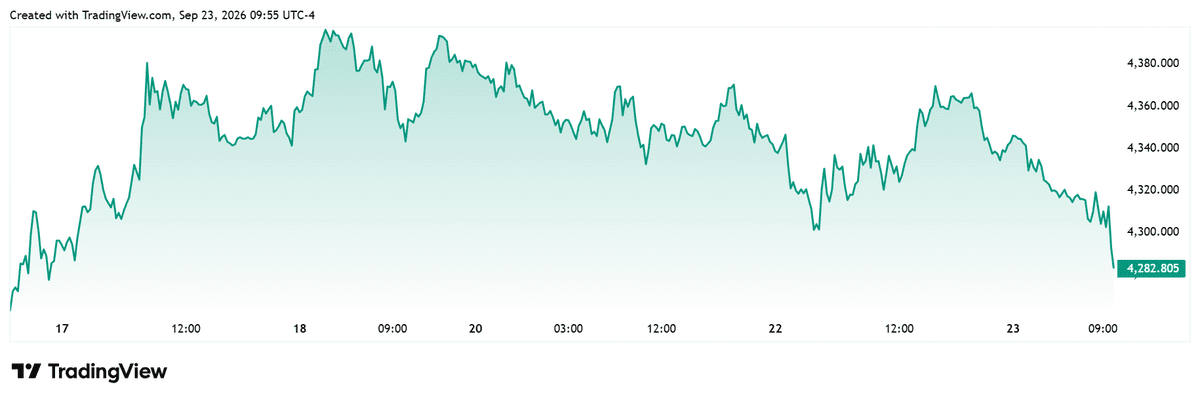
(Kitco News) - The gold market is selling off after the latest U.S. data showed the services sector improving beyond expectations this month, while the manufacturing sector also strengthened.
S&P Global reported on Wednesday that its flash Composite Purchasing Managers Index (PMI) rose to 58.4 in September, up from August’s reading of 56. The number was above expectations, as economists had forecasted a reading of 55.2.
“US business activity growth accelerated for a fourth successive month in September to reach the fastest rate for over five years,” the report noted. “A further surge in service sector business activity was accompanied by a renewed improvement in manufacturing output growth.”
“Employment also rose sharply, with jobs added at a pace not seen for over four years, as firms sought to meet rising demand,” the report added. “However, backlogs of work continued to rise at an increased rate and supply chain delays intensified, pointing to a lack of operating capacity which fed through to higher prices. Input costs meanwhile surged higher on the back of the recent spike in energy prices, adding to a worsening inflation picture.”
The PMI for the service sector rose to 58.7 in September, up from August’s reading of 56.5. Activity in the service sector was above expectations, as economists had forecasted a reading of 56.0.
The manufacturing sector PMI also improved. According to the report, the PMI for the manufacturing sector rose to 57.0, up from August’s reading of 53.9, and also above the consensus forecast of 53.6.
The gold market was dropping to fresh session lows following the North American open and the latest PMI data. Spot gold last traded at $4,282.81 per ounce for a loss of 1.74% on the daily chart.
“US business continues to boom, with output growing at the fastest rate for over five years in September,” said Chris Williamson, Chief Business Economist at S&P Global Market Intelligence. “Historical comparisons suggest that the latest survey data point to annualized growth of around 5% with a 4% gain now signalled for the third quarter as a whole.”
“To put the growth surge in context, barring the spike in demand following the opening up of the economy after the COVID-19 lockdowns, the latest improvement in business activity is the greatest recorded since early 2015,” he wrote. “Business is clearly booming now in both manufacturing and services.”
Williamson noted, however, that this standout growth is coming with “some of the most severe supply chain bottlenecks seen in the near-two-decade survey history if the pandemic is excluded, with companies also reporting increasing problems finding suitable staff.”
“Backlogs of work are consequently rising sharply,” he said. “While this accumulation of uncompleted orders bodes well for the further expansion of output and capacity in the coming months, it also indicates that companies are developing more pricing power, and hence is a worry for the inflation outlook.”
“Firms’ input costs have meanwhile jumped in September at the steepest rate for four years, with fuel and transport costs spiking higher thanks to the rise in oil prices seen during the month, which will add further to the upward pressure on selling prices and inflation in the coming months.”
