

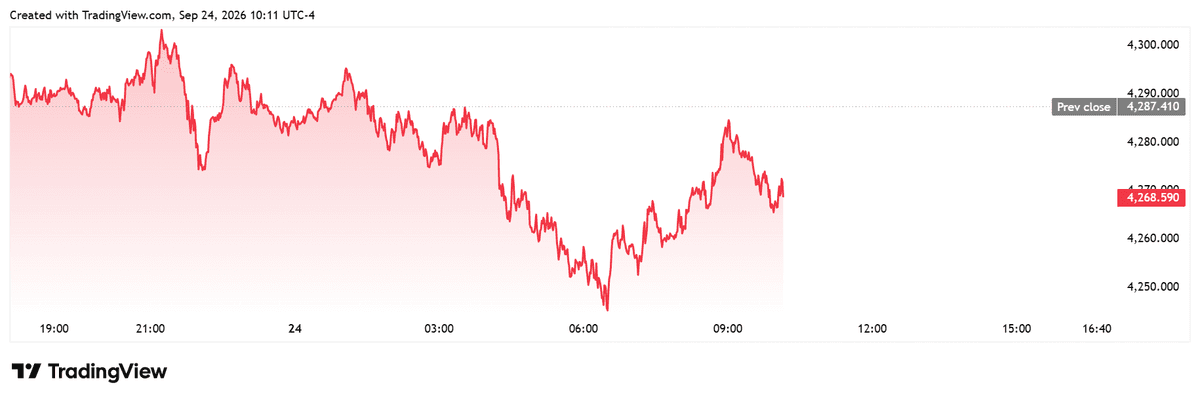
(Kitco News) - Spot gold is trading near session lows on Thursday morning after the latest data showed the U.S. housing market improving beyond expectations in August.
New home sales rose 6.4% last month, double the expected 3.2% increase, the U.S. Census Bureau and the U.S. Department of Housing and Urban Development announced.
New home sales came in at a seasonally adjusted annualized rate of 684,000 in August. The numbers were better than forecasts, as the market consensus expected sales of 620,000 units. July’s sales were also revised up to 643,000 from 607,000 units.
On an annual basis, new home sales were down 2.0% from the August 2025 rate of 698,000.
Looking at home prices, the median sales price for new homes last month was $393,700, and the average sales price was $478,700. As of the end of August, the inventory of houses for sale was 483,000, representing a 8.5-month supply at the current sales rate.
Economists continue to pay close attention to the U.S. housing market as it is a major contributor to economic activity. The housing sector has struggled after the Federal Reserve aggressively raised interest rates at the fastest pace in 40 years.
Spot gold fell to a session low of $4,244.27 earlier in the morning, and last traded at $4,268.28 per ounce, down 0.45% on the day.
Jeffrey Roach, Chief Economist at LPL Financial, said softer demand for new homes should bring down the median price even further, especially as mortgage rates rise.
"Despite higher mortgage rates and softer demand, prices remain well above pre-pandemic levels," he noted. "As of yesterday, mortgage rates stood at 7.06%, the highest level since 2025, though still below the October 2023 peak of 8.0%. Given ongoing pressures in Treasury markets, it would not be surprising to see mortgage rates move higher from here."
"Elevated mortgage rates and the persistent lock-in effect continue to limit overall housing turnover," Roach said. "As a result, housing is unlikely to become a contributor to economic growth in the near term, though stronger activity in the South should support consumer spending and regional economic resilience."
