
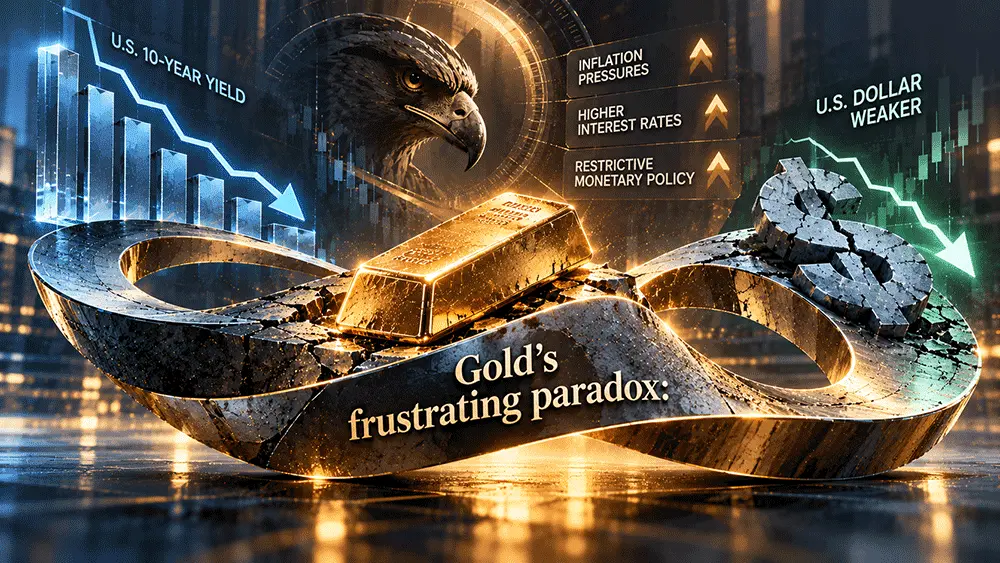
(Kitco news) - This week’s price action reminds me of a popular adage about the gold market: Gold’s greatest power is its ability to frustrate investors.
This should have been an amazing week for the precious metal as the Federal Reserve left interest rates unchanged, bond yields fell sharply, and the U.S. dollar retreated from its recent highs. However, gold prices are looking to end the week with a 3% decline, falling below $3,900 an ounce to their lowest level in more than 12 months.
The frustration is palpable, and understandable. Traditionally, lower bond yields and a weaker U.S. dollar reduce gold’s opportunity costs, making it more attractive as a non-yielding asset.
The problem is that the Federal Reserve may have paused its tightening cycle, but it is far from finished.
Federal Reserve Chair Kevin Warsh made it clear Wednesday that the central bank remains committed to bringing inflation back to its 2% target. With the U.S. economy expanding by 3.4% in the third quarter and the labor market remaining relatively resilient, policymakers have little incentive to abandon their hawkish stance.
At the same time, the ongoing war with Iran continues to disrupt global energy markets, keeping oil prices elevated and adding to inflation pressures.
This creates a particularly difficult environment for gold. Instead of benefiting from geopolitical uncertainty and rising inflation, the precious metal is being punished by expectations that the Federal Reserve will need to keep interest rates higher for longer.
What makes this environment particularly challenging is that gold is no longer trading on what bond yields and the dollar are doing today; investors are focused on where monetary policy is heading tomorrow.
Gold is supposed to protect investors against inflation and uncertainty, yet the very forces that should support safe-haven demand are creating its biggest headwinds.
Despite the selling pressure, investors should not confuse short-term frustration with a permanent change in gold's long-term fundamentals.
The Federal Reserve cannot maintain restrictive monetary policy indefinitely without risking economic damage, particularly as elevated borrowing costs weigh on an already debt-laden economy.
Gold investors may need to accept that, at least for now, the path of least resistance for gold is lower; however, there is persistent optimism that lower prices remain long-term buying opportunities.
