
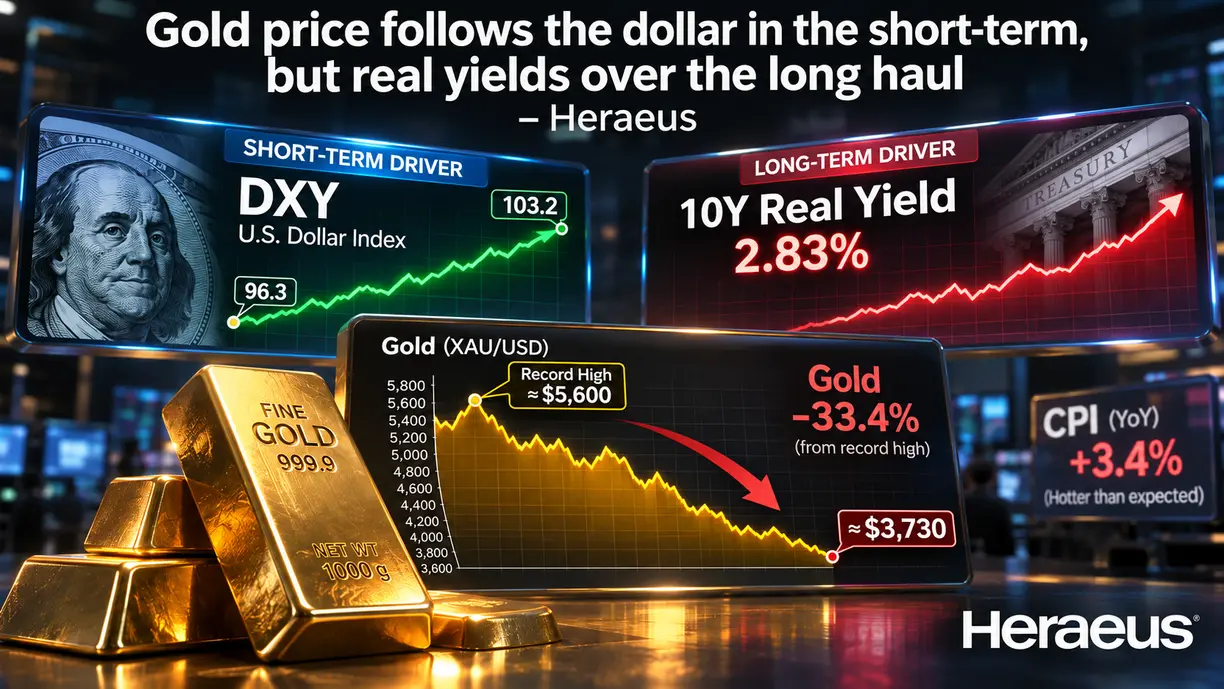
(Kitco News) – Gold’s recent price correction has restored the precious metal’s inverse correlation with real yields, which broke down completely during its 2022-2025 rally, according to precious metals analysts at Heraeus.
In an analysis of gold and bond yields published this week, the analysts noted that since hitting a record high of $5,600 per ounce in late January, gold has declined 33.5% to around $3,730. “Over the same period, the dollar index (DXY) has risen from 96.3 to 103.2 and the US 10-year inflation-protected real yield has climbed from 1.89% to 2.83%,” they said. “Last week’s hotter-than-expected CPI reinforced both headwinds and expectations of further Fed tightening.”
Over shorter-term horizons, the dollar is one of gold’s most consistent price drivers. “Since 1990, the correlation between daily percentage changes in the gold price and DXY has been -0.31, and -0.43 this year,” the analysts said. “Put simply, dollar-up days have tended to be gold-down days. A 1% rise in DXY this year has typically coincided with a little more than a 2% fall in gold.”
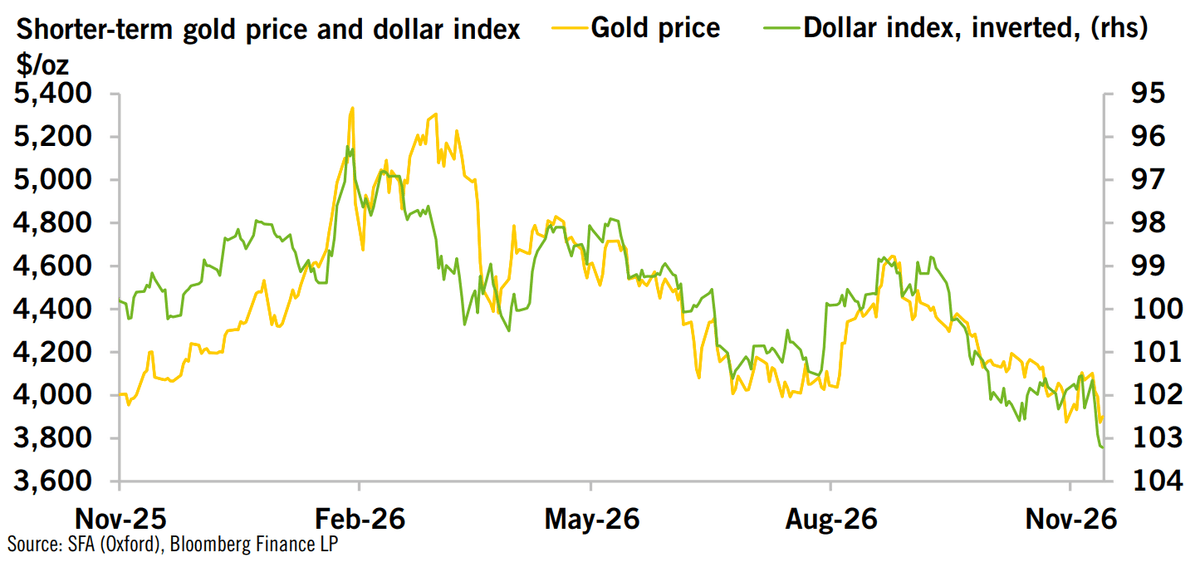
But over the longer term, DXY explains much less about the yellow metal’s price. “Gold is almost ten times higher than in 1990, while DXY, which measures the strength of the dollar against other major currencies, is only around 10% higher,” they noted. “Adjusting gold for the dollar’s movement against the DXY currency basket leaves that long-term rise intact, suggesting it reflects the erosion of major fiat currencies generally, along with real gains in gold, rather than simply a weaker dollar.”
Instead, Heraeus analysts said it is real yields that determine whether or not this longer-term trend can dominate. “Before 2022, periods of high/rising 10-year real yields were closely associated with lower/falling gold prices,” they wrote. “That relationship weakened during the 2022- 2025 price rally, when central-bank buying and other drivers outweighed the rates headwind, but has reasserted itself this year. The 10-year real yield has risen from around 1.7% in February to above 2.8%, close to its highest since 2008 and sharply increasing gold’s opportunity cost.”
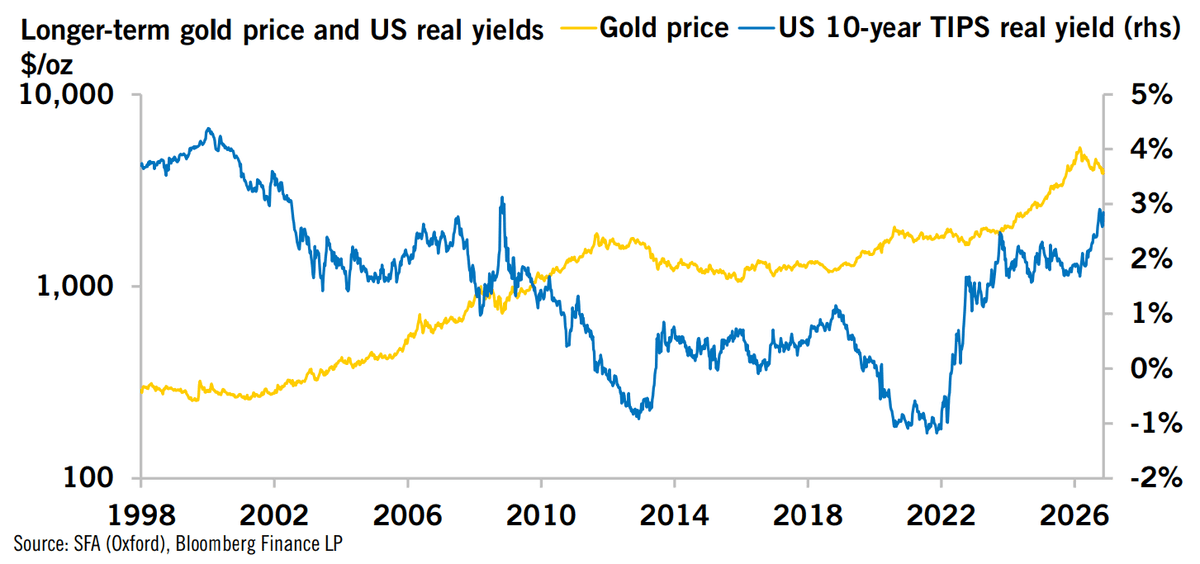
“Inflation supports gold over the long run only when policy lets real rates fall; for now, each ‘hot print’ is a headwind,” they added.
But recent positioning suggests the balance of risks may be changing. “Speculators have swung from a $20.5 billion net short-dollar position in February to a $10.7 billion net long, the largest since 2016,” Heraeus noted. “Similar positioning extremes have often preceded dollar weakness, although the sample is small and positioning is a poor timing signal.”
“The idea that a sustainable low for the gold price has already occurred would be more convincing if crowded dollar longs were accompanied by stabilising real yields and signs that the Fed’s tightening cycle is nearing its end.”
See live precious metals prices for gold, silver, platinum and palladium — in USD, CAD and 12 more currencies.
