
(Kitco News) – While the U.S. dollar could strengthen modestly next year, oil prices will likely moderate toward $75 per barrel by the fourth quarter, and gold remains the top commodity pick for 2027, according to Morgan Stanley Research.
“The biggest change since our midyear outlook is how much more attractive risk has become,” said Serena Tang, Morgan Stanley’s Chief Cross-Asset Strategist in the bank’s 2027 Global Investment Outlook published Wednesday. “Stocks and corporate bonds have cheapened even as expectations for AI investment have risen. And of course, we’re heading into 2027 with more clarity on two big unknowns—the U.S. midterm elections are behind us and markets better understand the Federal Reserve’s reaction function.”
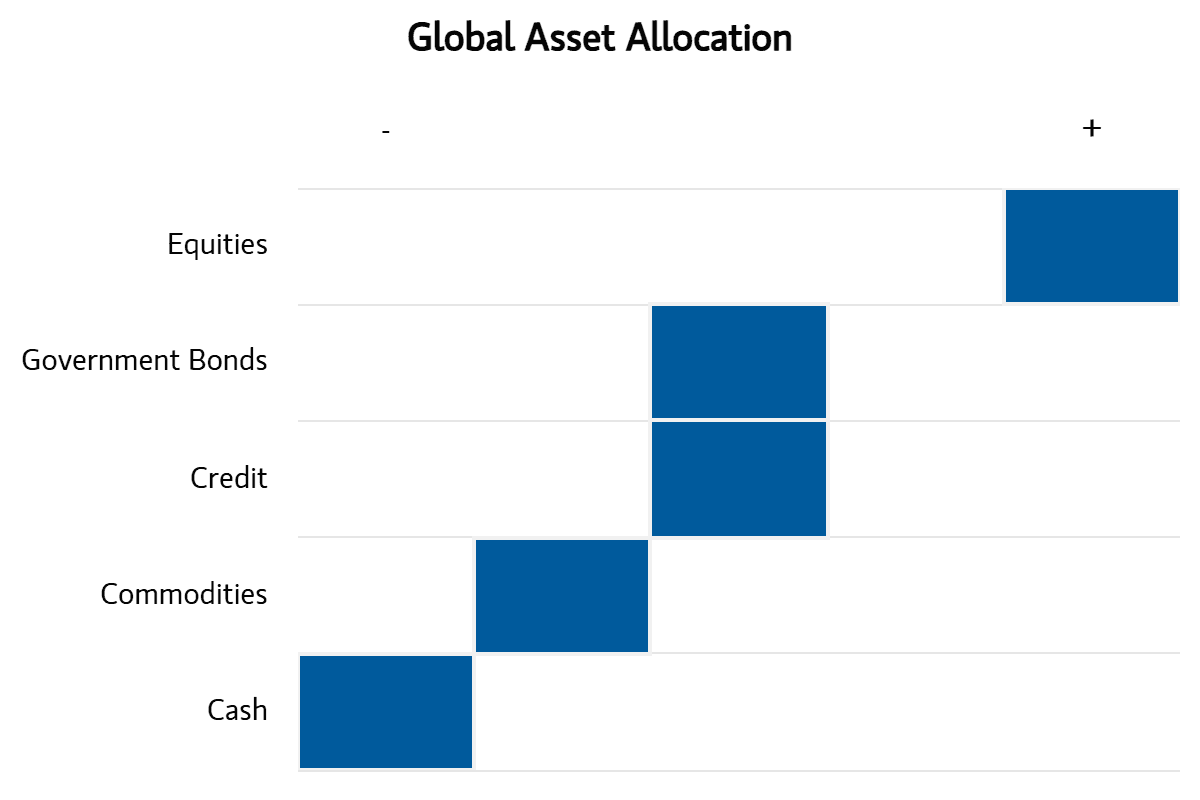
Morgan Stanley Research believes this combination will favor risk assets in 2027, with their strategists recommending a maximum overweight allocation to equities and neutral allocations to core fixed income and corporate credit, while they downgraded commodities and cash to underweight.
Morgan Stanley warned, however, that risks to the outlook remain. “Central banks could raise interest rates even more in response to strong growth and persistent inflation,” the report said. “Conflicts in the Middle East and Ukraine could continue to drive volatility in energy markets, while Europe faces a wave of elections in 2027 and tariff impacts persist.”
“Over the last two years, risk assets and the broader economy have proven more resilient than many had expected when faced with these same risks,” Tang added. “We believe they can be resilient again in the face of these unknowns. But policy uncertainty globally could produce very different outcomes across markets. So, timing and diversification will be critical.”
On the currency front, Morgan Stanley said the U.S. dollar “could rally modestly, supported by investor confidence in the U.S. economy and interest-rate differences that make U.S. assets more attractive.”
“The euro is likely to underperform other currencies as political risks rise ahead of the French presidential election in April, with a second round of voting in May if no candidate secures a majority,” the report said.
And even though the strategists are arguing for an underweight allocation to commodities as a whole for the coming year, gold is still Morgan Stanley Research’s top commodity pick.
“An easing of Middle East conflicts could lower oil prices and interest-rate expectations, making gold more appealing relative to interest-paying investments like bonds and cash,” the report stated. “The metal should also benefit from continued demand from exchange-traded funds and central banks.”
Morgan Stanley said oil prices are likely to remain elevated in the near term amid persistent geopolitical uncertainty before prices eventually decline toward $75 per barrel by the fourth quarter of 2027, but the analysts cautioned that the pace of normalization was unknown.
In late September, Amy Gower, Morgan Stanley’s head of metals and mining strategy, said gold prices may be under pressure at the moment, but ETF and central bank demand has remained strong, and the yellow metal will be trading back above $5,000 per ounce by the second half of next year.
In an interview with CNBC, Gower acknowledged that the current environment was a challenging one for gold.
“We've got these long-dated bond yields hitting 20-year highs,” she said. “We've got a bit of dollar strength coming through. We've obviously got oil price strength as well.”
Gower pointed out several factors that she sees supporting gold into next year.
First, she said that physical demand remains very strong from central banks such as China and Poland. “But even if we just look at China's broad gold imports, they're on track for at least the highest since 2017, we think probably longer than that,” she noted. “China seems to have this very, very strong appetite for gold. We should remind ourselves they're going off for Golden Week on Thursday, so they might be a little quiet, but maybe when they're back, we'd see that re-engagement.”
Gower also pointed to persistent concerns around long-term government debt and fiscal sustainability. “What if we get more intervention in that long-dated bond market, and then you get yields coming back down?” she asked. “What happens if oil comes lower?”
Gower agreed that the correlations appear to be shifting between gold and the dollar and between gold and the bond market of late.
“That does seem to be the case at the moment,” she said. “I think what you actually see, if you look at gold and the dollar over the long term, the correlation is close to zero. But you can get these periods where they're inversely correlated. A stronger dollar obviously makes gold more expensive for non-dollar holders. But equally, if they're both acting as safe havens, they can actually rally together.”
“I think at the moment, that seems to be the way it's trading, stronger dollar, weaker gold,” she said. “But I wouldn't be surprised if this changes as well.”
Gower said that while gold prices may face pressure in the near term, Morgan Stanley sees further gains in the months ahead.
“We do see upside to gold on a 12-month view,” she said. “We do see the price moving back above $5,000 an ounce by the second half of 2027, so we would say, on these pullbacks, we would be looking to add to gold positions.”
See live precious metals prices for gold, silver, platinum and palladium — in USD, CAD and 12 more currencies.
