
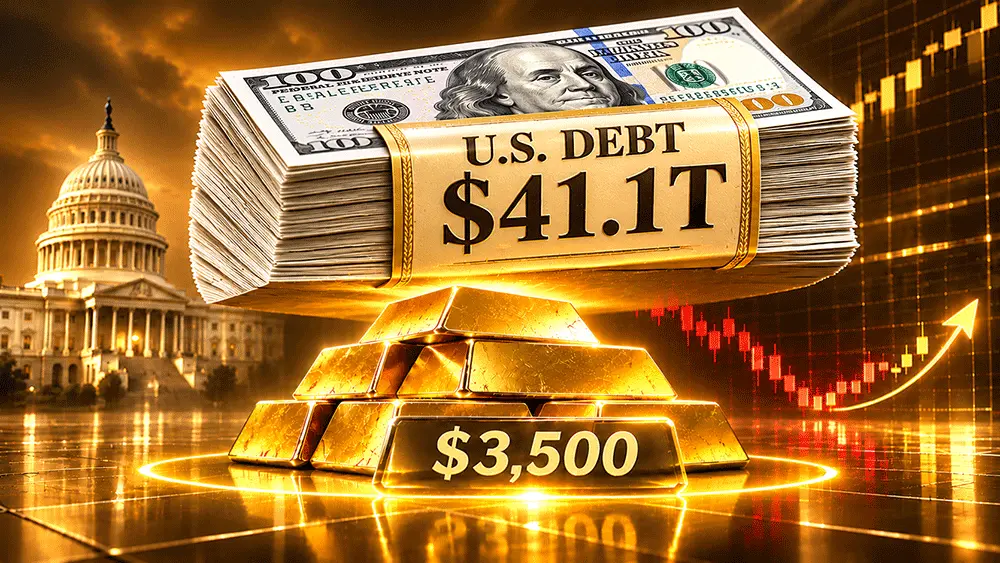
(Kitco News) - There is no denying that this week’s price action delivered a gut punch to gold and silver investors. But while the precious metals may be down, they are certainly not out. And there could be 5 trillion new reasons why gold prices rally in the months ahead.
While rising bond yields and expectations of further Federal Reserve rate hikes have created significant headwinds for gold, the bigger picture remains unchanged. Gold continues to play an important role as a hedge against growing sovereign debt risks.
In a report published Friday, as gold prices tested support at $3,500, CIBC Capital Markets warned that the U.S. government could hit its $41.1 trillion debt ceiling as early as late February, setting up another contentious political showdown in Washington.
The report might not make major headlines, but it provides a glimmer of light on a dark day.
The bank estimates that Congress may eventually need to raise the debt ceiling by nearly $5 trillion to provide enough borrowing capacity through the 2028 elections.
That is an extraordinary amount of money, even by Washington's increasingly extravagant spending standards.
The bigger question is what another massive increase in the debt ceiling means for confidence in U.S. government debt and the U.S. dollar.
We saw a glimpse of this dynamic in August, when gold rallied as the Treasury announced an expanded debt buyback program.
Although designed to support market liquidity, the program highlighted the growing challenges of managing America's enormous debt burden.
A $5 trillion increase in borrowing authority could bring those concerns back into focus.
Société Générale is already positioning for this possibility. In its latest multi-asset outlook, the French bank identified the approaching debt ceiling as a potential catalyst for renewed dollar weakness and higher gold prices.
SocGen maintained its 10% portfolio allocation to gold and continues to recommend buying price dips. The bank expects gold to reach $5,000 an ounce by the end of 2027.
Of course, another debt ceiling confrontation could initially create liquidity pressures that weigh on gold, particularly if investors are forced to raise cash.
But that would not undermine the longer-term investment case.
The Federal Reserve can raise interest rates to fight inflation, but monetary policy cannot solve Washington's structural debt problem.
Gold doesn't need a sovereign debt crisis to thrive. It only needs investors to question how much longer the current fiscal trajectory can continue.
And with another $5 trillion potentially on the horizon, that question isn't going away.
