
It has been more than 15 years since Bitcoin (BTC) was launched by Satoshi Nakamoto on January 3, 2009, amid a global financial recession that rocked the housing market and had the financial system on the brink of collapse.
Since its debut, Bitcoin’s price has increased from fractions of a penny to more than $50,000, but despite its growth and the wide range of applications for Bitcoin and blockchain technology, the asset class is still largely seen as speculative, with people like JPMorgan CEO Jamie Diamon referring to BTC as a “pet rock.”
But the January launch of multiple spot BTC ETFs has started to shift the discussion as heavy inflows indicate rising demand from both retail and institutional investors, while on the global stage, international corporations and even some governments have begun looking to the top crypto as a means to settle debts and facilitate cross-border commerce, hinting at wider adoption.
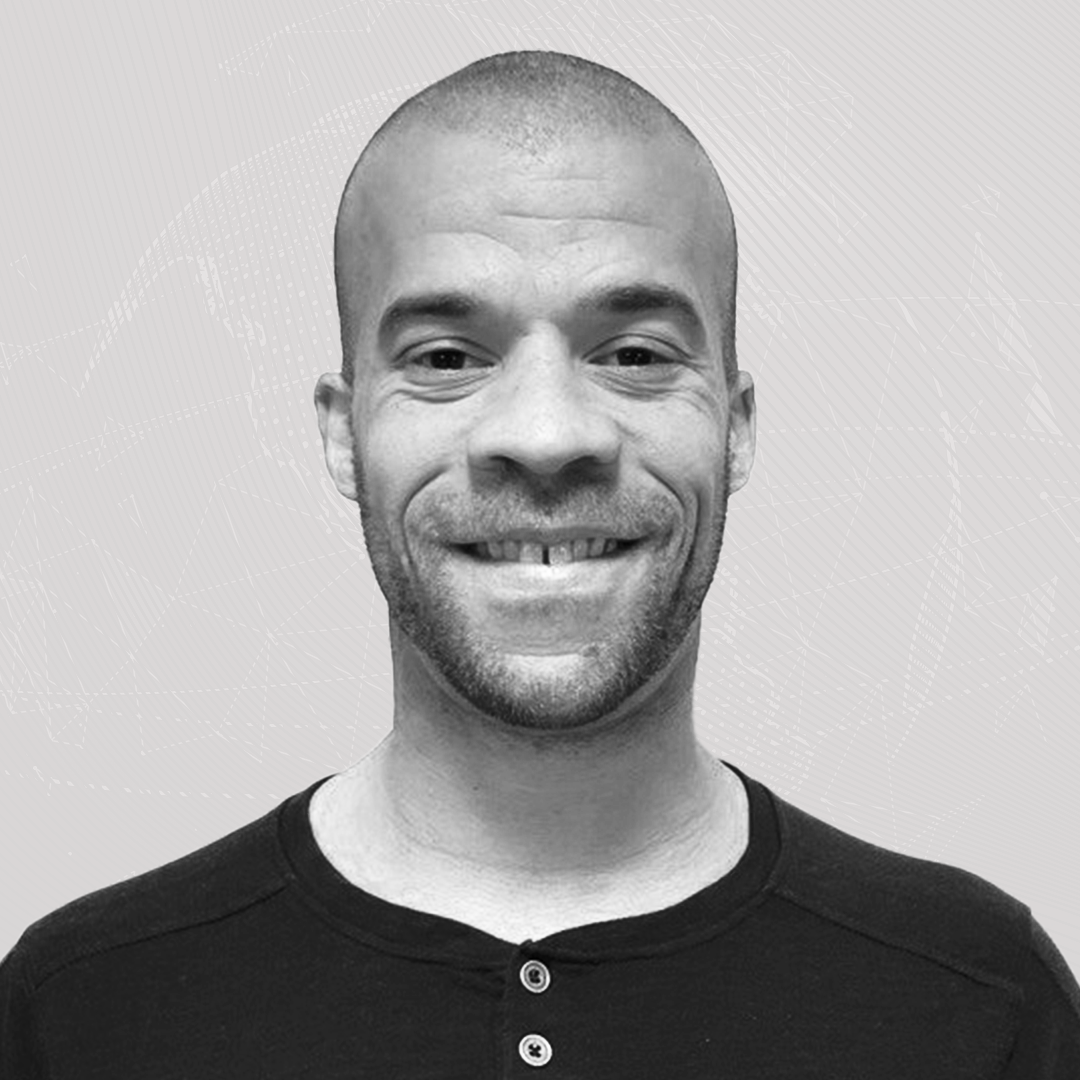
To get a fresh perspective on how Bitcoin is being integrated with various financial services, Kitco Crypto spoke with Zac Townsend, co-founder and CEO of Meanwhile, the first life insurance provider denominated and operating entirely in BTC.
“Meanwhile is a fully regulated and licensed life insurance company based in Bermuda, the insurance capital of the world,” Townsend said. “It's a very legitimate place to have an insurance company, and what's unique about our company is that it's entirely denominated in Bitcoin. I think we're one of the few, if not the only company in the world, that actually operates entirely on the Bitcoin standard.”
That means that premium payments made to Meanwhile are done with Bitcoin, and all claims are paid out in Bitcoin, he said. “And we do everything in between – from financials, solvency calculations, reserving, and our regulatory filings – in Bitcoin.”
“What's nice about that is that the exchange rate between Bitcoin and the dollar doesn't actually matter to us because whether it's $50,000 today or $15,000 in the past, our balance sheet and the promises and the guarantees we make to our users are all in Bitcoin,” he said. “So it doesn’t matter the day-to-day, month-to-month, or year-to-year fluctuations in BTC.”
When asked what prompted him and his business partner to start Meanwhile, Townsend said they have been long-term “believers in BTC and we think there’s going to be a global economic system built on Bitcoin. And if you’re going to have a global economic system, you’re going to have financial institutions of every type. There are a lot of different people who have worked on trading or options strategies, but with our background and experience in the more boring, traditional, long-term conservative financial services, this seemed like the perfect type of business to build.”
He noted that life insurance “is the oldest savings product in the world,” and “insurance companies are like boring, permanent investment vehicles for long durations.”
“Bitcoin could use a little more of that and a little less of, ‘what is the price going to be next week?’” he said. “So we asked ourselves, ‘What’s the price of Bitcoin going to be in 20 years?’ and we think it's going to be a lot higher than it is now. That simplified much for us in insurance.”
Townsend added that this model doesn’t work for all forms of insurance, such as car insurance, which are subject to varying payouts depending on what type of claim is filed.
“If you pay for your car insurance with Bitcoin, but your mechanic only takes dollars, someone's taking this currency risk,” he said. “But for our product, it's more like you pay us Bitcoin, and then eventually we pay your kids Bitcoin. We are anticipating that Bitcoin will have a lot more purchasing power in the future, but fundamentally as a company, and the way we approached it with regulators, is that we could be operating this company in euros or yen or Swiss francs or dollars, we just happen to be operating in Bitcoin.”
He said that approach resonated with regulators and simplified the overall process because they don’t have to “keep a bunch of dollars around” or manage different currencies and bank accounts.
Townsend also said that financial inclusion played a role in their decision to base Meanwhile on Bitcoin.
“There are 57 countries in the world that had inflation rates over ten percent last year,” he said. “So if you’re in one of those countries – like Argentina, Nigeria, or even Indonesia – and you are thinking about life insurance, which is an intergenerational savings product, or even burial insurance, we believe that now, and certainly in the future, you’d rather have your insurance denominated in Bitcoin rather than Argentinian pesos, just the way the last few years have gone.”
“So that really resonates with us as well,” Townsend said.
Tailwinds for Bitcoin
When asked what has been the main driver of interest and price appreciation for Bitcoin over the past year, Townsend said the answer is twofold.
“First, the idea of Bitcoin as a store of value feels persistent,” he said. “I know it has only been 15 years, but it feels like it's taking that position as a long-term store of value in some ways.”
“I am really impressed and motivated by the idea of a global computer, just as an example, but I’m hard-pressed to say that it will be Ethereum or Solana or one of the other competitors,” Townsend said. “Those fights are still being fought, whereas there is something about Bitcoin that already feels more permanent, more stable.”
“I think that's partially why it's perfect for a life insurance company because again, the question is whether it is going to be a durable store of value and intergenerational protection in three, four, or five decades,” he said. “And of all the tokens right now, for us, we’d make that bet only on Bitcoin.”
“Second, I do feel like Bitcoin is just now maturing,” Townsend said. “Sometimes I think that maybe the Ethereum Virtual Machine (EVM) is a bunch of experiments, and eventually, the best of those experiments will get ported back to Bitcoin.”
“So I do think the ETFs have played a role, but so have ordinals,” he said. “There’s also something like 20 layer-two protocols that are going to be launched this year on Bitcoin alongside established projects like Stacks and the Lightning Network. So I think there’s going to be a whole new set of innovators, and I think that that energy is real.”
“I think Bitcoin in the last cycle was the boring chain and the boring token – and I think it is boring in the sense that it is stable and long-term – but I think that this cycle will be a little different in that there will be a lot of innovation happening on Bitcoin directly,” Townsend said.
The launch of ordinals and BRC-20 contracts was made possible by the launch of BitVM on December 12, 2023. According to the whitepaper, “BitVM is a computing paradigm to express Turing-complete Bitcoin contracts,” allowing “any computable function [to] be verified on Bitcoin.”
“I remember the day that BitVM happened, my co-founder and I said to each other that this was going to change what Bitcoin can be, even though it was just a small little change at the time,” he said. “Once that happened, we understood that computation is possible, so eventually, we’ll figure everything out.”
One chain to rule them all
When asked if he thinks Bitcoin will eventually emerge as the one chain to rule them all, and that all use cases could be handled on Bitcoin, Townsend said he is not bold enough to make that prediction and instead looks at it from a more practical perspective.
“What I would say is for my users, right now, if I looked out 20, 30, 40 years and I was making promises to people, the token I feel the most comfortable or certain making that promise on is Bitcoin,” he said. “I do think that there are many different use cases in the world, and they will probably express themselves in many different technologies.”
“Some people like Windows, others like MacOS, some prefer Linux, and then there’s a long list of operating systems that we’ve never heard of,” he added. “I abide more by that mental model – that there will be one blockchain that is dominant in the way Windows was dominant, despite it not being the most sexy or productive platform.”
“So maybe that's Bitcoin, but there will be the sexier thing,” he said. “Maybe that's the EVM, but also maybe that's Solana. I don't know. Those fights haven't been won yet, and a new challenger has the potential to rise that combines the best of both worlds and renders the others obsolete. There will likely be two or three top platforms, but I don’t think there’s going to be 20.”
Interest in BTC-backed life insurance
Addressing the level of interest in BTC-backed life insurance, Towsend noted the saying, ‘Life insurance is sold, it's not bought.’
“We’ve been seeing some interest, but I don’t want to give the impression that millions of people are breaking down our door for access,” he said. “We started selling policies late last year. We've sold more policies every month than the month before that. It takes people a while.”
He noted that the process of applying for life insurance isn’t “the most exciting thing in the world,” and requires things like an extensive medical history and other private information that many in the crypto crowd like to keep close to the vest.
“The way our policy works is that you pay us in equal installments over 10 years,” he said. “So some contracts might be one Bitcoin a year for 10 years, and then we make you a promise, depending on your age, gender, and health status, to pay out 13 or 15 Bitcoins on your claim in the future.”
Based on this understanding, and taking into account the circulating supply of BTC, Townsend highlighted that “it’s not a product meant for millions of people around the world,” and is more tailored to long-term hodlers with larger Bitcoin stacks.
“Even if you're going to pay one Bitcoin over 10 years, as with our tenth of a BTC per year policy, that is currently $50,000 or $5,000 per year, which not everyone can manage,” he said. “In the original memo I wrote to raise funding, I said I’m going to build a ‘Tesla roadster,’ and that’s what we’ve done,” he said. “We have this product, but it’s really for whales.”
But “the ultimate vision is to be able to sell the product to the Argentinian middle class, which means that future policies may be denominated in Satoshis and not BTC,” he said. “We are starting upmarket and going downmarket, and that will require us to build a lot of technical infrastructure and incorporate things like AML/KYC policies, as well as establishing a regulatory infrastructure required to run an insurance company.”
When asked what other types of business could benefit from adopting an all-Bitcoin model, he noted that Meanwhile is starting to explore private credit as well, but is doing so methodically to avoid running into the same pitfalls as other crypto lenders have.
“The way our insurance company works is you pay 10 BTC and we promise you 15 back over your lifetime. We do that by lending Bitcoin to other people in a very boring, conservative fashion,” he said. “We’ve never had any credit losses because we negotiate hundred-page master loan agreements. So we think there are opportunities for a longer term or boring, longer duration, lower yield play in crypto.”
“But fundamentally, if you think that there is going to be a Bitcoin economy, then you have to assume there is going to be capital markets,” he added. “I don’t think there’s enough business for this yet, but having a bank where people can deposit Bitcoin, and then loans are made in Bitcoin – I think that will eventually happen.”
Towsend said his ultimate dream is for the existing relationship between energy and Bitcoin to grow until the point where things like oil contracts and natural gas futures are denominated in Bitcoin.
“If that sort of thing happens, then you start to have the settlement of those things – like oil, natural gas, energy, and maybe even debt funding for wind farms, nuclear power plants, and oil fields – denominated in Bitcoin,” he said. “The idea of Bitcoin as a settlement layer between countries, or between energy companies and countries, I think that makes a lot of sense, and fundamentally hasn’t been explored.”
“We’re at the very beginning of that journey,” he said.
Bitcoin and the halving
On the topic of the Bitcoin halving and price predictions, Townsend said he thinks “it's going to go up.”
“If I knew what the price of Bitcoin was going to be next week, next month, or next quarter, I'd be doing something else, I’d be making money that way,” he joked. “I try not to get too specific with price predictions, but my stock answer, and the thesis behind Meanwhile, is that I do think it’s going to go up over time.”
“The way we look at it is by asking ourselves, ‘Will Bitcoin have more purchasing power in 40 years?’” he said. “And I think the answer to that is definitely yes.”
“With myself, my friends, and a lot of the other builders in the space, there’s a natural tendency to think in these four-year cycles because that’s the way Bitcoin has functioned – partially because of the halving, partially because of the way price movements have been – and we get caught up in that too,” he concluded. “But it's important to not forget that we are on our fourth cycle, and I think that it's going to be the fourth of infinite cycles. We try to build and communicate with that in mind. The more people we have thinking that way, building that way, and acting that way will be better for the cryptocurrency ecosystem as a whole.”
