
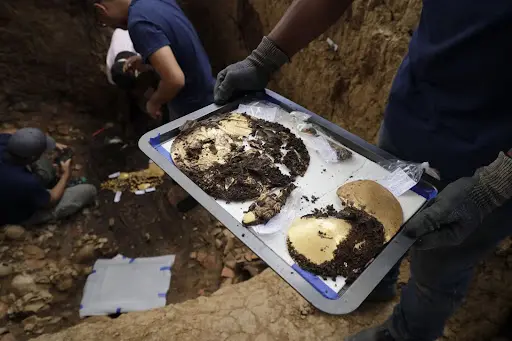
Photo courtesy of Patrimonio del ministerio de Cultura (MiCultura)
(Kitco News) - There is no question that gold has a long, storied history as a symbol of wealth and power around the world, and recent discoveries continue to underline its importance.
Archaeologists in Panama are celebrating the discovery of historical gold artifacts, along with relics and evidence of human sacrifice, in a recent dig in the archaeological park of El Caño, situated in the Natá district of the province of Coclé.
Since last January, archaeologists have been excavating a site known as Tomb No. 9, believed to be the resting place of an important lord during the ‘Coclé Culture,’ which dates between 750 and 800 AD, long before the Spanish first came to the country in 1501.
The researchers’ persistence paid off when they discovered a treasure trove of ceramic artifacts and gold pieces in the grave.
Dr. Julia Mayo, director of the El Caño Foundation and director of the archaeological project for 18 years since the excavations began in 2008, explained that this collection may have belonged to an adult male of high status from the Rio Grande chiefdom.
The personal collection was composed of five pectoral ornaments, two belts of spherical gold beads, four bracelets, two earrings in the shape of human figures (a man and a woman), an earring in the shape of a double crocodile, one necklace of small circular beads, five earrings made of sperm whale teeth with gold sheaths, a set of circular gold plates, two bells, bracelets and skirts made of dog teeth, and a set of bone flutes.

The archaeologists also found remains of other people, whom Dr. Mayo said would have been sacrificed to accompany the chief to the ‘afterlife.’ The noble’s body was discovered buried face down on top of the body of a woman, a common form of burial in this society, the press release said.
The excavation is still ongoing, so it remains to be seen how many other people might have been buried in the tomb. Dr. Mayo said that this is an important historical discovery for the nation.
