
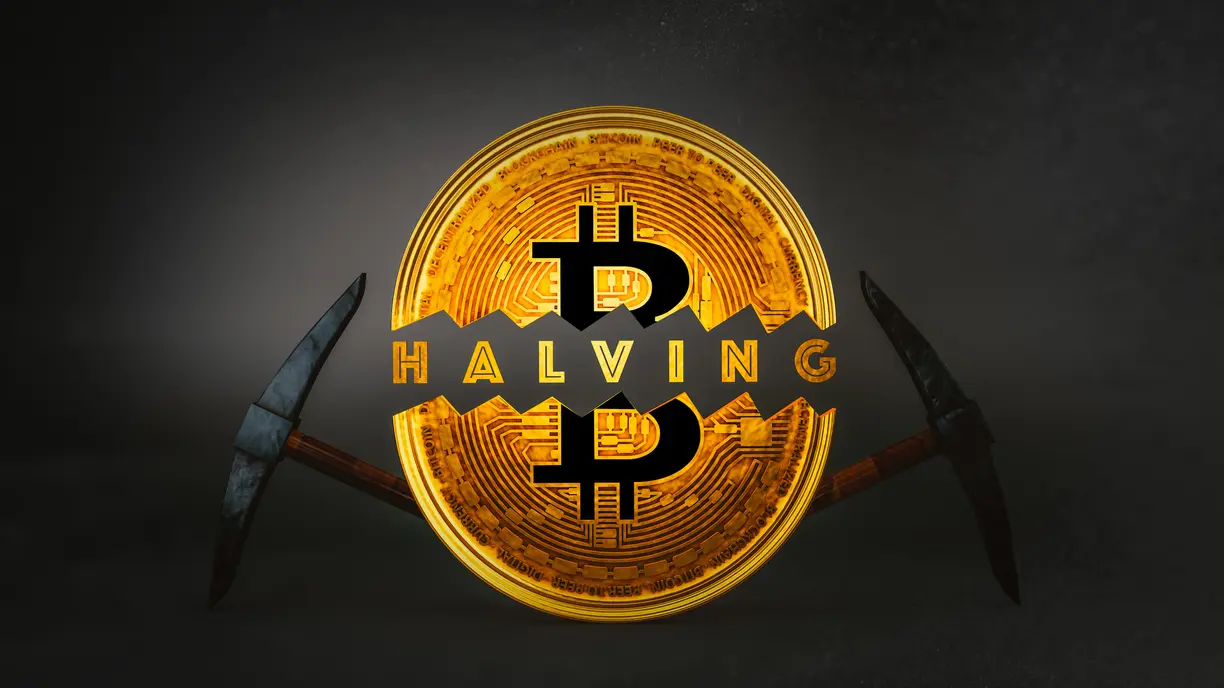
(Kitco News) – With the Bitcoin (BTC) halving set to transpire in less than 36 hours, the attention of the crypto community has turned to miners, who will soon see their revenues cut in half as the standard block reward declines from the current emission rate of 6.25 BTC to 3.125 BTC.
"Currently, miners who confirm blocks are rewarded with six and a quarter bitcoins every ten minutes,” said Greg Beard, CEO of Stronghold Digital Mining, in a note to Kitco Crypto. “However, with the halving, these rewards will be cut down to three and an eighth bitcoins. That’s a shift of about 900 bitcoins per day to 450 bitcoins per day.”
The pending decline in revenue has led many investors to dump Bitcoin mining stocks, both abroad and in the U.S., but that could soon be seen as a rash and imprudent move, according to Mitchell Askew, head analyst at Bitcoin mining firm Blockware Solutions, who told CoinTelegraph that “Investors will realize their fears were mostly unsubstantiated.”
Askew said post-halving profitability concerns and Bitcoin’s 7.5% price fall over the last week are the main catalysts behind miners’ falling stock prices, but thinks that “[The] halving will be a ‘buy the news’ event for public Bitcoin miners and the private ASIC market.”
While mining revenue is set to decline in the short term, history shows that eventually, Bitcoin’s price will rise to a level that makes miners profitable again, meaning the decline in revenue is only temporary.
“At the same time, introducing Bitcoin ETFs has generated new demand, with millions of dollars flowing into Bitcoin ETFs during the recent Bitcoin rally,” said Beard. “This combination of reduced coin supply and increased demand will lead to a further supply and demand imbalance."
Beard also thinks that the halving will help thin the crowded field of cryptocurrency mining, which will be healthy for the ecosystem in the long term.
"There have been many conversations within the industry about the excessive number of publicly traded miners,” he said. “Currently, there are at least 20. I anticipate seeing the mining sector trending towards consolidations over the course of this year."
"The increase in the Bitcoin hash rate, from 100x to 400x over the last three years, has effectively quartered miners' rewards ahead of the halving,” he added. “This reduction of miner rewards, paired with the increase in the price of Bitcoin, has ultimately increased the competition among miners for the limited rewards.”
Moving forward, Beard said miners will need to make strategic adjustments to their operations to remain competitive.
"Miners whose only leveler is to acquire more efficient machines to stay competitive will find themselves at a disadvantage, as this option isn’t sustainable in the long term,” he said. “On the other hand, miners who own their low-cost power are better positioned to thrive in the post-halving environment, as their operational costs will be lower, allowing them to be more flexible with their capital."
As for concerns about profitability from block rewards due to the reduction in supply, Beard said Bitcoin is moving into the next phase of its existence where the majority of miner revenue will come from transaction fees, and halvings will have less impact moving forward.
"We’ve only recently seen transaction fee volatility, with fees shifting from under 2% before May 2023 to an average of about 9% since then,” he said. “The spike in fees was related to inscription activity on the Bitcoin blockchain. I predict that the halving’s impact on fees will be overshadowed by the impact of a surge in Bitcoin Ordinals, representing a fundamental change in the use of the Bitcoin blockchain."

Taras Kulyk, founder and CEO of SunnySide Digital, a company that provides data center hardware and infrastructure for the Bitcoin mining industry, also sees the industry going through a period of consolidation after the halving and expects to hear about numerous mergers and acquisitions (M&A).
“Given the perceived and real potential for compressed Bitcoin mining economics, there will likely be a surge of M&A activity in 2024/25,” Kulyk said. “Scale and profitability will increasingly define success and attract fresh investor focus and the sector will likely see a pronounced trend towards consolidation, which should not come as a surprise to investors who’ve been tracking the ongoing maturation of the space.”
“The M&A trend extends beyond mining operations to encompass service providers like SSD, where M&A will play a pivotal role, as publicly listed miners seek service vendors that are capable of supporting their growing scale (with some operators now over 1GW of power utilization),” he added.
There is also a downside to this consolidation, according to Jag Kooner, Head of Derivatives at Bitfinex, who warned that it “could lead to greater centralization of mining power among larger, more financially robust entities.”
“However, this shift also presents an opportunity for innovation and efficiency improvements within the sector,” Kooner said. “Miners might explore new regions with cheaper energy sources or invest in more efficient mining technology to maintain profitability.”
Alexei Zamyatin, co-founder of Build on Bitcoin, sees a new era of collaboration between miners and Bitcoin layer-two (L2) projects after the halving as fees will become the main source of revenue.
“This halving will highlight the growing collaboration between miners and Bitcoin L2 projects, with miners seeking additional revenue and L2s seeking to harness the security of the Bitcoin L1,” he said. “This collaboration will occur through merge mining, allowing cross-chain compatibility with outside chains such as Ethereum.”
“And it won’t stop there, miners will continue to look for more revenue and will be incentivized to bootstrap new L2 Bitcoin projects, because the more successful use cases built on Bitcoin, the more miners are able to make as each halving dwindles their rewards,” Zamyatin added. “The direction Bitcoin miners and L2s are headed together will ultimately create a more sustainable, robust ecosystem and this halving will mark the beginning of a critical phase of innovation in the Bitcoin ecosystem.”
Bitcoin performance post-halving
According to most analysts, Bitcoin is likely to continue to see volatile, sideways trading immediately following the halving as the mining industry adjusts to the new emission rate while the broader market grapples with rising geopolitical tensions.
“Researchers foresee BTC maintaining its sideways movement for the next few days until there is more clarity on the geopolitical front (i.e. conflict in Middle East and control over oil transportation routes),” said analysts from 21Shares in a note shared with Kitco Crypto. “Should these geopolitical risks stabilize, Bitcoin is likely to resume its upward trend post-halving, supported by a growing institutional interest in digital assets led by the US Spot and recently approved Hong Kong ETFs.”
“The evolving geopolitical landscape, coupled with increasing institutional adoption and the scarcity of Bitcoin's supply, sets the stage for a potential bullish continuation in the weeks following the halving event,” they added.

According to Beard, the halving now has less of an effect on Bitcoin’s price than other factors, including demand from the spot BTC ETFs and concerns related to inflation and interest rates.
“I do believe the significance of the Bitcoin halving in April is being exaggerated,” he said. “However, the latest Bitcoin rallies are much more than a fad. Bitcoin is maturing with institutional adoption. The recent surge in price, backed by BTC ETFs, is likely to generate more interest, creating a compound effect. Given this, it wouldn't be surprising to see the price of Bitcoin increase significantly over the next two years."
"The previous effects of the halving have historically resulted in an upside in the price action of Bitcoin,” Beard added. “While others look at the Bitcoin price on a technical basis and predict it will increase, I, on the other hand, am looking at the basic fundamentals of supply and demand and drawing the same bullish conclusions."
“Historically, halvings have been followed by rallies in the price of Bitcoin, partly due to the reduced pace of new coin generation which exacerbates the supply scarcity,” Kooner said. “If past trends continue, the increased value of Bitcoin could offset the reduced block reward, thereby sustaining miner incentives and preserving network security.”
“This outcome depends on a variety of factors including market demand, investor sentiment, and macroeconomic conditions affecting liquidity and investment flows into cryptocurrencies,” he noted. “Another critical element in the mix is that the regulatory landscape remains a wildcard, with potential changes looming on the horizon that could significantly impact the operational dynamics and profitability of Bitcoin mining companies both large and small."
Kooner said that “the sell-the-news event usually occurs when there is market consensus for it, which could be the case after sentiment was hit following an escalation of tension in the Middle East, which at the weekend triggered one of the largest market-wide two days of liquidations we have ever seen.”
“The sentiment surrounding Bitcoin's 2024 halving was notably optimistic until a week ago with many expecting a significant price surge,” he said. “This optimism was partly fueled by BTC surpassing its 2021 cycle high even before the halving, setting new records and drawing increased interest from institutional and retail investors alike.”
“Because of ETF flows absorbing the current daily supply added to the market by Miners (around $60 million worth of BTC) it had been assumed that passive demand from ETFs post-halving will have a more pronounced impact,” he added.
“However with last weekend’s de-leveraging event, following the launch of missiles and drones towards Israel from Iran, sentiment has taken a turn for the worse,” Koopner noted. “It remains to be seen if this will affect fundamentals but sentiment is decidedly more cautious now than it had been just a week ago.”
“We believe that after the latest move down, there could be a potential pause in the trend we have been seeing to date of Long-Term Holders and whale investors distributing their holdings, at least until BTC recovers to higher prices,” he concluded.
