
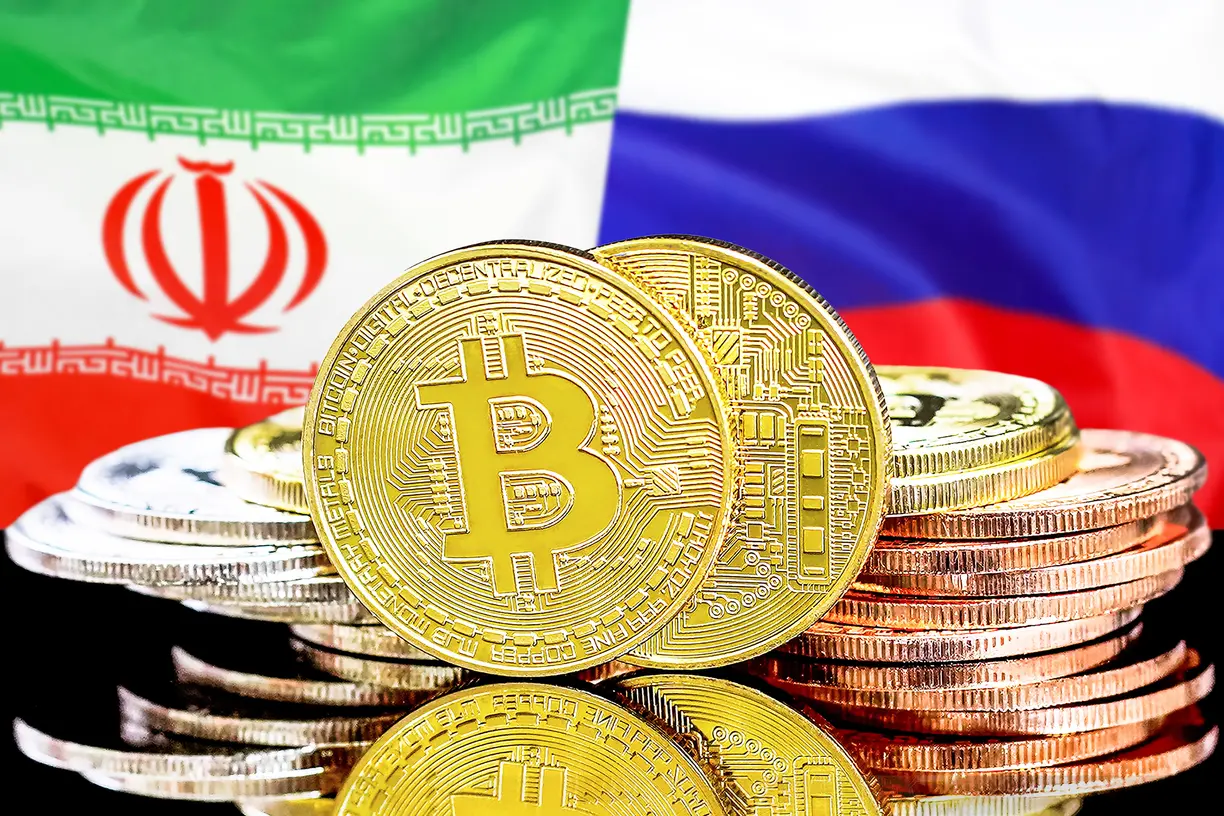
(Kitco News) – As geopolitical tensions in Europe and the Middle East rise, the governments of Iran and Russia are reportedly working on central bank digital currency (CBDC) and digital financial asset (DFA)-powered trade solutions, Iranian officials have confirmed.
According to a report from Russian media outlet Izvestia, Rahimi Mohsen, the trade attaché of the Iranian Embassy in Russia, said the countries were “exploring the use of DFAs and central bank digital currencies,” which can help simplify trade between Tehran and Moscow and potentially mitigate the effects of sanctions.
Currently, payments between the two countries are challenging due to the conversion of national currencies and the discrepancy between the market rate in Iran and the state rate. Mohsen said that while difficulties remain, “it is necessary to create infrastructure and regulations for new payment methods,” and Iran intends to cooperate with Russia to implement these new decisions.
Maxim Chereshnev, Chairman of the Board of the Council for the Development of Foreign Trade and International Economic Relations, noted that both countries are under sanctions from the West, which makes them even more motivated to cooperate on a viable solution.
Chereshnev added that a partnership with Iran is also strategically important as it allows Russia to strengthen its influence in the Middle East and Central Asia.
He noted that as a result of the current discrepancy between the market rate in Iran and the state rate, each transfer sees Russian businesses lose 20–25% in value. He said the launch of settlements through DFAs and CBDCs can simplify trade between states, reduce the amount lost, and increase the transparency and security of transactions.
Nikolai Dudchenko, an analyst at Finam Financial Group, said using the new payment methods would also set a precedent that could lead to other countries establishing similar settlement agreements with Russia, further enhancing their trade profile. This could also help unite developing countries and the rapidly growing BRICS union.
In 2023, Iran and Russia traded more than $4 billion in products, including food, agricultural raw materials, machinery, equipment and vehicles. And with the volume of trade between the countries expected to grow, establishing a reliable method of transaction outside of the SWIFT system is key to long-term success.
Moscow and Tehran have many long-term plans for the development of international transport and logistics corridors, military-technical cooperation, and projects in the field of partner (Islamic) financing, said G. V. Plekhanova Ilyas Zaripov, Associate Professor of the Department of Global Financial Markets and Fintech of the Russian Economic University.
The two countries have already agreed to connect to each other’s national payment systems – the Russian SPFS and the Iranian Shetab – but the use of CBDCs and DFAs is the next important step in interaction, Ilyas Zaripov said. In his opinion, this will intensify settlements and may become the basis for creating a single currency for the BRICS+ countries.
Iran and Russia have also reportedly discussed the possibility of launching a token for the Middle East region that would be backed by gold and accepted as a means of payment.
In March, Russian President Vladimir Putin signed a law that allows Russian firms to engage in cross-border DFA trade using Russian-issued tokens and the digital ruble. Notably, the law does not allow Russian companies to use other countries’ DFAs or CBDCs in trade deals.
Lawmakers in Russia have also proposed doing business with China using the digital ruble and the Beijing-backed digital yuan as a workaround to U.S. sanctions.
