

(Kitco News) – When analysts attempt to predict how Bitcoin (BTC) will perform in the future, most look at its price action and use technical indicators such as RSI and Fibonacci retracement levels. Others focus on fundamental indicators, such as the Bitcoin halving, circulating supply, and network hashrate.
For Jamie Coutts, chief crypto analyst at Real Vision, the best indicators of Bitcoin’s future performance are the M2 money supply and performance of the U.S. Dollar (USD) Index (DXY), which measures the dollar’s value compared to a basket of six dominant global currencies.
“The Global Money Supply index tracks M2 money aggregates from 12 of the world's largest economies, all in USD,” Coutts said on X. “In our fiat, credit-based financial system, the money stock often moves in one direction. Significant drops, like in 2022, are rare and typically brief.”
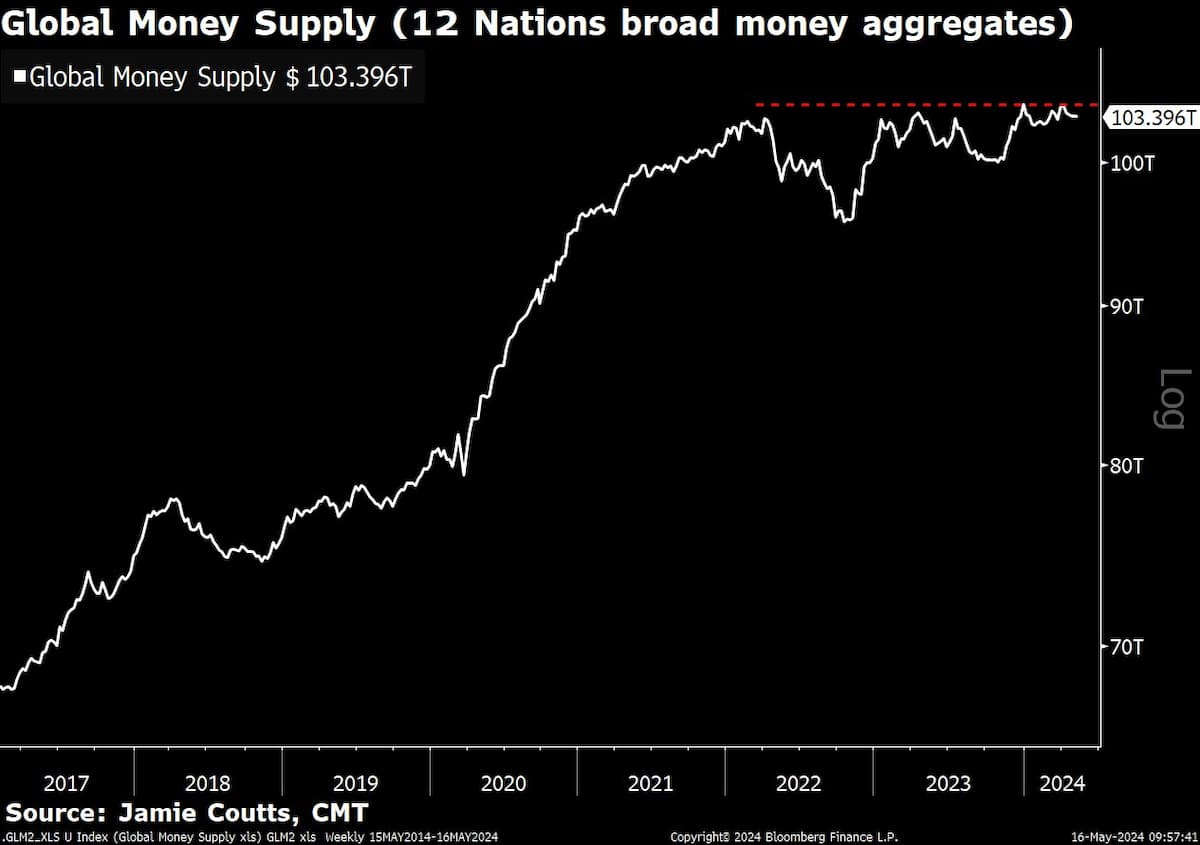
“Currently, there is a sea of red across my macro & liquidity dashboard,” he noted. “But signs are emerging that this is about to change. Global M2 is currently neutral and holds the key for the next leg of the cycle.”
Coutts said that of the three main measures he tracks in his “Bitcoin/Liquidity framework” – central bank balance sheets, Global M2, and the DXY – “Global M2 appears to capture the most of the moves.”
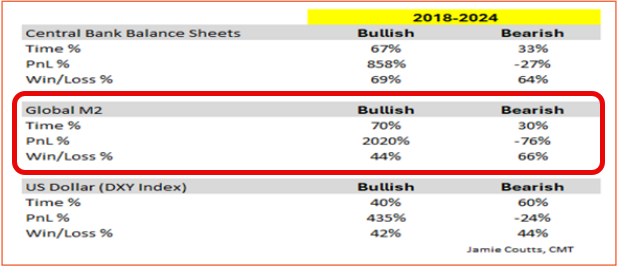
“The rate of change in money supply is more important than the nominal value,” he said. “The chart confirms what our MSI performance table suggests: Bitcoin usually moves with shifts in M2 momentum.”

Coutts noted that momentum is currently “sluggish” for the global money supply MSI indicator “despite being in an uptrend,” and said that in order “for a breakout from the 2.5-year pattern of monetary contraction and a bullish MSI signal, momentum needs to increase.”

He highlighted three factors that, when combined, could help achieve this goal: “dollar depreciation, credit expansion, and increased government debt issuance.”
“Improving credit conditions are key,” Coutts said. “M2 in the U.S. is about to turn positive on a 12-month basis, the first time since early 2021. This could lead more countries to follow in the coming months.”
He added that “corporate bond spreads (BBB/Baa) vs. the U.S. 10-year Treasury yield are crucial for monitoring credit conditions,” and said, “These spreads have closely aligned with major Bitcoin cycle inflections over the past five years.”
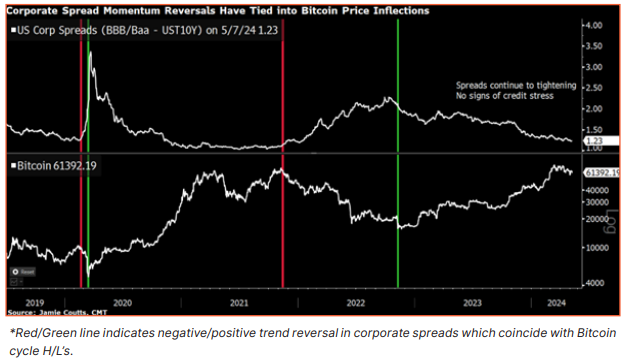
“The chart shows notable changes in corporate bond-spread trends, marking the Bitcoin peak in 2021 and the trough in 2022,” he noted. “Red and green lines indicate negative and positive trend reversals, coinciding with Bitcoin's cycle highs and lows.”
Coutts said currently, there are no “immediate concerns as corporate spreads are narrowing,” indicating “corporations are issuing and rolling over debt despite high interest rates from the record hikes in 2022 and 2023.”

“Using the chameleon trend indicator [chart above] on the corporate spread index provides a clear strategy: long Bitcoin when the index shows [a] bearish trend (red) and stay alert for potential trend reversals (turning green),” he said.
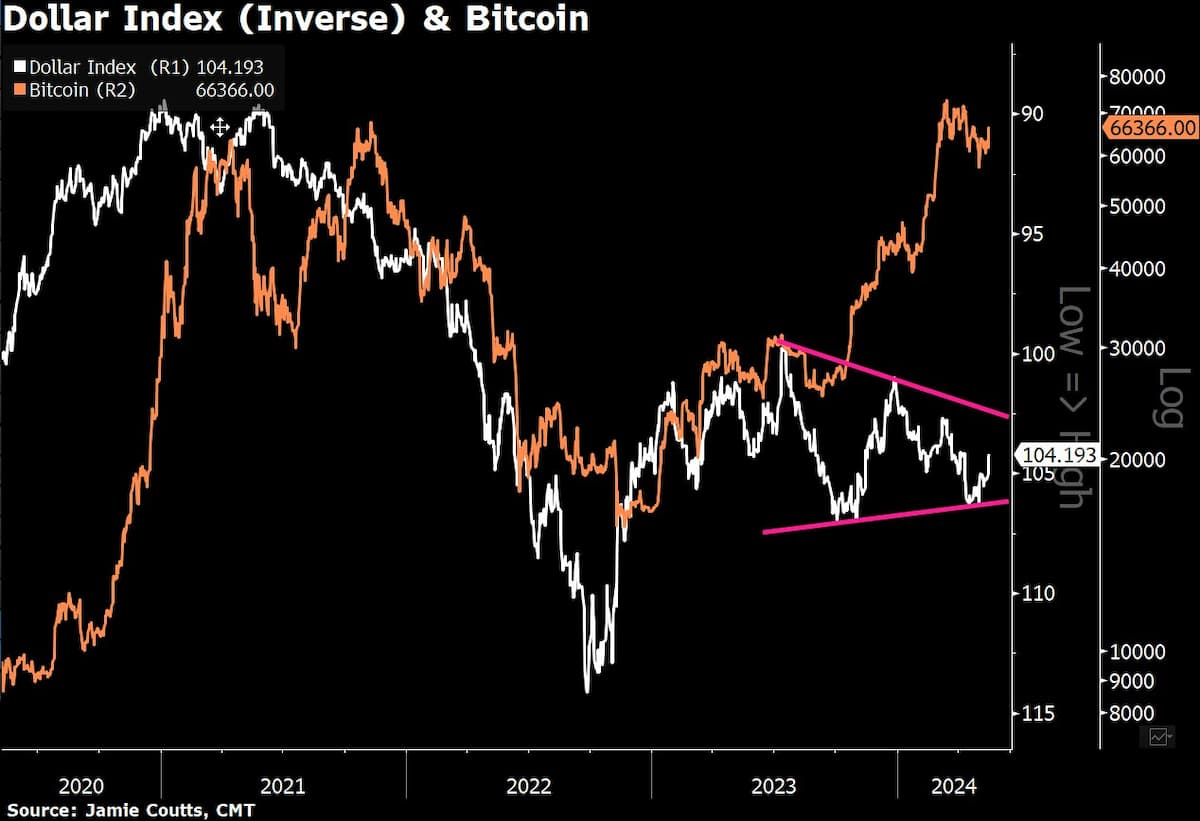
As far as the DXY is concerned, Coutts noted that “the dollar is range-bound.” He suggested that a break below 101 “would be rocket fuel for Bitcoin.”
Another tailwind for King Crypto is U.S. government debt, which is “unlikely to improve unless fiscally responsible conservatives take over Congress,” he said. “Unlikely. Moar deficit spending on its way.”
“While my framework needs 2/3 MSI indicators to turn Bullish for macro headwinds to turn into tailwinds, Bitcoin price action will probably sniff out this inflection in the macro before most indicators react,” Coutts concluded. “Best not to fade it if it breaks above the ATHs.”
