

(Kitco News) - The gold market is holding steady after the Philadelphia Federal Reserve's manufacturing sector survey disappointed market forecasters this month.
On Thursday, the regional central bank said its manufacturing business outlook for June fell to 1.3, compared to May’s reading of 4.5. The data was worse than expected as economists were looking for a reading of 5 this month.
"The survey’s indicators for current general activity, new orders, and shipments all declined, with the latter two turning negative," the report said. "The employment index suggests declines in employment overall. Both price indexes indicate overall increases in prices but remain below their long-run averages. The firms continue to expect growth over the next six months."
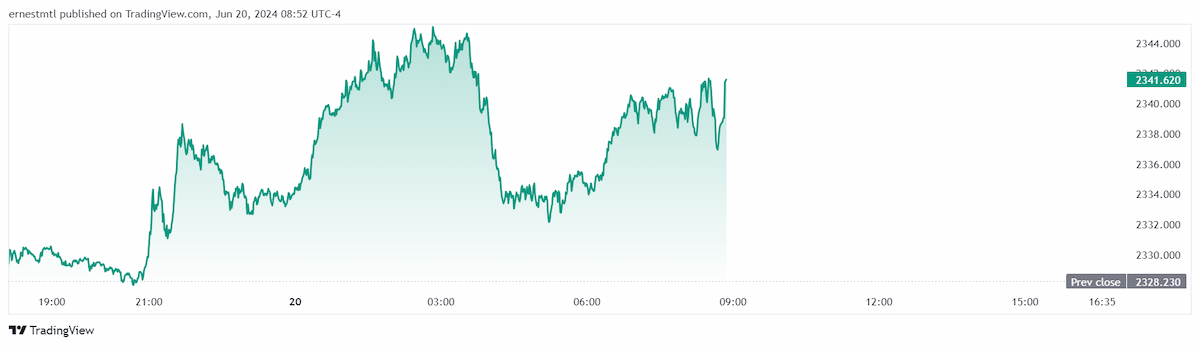
Gold prices held steady in the minutes following the manufacturing data release, which came out at the same time as weekly jobless claims and May housing starts. Spot gold last traded at $2,341.62, in the upper half of its daily range and up 0.58% on the day.
The key components of the index were mixed this month. “The index for new orders recorded a second consecutive negative reading but moved up from -7.9 in May to -2.2 in June. The current shipments index fell 6 points to -7.2, its lowest reading since December,” they wrote.
On balance, firms in the region continued to report a decline in employment. “The employment index rose 5 points to -2.5 in June, its eighth consecutive negative reading,” they said. “Most firms (74 percent) continued to report no change in employment, while the share of firms reporting decreases (14 percent) slightly exceeded the share reporting increases (11 percent). The average workweek index rose from -8.3 to 4.8.”
The report also showed an increase in inflation pressures. The prices paid index rose 4 points to 22.5, while the current prices received index increased 7 points to 13.7.
“Responses to the June Manufacturing Business Outlook Survey suggest mostly steady regional manufacturing activity overall this month,” the Philly Fed wrote. “The indicator for current activity ticked down but remained positive. The shipments index fell further into negative territory, and the new orders index remained negative. On balance, the firms continued to indicate a decline in employment, and the current price indexes suggest overall increases in prices.”
Most of the survey’s broad indicators for future activity fell but remained positive, they noted, suggesting less widespread expectations for growth over the next six months.
