
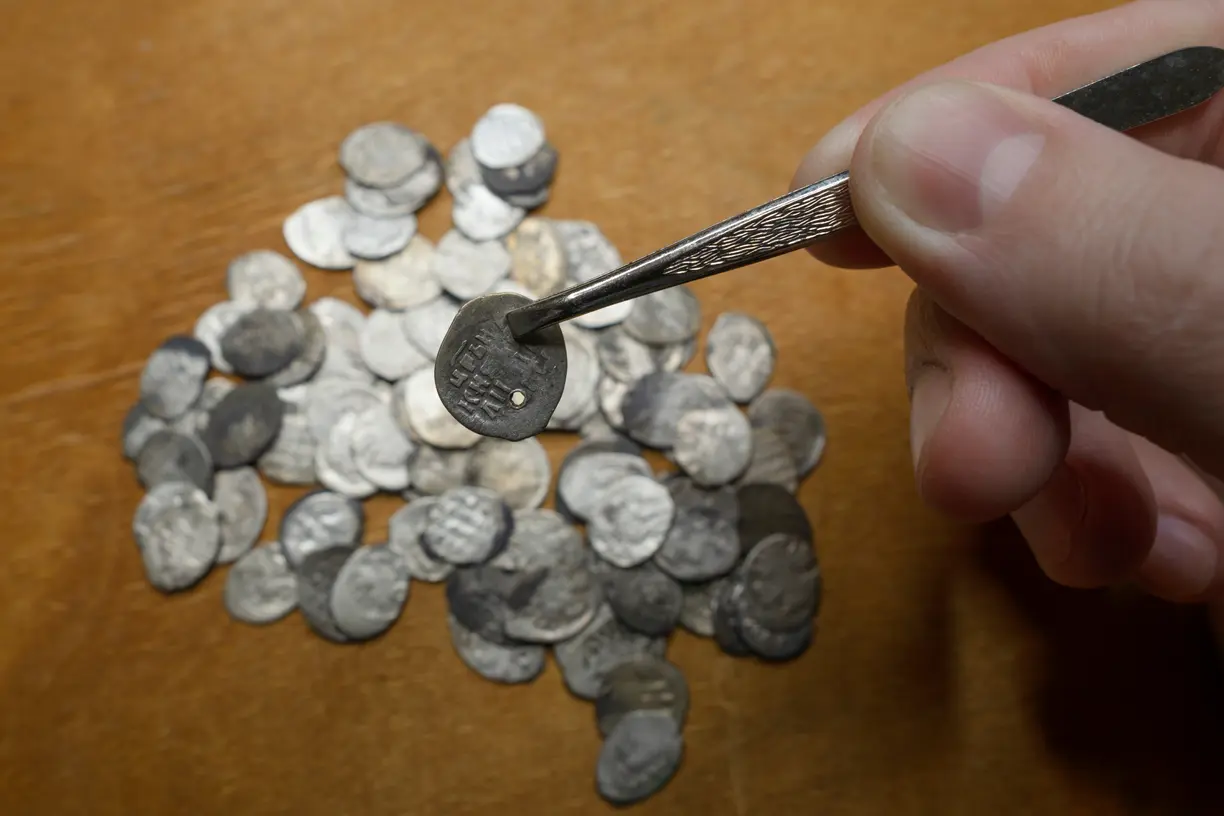
(Kitco News) – Underground repairs can be expensive, especially in a world where the costs for materials are increasing due to inflation, but every once in a while, they can lead to a treasure trove of riches, as was the case for one handyman in Germany.
As Popular Mechanics reported, Claus Völker, a resident of the German municipality Glottertal, was laying down underground piping near a swimming pool in May when he found a collection of “small metal plates.”
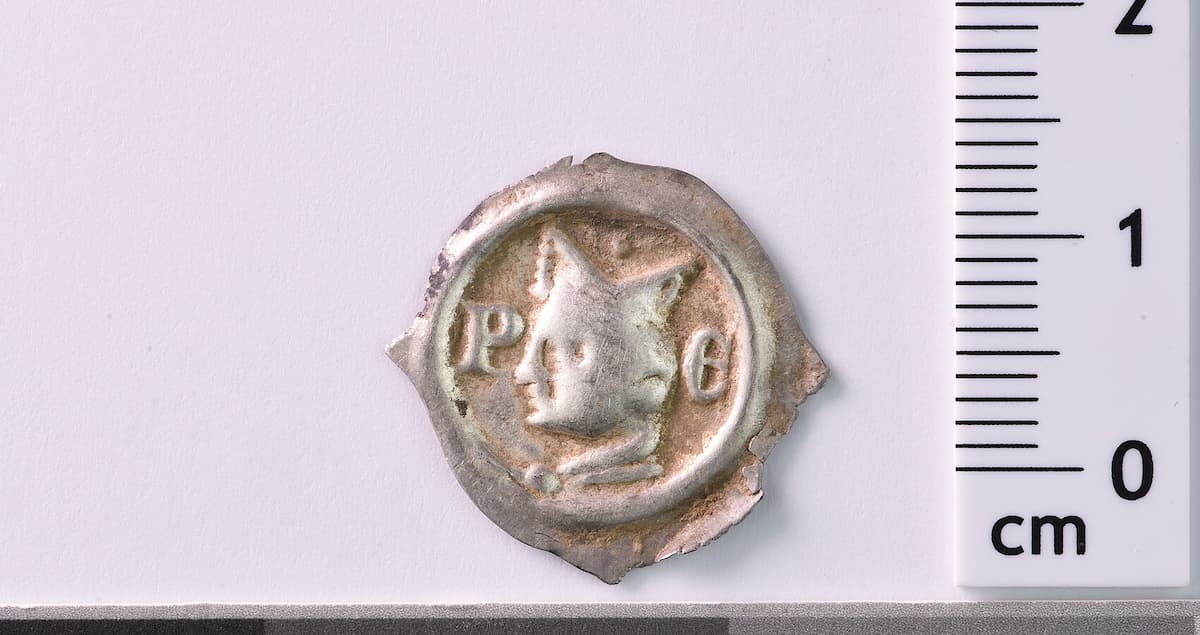
According to a translated statement from the State Office for Monument Preservation (LAD) of the Stuttgart regional council, Völker had actually stumbled upon “one of the most extensive medieval coin treasures of recent decades.”
After noticing the “small metal plates” while assisting the LAD with an excavation, Völker explored the trench being dug further and discovered more objects. Archeologists quickly responded to the find, and with the help of a LAD representative, a more extensive excavation was conducted, yielding “around 1000 coins.”
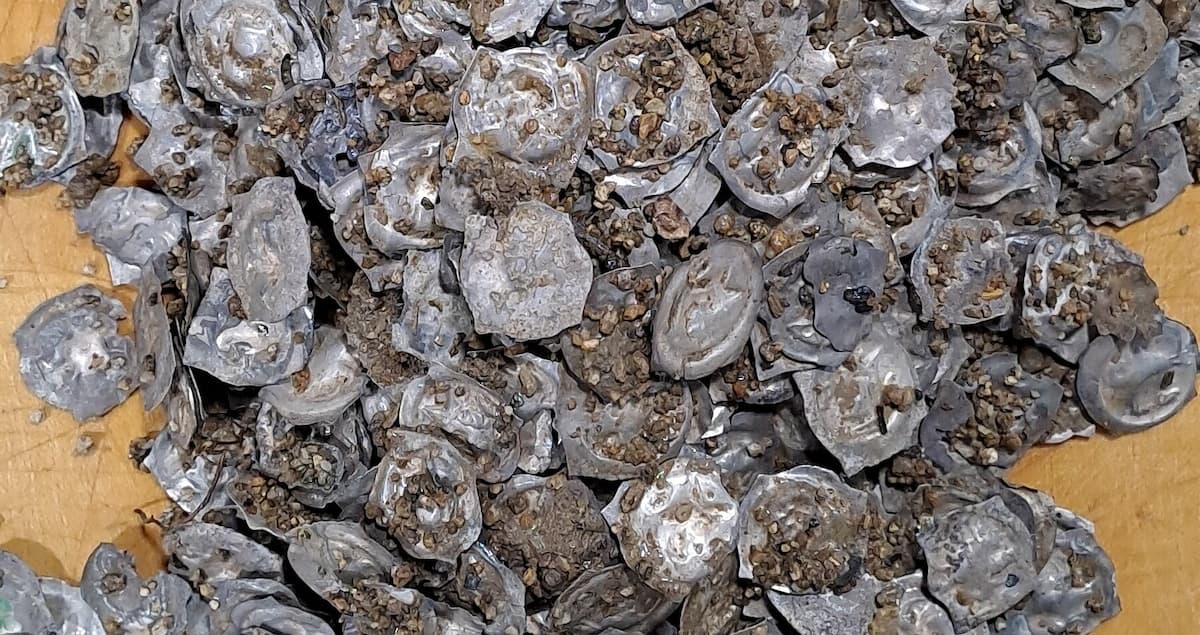
In the days that followed, rains turned the trench into a knee-deep mud pit, but the archaeologists were not deterred. They grabbed their metal detectors, and their efforts paid off as they discovered an additional 500-600 coins.
A thorough cleaning of the items was conducted, which yielded historical results.
“These are mainly coins from the Breisach, Zofingen, and Freiburg mints, which were minted around 1320,” said Andreas Haasis-Berner, an archaeologist at the LAD. “There are also a few coins from Basel, St. Gallen, Zurich, Laufenburg and Colmar.”
Haasis-Berner noted the significance of the find. “The evaluation of this coin hoard will enable us to make statements about the circulation of coins in Breisgau, the minting activity in the mints, the silver trade, and the mining in Glottertal,” he said.
When asked whether the hoard was very valuable at the time, Haasis-Berner said, “You could have bought about 150 sheep with the coins.”
Delving deeper into the region's history, Haasis-Berner told Life Sciences that “Glottertal has been one of the most important mining areas for the dukes of Freiburg. The site where the coins were found was a main settlement area for miners,” who mined a variety of metals including silver.
The archeologist said this discovery was “the biggest treasure since 1949 in the region of Freiburg,” referring to a find of 5,000 coins from around the 1280s that was discovered by archaeologists in 1949.
Freiburg was founded in 1120 by the House of Zähringen dynasty, whose dukes ruled the region until 1218. When the Zähringer line ended, the city was taken over by the House of Urach.
“With these treasures, we can see which coins have been common,” Haasis-Berner said.
