
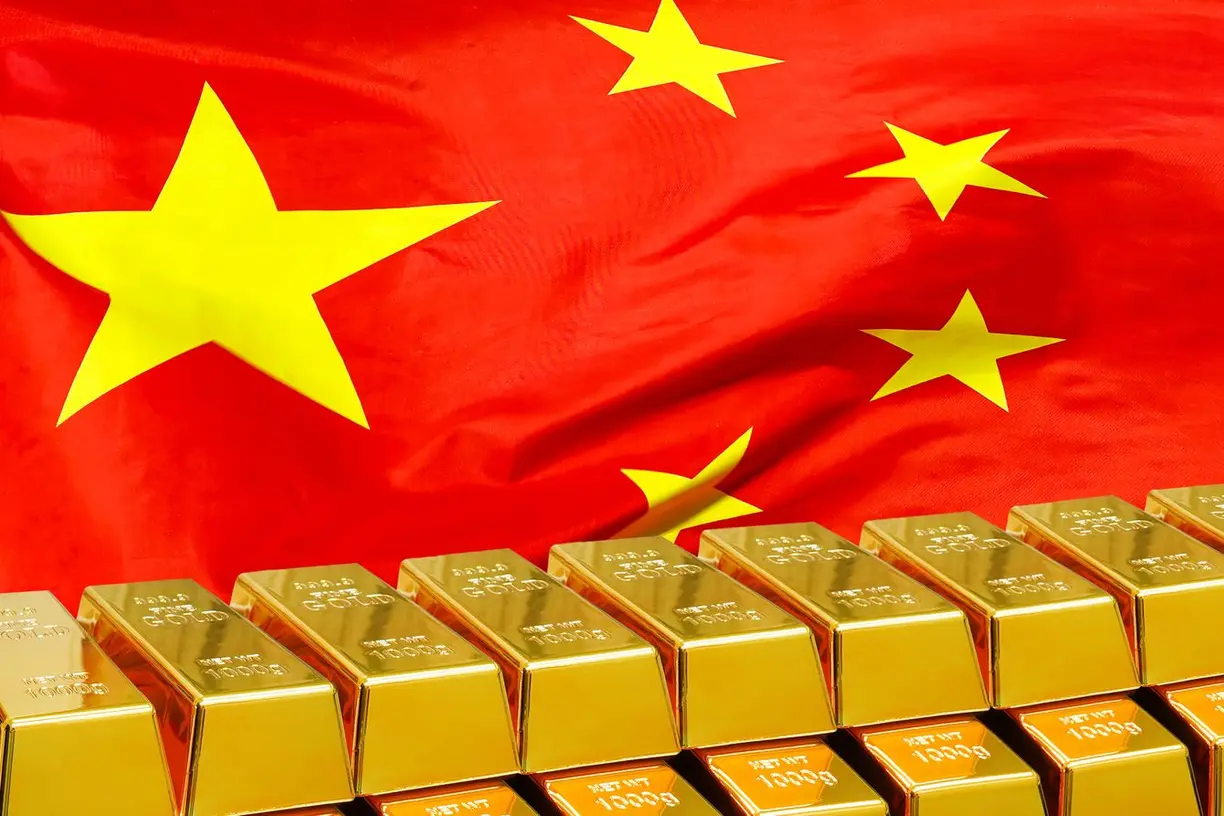
(Kitco News) – China's net gold imports via Hong Kong rose by about 17% in July compared to June, the Hong Kong Census and Statistics Department announced on Tuesday.
China imported a net 25.659 tonnes of gold from the Special Economic Region (SAR) in July, up from the 21.919 tonnes imported in June, the government data showed. Total gold imports via Hong Kong were up over 6% to 31.457 tonnes.
But, the increased imports are unlikely to be driven by demand from the county’s jewelry sector, which has been hammered by the record high prices for the precious metal in 2024.
“The major challenge we've encountered in the past two quarters is the continuous rise to historic highs in gold prices, with virtually no corrections,” Wang Lixin, CEO of the World Gold Council (China) told Shine.cn.
The China Gold Association (CGA) reported a 27% decline in gold jewelry purchases in H1 2024 as a combination of geopolitical challenges and economic uncertainties drove gold prices to fresh all-time highs. In the first half of this year, China's gold consumption decreased by 5.6% from a year earlier to 523.8 tonnes, with jewelry’s share falling to 270 tons, the CGA said.
“We have experienced sudden spikes in gold prices before, but we've never seen them sustained at these levels,” said Wang. “This has led to a market phenomenon that we could not have anticipated.”
Chinese consumers have now adopted a wait-and-see attitude as they hold back on purchases in an attempt to determine where gold prices will go next, while those who continued purchasing gold switched from high-end jewelry to gold bars and coins with a lower premium. Sales of bars and coins surged 46% in the first half of 2024 to 213.6 tonnes.
"In response to the current market challenges, it's crucial to remain proactive,” Wang said. “Despite high gold prices, there is a need to innovate and create special products because consumer demand for beauty and better products never wanes."
“Social lives expand, and young consumers find more occasions where they want to wear jewelry,” he added. “For industry players, the challenge is to create an atmosphere that encourages these consumers to incorporate jewelry into their diverse and evolving lifestyles, allowing them to stand out among their peers.”
Wang said that despite the challenges facing the domestic jewelry market, WGC research shows that younger consumers still have a strong desire to purchase gold. “In such an environment, it's crucial that we use new technologies to meet their evolving needs,” he said.
