
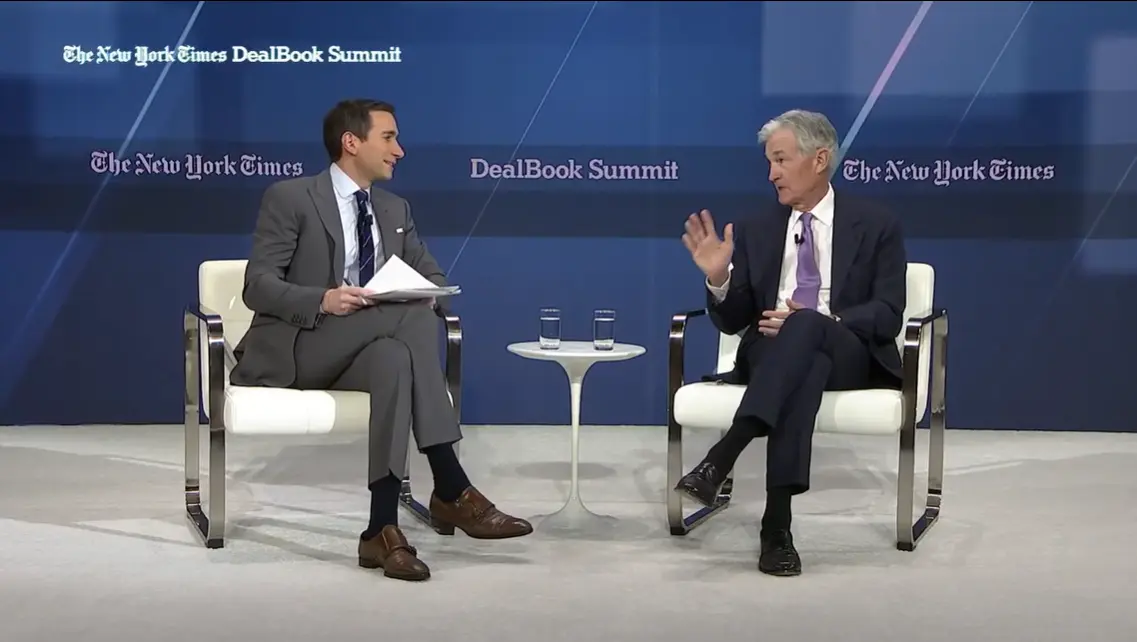
(Kitco News) – Federal Reserve chair Jerome Powell seized the attention of the currency, commodity, and crypto communities on Wednesday afternoon when he shared his views on the role of Bitcoin in the U.S. economy – including the assets with which it was and was not in competition.
During an onstage interview at the New York Times DealBook Summit in New York, Powell was asked if he believes that Bitcoin’s rise in value and prominence represents a loss of faith in the U.S. dollar and the Federal Reserve system itself.
“I don't think that's how people think about it,” the Fed chair replied. “People use Bitcoin as a speculative asset. It's just like gold, only it's virtual, it's digital. People are not using it as a form of payment or as a store of value; it's highly volatile.
“It's not a competitor for the dollar,” he emphasized. “It's really a competitor for gold, that's really how I think about it.”
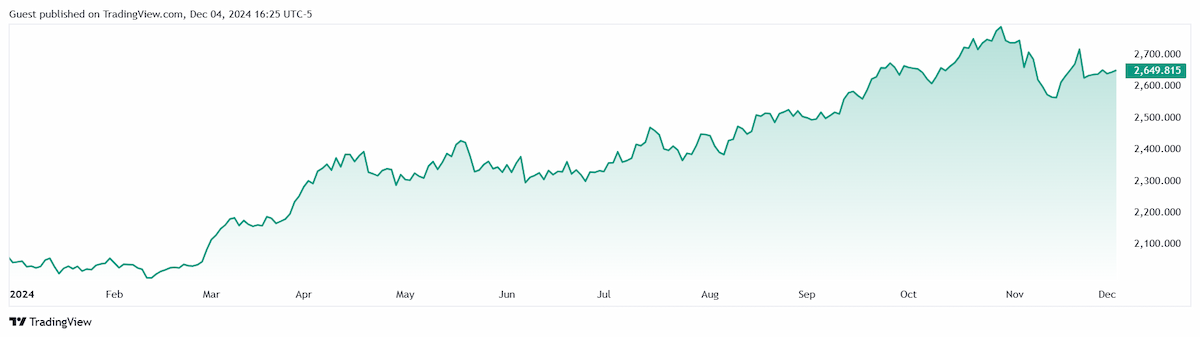
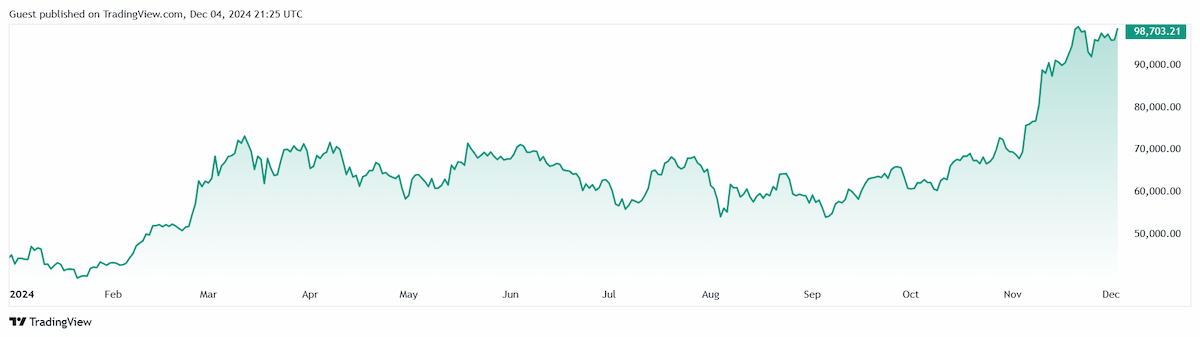
Both the yellow metal and King Crypto have made enormous gains this year even as the greenback has strengthened against other currencies. Gold is up 28.44% in 2024, while Bitcoin has gained 133.87% this year, and both are priced in U.S. dollars.
The central bank head was also asked about the Fed’s independence, and whether it could be challenged by the incoming Trump administration.
“What does independent mean? It basically means that we can make our decisions without them being reversed, other than by Congress,” Powell said. “We're a creature of Congress, we're not in the Constitution, we are a creature of statute. That gives us the ability to make these decisions for the benefit of all Americans at all times, not for any particular political party or political outcome. We're supposed to achieve maximum employment and price stability for the benefit of all Americans, and keep out of politics completely.”
Powell said that he believes that this idea enjoys “very, very broad support” from both political parties in Congress. “That's what really matters,” he added. “It's the law of the land, and I'm not concerned that there's some risk that we would lose our statutory independence, because I do think that that set of ideas is strongly believed by people.”
Powell was then pressed on Trump's comments about the possibility of him being fired, but he refused to address them directly.
The Fed chair was given the opportunity to reply to recent comments from Treasury Secretary nominee Scott Bessent, who suggested that the incoming administration could immediately make a ‘shadow Fed’ with an early Fed chair nominee to provide forward guidance, rendering the current chair’s words moot.
“I don't think that's on the table at all,” Powell said. “There's a set of institutional relationships between the Fed and every administration. I fully expect that we'll have the same general kinds of relationships that we have had, institutional relationships for example with the Council of Economic Advisors, but most importantly with the Treasury department. The Treasury Secretary and the Fed chair have had breakfast or lunch together every week for 75 years. And more than that, there's got to be trust and mutual respect and acknowledgment of the different authorities and boundaries that we have, but a very constructive relationship, because in times of crisis, we work much more together under the law.”
“It's a very important relationship and I'm confident that we'll have the same kinds of relationships with that incoming administration. It's going to be fine,” he said. “I don't know him well, but I'm confident that I will have the same kind of relationship with him once he's confirmed as I've had with other Treasury secretaries.”
Powell was also asked about the potential impact on the U.S. economy of the Trump administration's proposed tariffs.
“Here's what we don't know about tariffs,” he replied. “We don't know how big they'll be, we don't know their timing and their duration. We don't know what goods will be tariffed. We don't know what countries’ goods will be tariffed. We don't know how that will play into prices, what will be the transmission into prices. We don't know how people in the markets and in the economy react to that. We don't know whether other countries will retaliate. That's a partial list of the things we don't know, so we can't really start making policy on that because that is something that lies well into the future.”
“The main thing we don't know is all the other things that will be happening in the economy in six months or a year when this starts to matter,” Powell added. “So what are we doing? We are modeling this, we're looking at it, we're evaluating it, we're observing it. But the decisions that we're making right now are not about that, they're about what's happening in the economy now.”
