
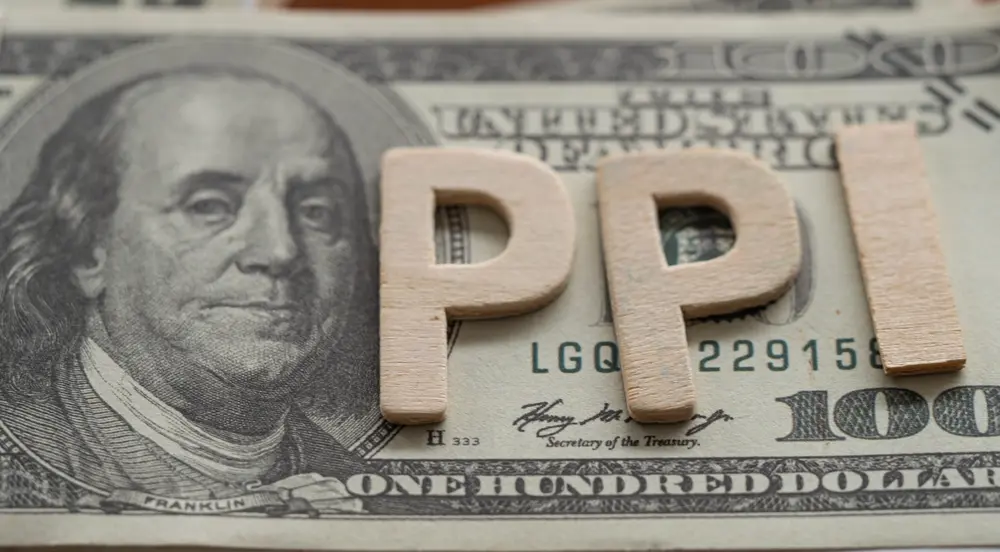
(Kitco News) - Weaker producer inflation pressures are introducing fresh volatility to the gold market, as some economists suggest the data may not be sufficient to support expectations for additional monetary policy easing from the Federal Reserve.
The headline Producer Price Index (PPI) rose 0.2% in December, following November’s 0.4% increase, the U.S. Labor Department announced on Tuesday. The latest inflation data came in slightly weaker than expected, as economists had anticipated another 0.4% increase.
Over the last 12 months, headline wholesale inflation increased by 3.3%, according to the report. Annual inflation fell just below expectations, as economists had forecasted a 3.4% rise. However, the report highlighted a sharp increase compared to the 1.1% annual rise seen in 2023.
Core PPI, which excludes volatile food and energy costs, remained unchanged last month. Core inflation was also weaker than expected, with economists projecting a 0.2% increase. On an annual basis, core PPI rose by 3.3%, below the 3.5% increase expected by economists. Despite this, core inflation remains significantly higher than the 2.7% increase reported in 2023.
Gold Market Reaction
The gold market is struggling to find clear direction in reaction to the inflation data. Although the weaker-than-expected inflation readings might suggest reduced price pressures, the sharp increase in producer prices over the past year underscores that inflation remains a concern, according to some economists. Spot gold last traded at $2,664.10 an ounce, roughly unchanged on the day, as the market continues to consolidate within its established trading range.
Broader Implications of PPI Data
PPI is widely viewed as a leading indicator of inflation, as producers tend to pass higher input costs on to consumers. However, while gold is traditionally considered a hedge against inflation, persistently high consumer prices have prompted the Federal Reserve to significantly shift its monetary policy stance. The central bank now anticipates a much shallower easing cycle.
Minutes from the Federal Reserve’s December monetary policy meeting revealed that some officials see interest rates approaching a neutral level. This relatively hawkish stance has led markets to price in only one rate cut for 2025, a notable shift from September when markets anticipated four rate cuts.
Economists Remain Cautious
Some economists argue that the weaker December PPI data is not enough to significantly alter current forecasts. As a result, this data could weigh on gold prices in the near term, particularly as markets adjust to the Fed’s evolving policy outlook.
