
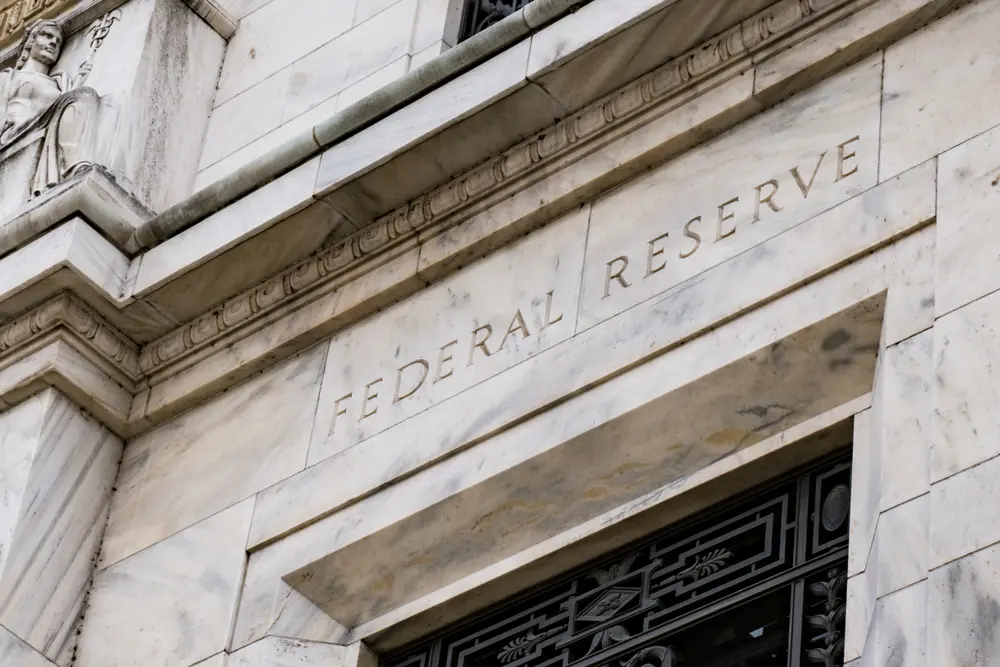
(Kitco News) - The gold market is struggling near critical short-term support at around $2,750 an ounce as the Federal Reserve leaves interest rates unchanged and provides little guidance on its easing cycle.
As widely anticipated, the Federal Reserve left the Fed Funds rate unchanged within a range of 4.25% to 4.50%.
The central bank’s monetary policy statement remained virtually unchanged from December’s meeting when it signaled an adjustment to its easing cycle through 2025, with only two rate cuts expected.
Following the Federal Reserve’s monetary policy decision, the gold market has dropped below critical support and is trading near session lows. Spot gold last traded at $2,748.70 an ounce, down 0.48% on the day.
One notable change in the monetary policy statement is that the Federal Reserve appears slightly more concerned about inflation. “Inflation remains somewhat elevated,” January’s statement noted, a shift from December’s statement, in which the central bank acknowledged consumer price pressures were moving closer to its 2% target.
Michael Brown, Senior Research Analyst at Pepperstone, noted that the statement suggests the central bank, led by Chair Jerome Powell, is trying to buy time to ensure “a high degree of optionality remains, as policymakers continue to gauge whether further disinflationary progress is being made and assess the resilience of the U.S. labor market.”
However, Brown added that the Federal Reserve faces heightened economic uncertainty through 2025, which will contribute to market volatility.
“Consequently, the ‘Fed put,’ which has acted as a comfort blanket for risk assets over the last 18 months or so, is no longer present, with the metaphorical strike price for that ‘put’ falling each month that incoming data remains solid. This, coupled with a greater degree of policy uncertainty, will likely result in a bumpier ride for equities this year. However, solid economic growth and subsequent earnings growth should keep the path of least resistance trending upward,” he said.
Although markets continue to expect the Federal Reserve to cut rates twice this year, some analysts have suggested that January’s cautious stance could make these expectations unlikely.
Paul Ashworth, Chief North America Economist at Capital Economics, said that economic data in the next couple of months will be crucial in determining the Fed’s easing path.
“We still nominally expect the Fed to cut rates again in March. But, at this stage, that will require a big downward benchmark revision to payrolls and a muted inflation out-turn in January,” he said. “If the Fed doesn’t resume cutting in the next few months, however, we suspect the window will have closed. While markets are still pricing in second-half rate cuts, our view is that a flurry of tariffs will put a stop to that, as inflation rebounds to 3%.”
