
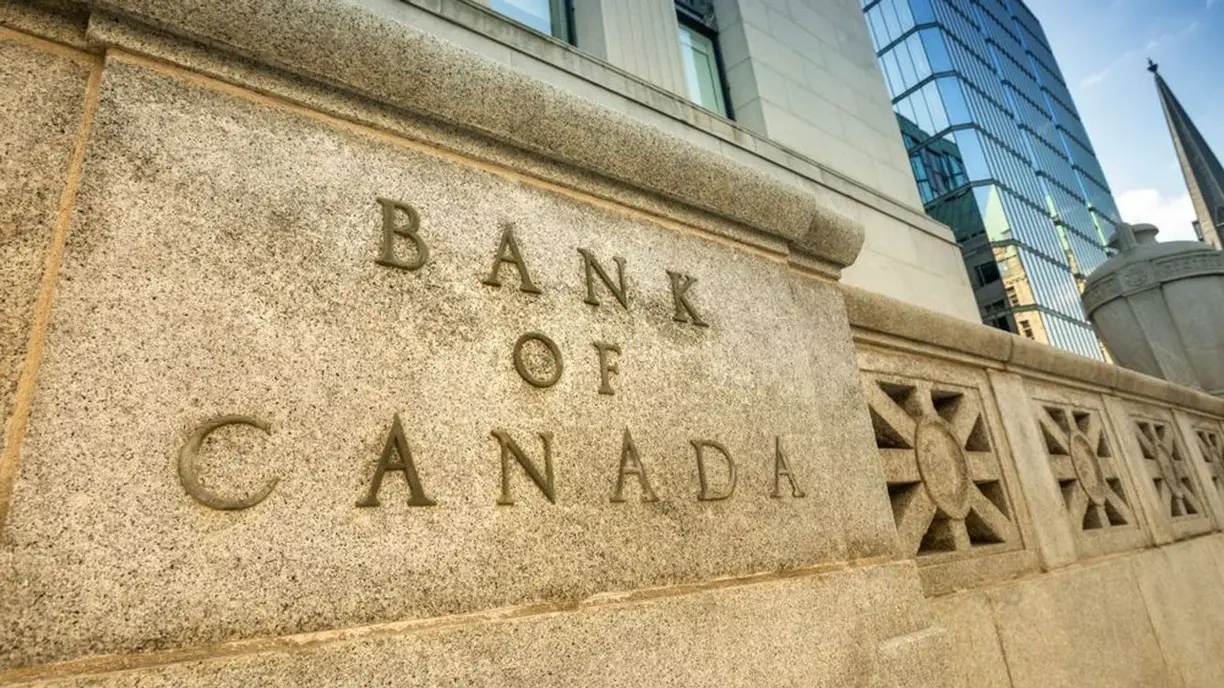
(Kitco News) - The gold market remains below its highs but continues to trade in record territory against the Canadian dollar, staying within striking distance of C$4,000 an ounce, as the Bank of Canada cuts interest rates and announces an end to its quantitative tightening measures.
In a widely anticipated move, Canada’s central bank lowered its overnight bank rate by 25 basis points to 3%. At the same time, the BoC announced that it will begin increasing its balance sheet again.
“The Bank will restart asset purchases in early March, beginning gradually so that its balance sheet stabilizes and then grows modestly, in line with growth in the economy,” the central bank stated in its monetary policy statement.
The gold market has shown little reaction to the expected easing, last trading at C$3,986.10 an ounce, up 0.21% on the day. Gold is outperforming the loonie as the Canadian dollar weakens against the U.S. dollar. Spot gold last traded at $2,759.70 an ounce, down 0.12% on the day.
The latest interest rate cut comes as the Bank of Canada continues to take advantage of easing inflation pressures and resilient economic activity. However, it also acknowledged significant uncertainty ahead.
“Lower interest rates are boosting household spending, and in the outlook published today, the economy is expected to strengthen gradually while inflation remains close to target. However, if broad-based and significant tariffs were imposed, Canada’s economic resilience would be tested,” the central bank stated in its monetary policy decision. “Setting aside threatened U.S. tariffs, the upside and downside risks to the outlook are reasonably balanced.”
Stephen Brown, Deputy Chief North America Economist at Capital Economics, noted that the Bank of Canada is striking a cautious tone as the country prepares for a potential trade war with the U.S. He added that the BoC’s easing cycle could end quickly if the Trump administration follows through on its promise to impose tariffs on Feb. 1.
“In the press conference opening statement, Macklem’s comments suggest that the Bank does expect some tariffs to be applied. He will tell us that ‘as we consider our monetary policy response, we will need to carefully assess the downward pressure on inflation from economic weakness and weigh that against the upward pressure on inflation from higher input prices and supply chain disruptions.’ That suggests the Bank is taking the lessons from the pandemic seriously and that it will not necessarily cut interest rates further, even if tariffs hit the economy hard,” Brown said.
